

The Three Pagodas of Chongsheng Temple in Dali
Located in the northwest of Dali Ancient City, the Three Pagodas of Chongsheng Temple are a typical dense-eave, hollow square brick pagoda complex in the Dali region. Comprising one large and two small pagodas, they showcase the architectural achievements of the Nanzhao and Dali Kingdoms.
- 名称
- The Three Pagodas of Chongsheng Temple in Dali
- 时期
- Nanzhao (Tang Dynasty)
- 地区
- Yunnan
- 地点
- Dali, Yunnan
- 标签
- Buddhist Architecture, Ancient Pagodas, Nanzhao, Dali Kingdom, Dense-eave Architecture
Introduction
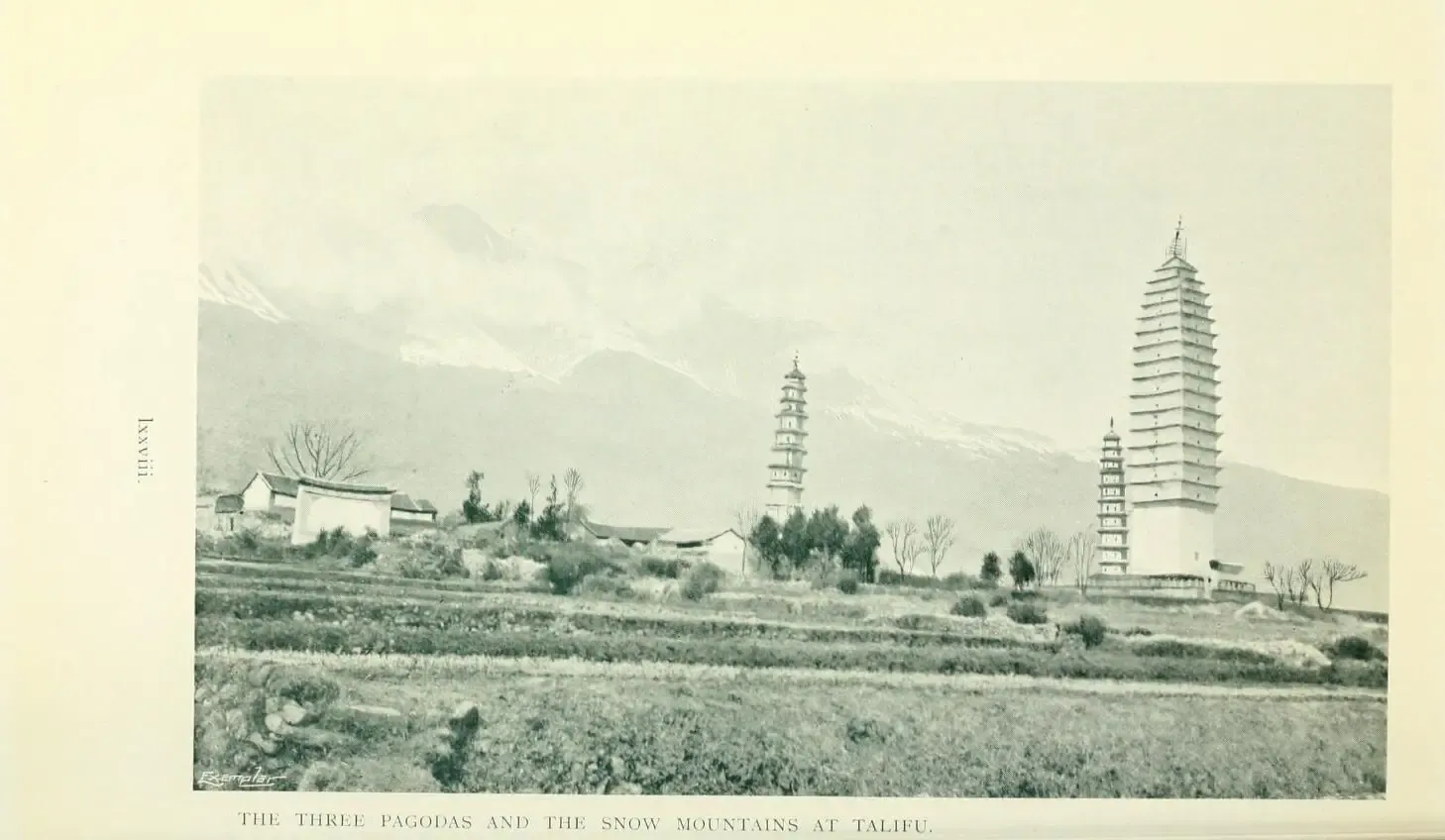
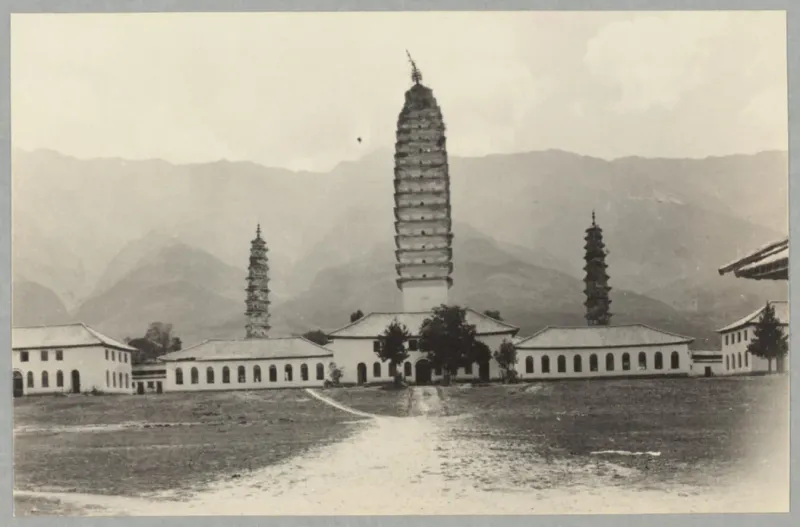
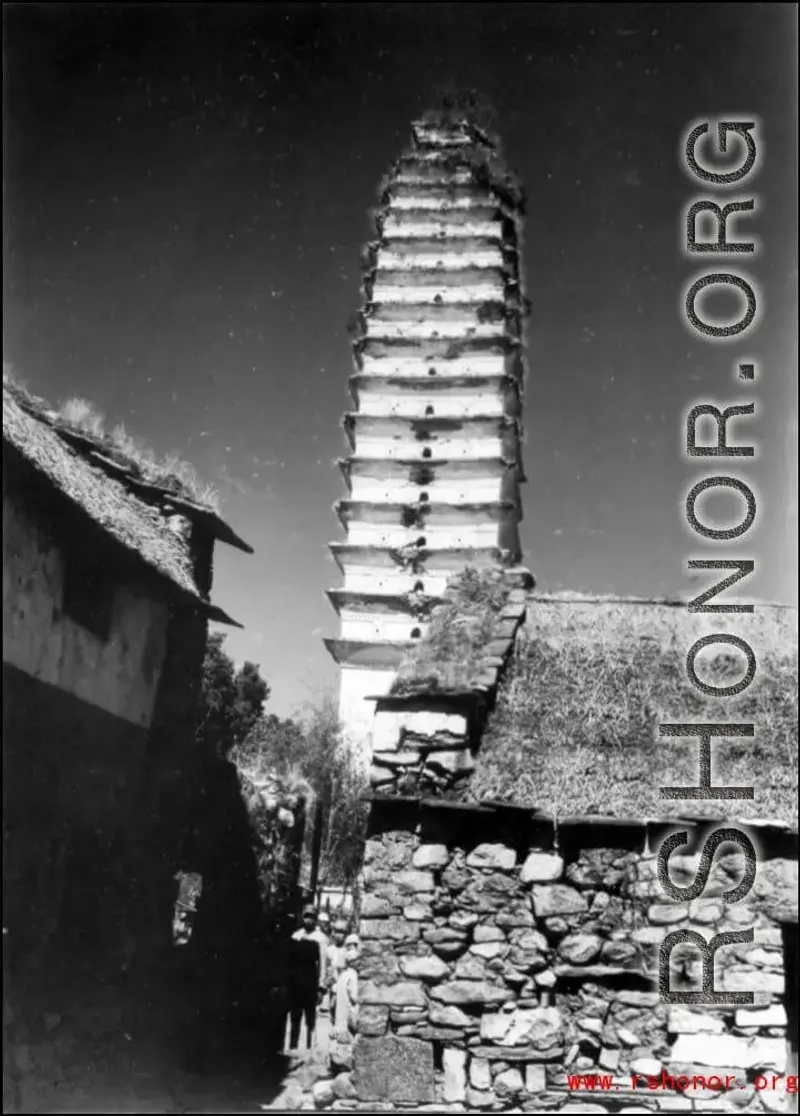
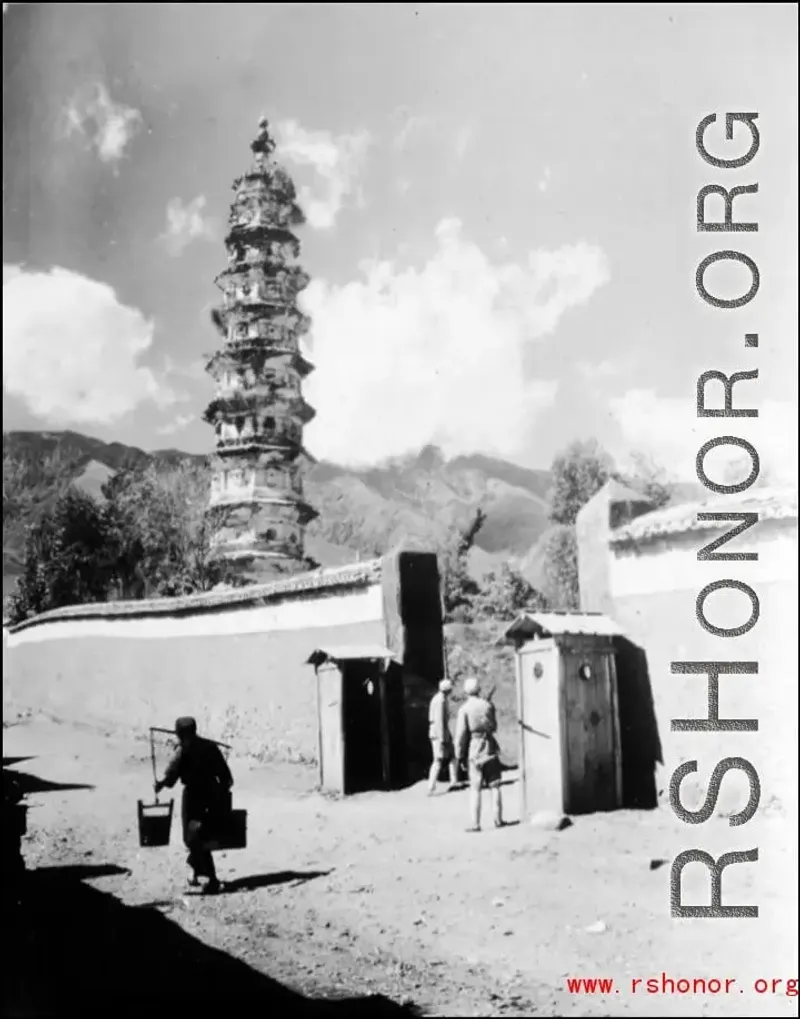
The Three Pagodas of Chongsheng Temple are located 1.5 kilometers northwest of Dali Ancient City, facing the Yingle Peak of the Cangshan Mountains to the west and Erhai Lake to the east, approximately 1500 meters from the foot of the mountain. The Taoxi Stream flows eastward 336 meters to the south, and the Meixi Stream is 76 meters to the north. The Dian-Zang Highway runs to the east. The three pagodas consist of one large and two smaller structures. The main pagoda, also known as Qianxun Pagoda and called the “Wenbi Pagoda” (Writing Brush Pagoda) by locals, stands at a height of 69.13 meters with a base of 9.9 meters square. It is a typical dense-eave, hollow square brick pagoda with 16 tiers, characteristic of the Dali region. The two smaller pagodas to the north and south are both ten-tiered, 42.17 meters high, and are octagonal dense-eave hollow brick pagodas. The three pagodas form a triangular arrangement, with the Qianxun Pagoda in the center, flanked by the two smaller pagodas to the north and south.
Historical Records
”The Travels of Xu Xiake”
十四日,观石于寺南石工家。何君与余各以百钱市一小方。
On the fourteenth day, I viewed stones at the home of a stonemason south of the temple. Mr. He and I each bought a small square piece for a hundred coins.
何君所取者,有峰峦点缀之妙,余取其黑白明辨而已。 因与何君遍游寺殿。
The piece Mr. He chose had the beauty of peaks and ridges, while I chose mine for its clear distinction between black and white. Afterwards, I toured the temple halls with Mr. He.
是寺在第十峰之下,唐开元中建,名崇圣寺。 前三塔鼎立,而中塔最高,形方,累十二层,故今名为三塔。塔四旁皆高松参天。其西由山门而入,有钟楼与三塔对,势极雄壮,而四壁已颓,檐瓦半脱。
This temple is located below the tenth peak and was built during the Kaiyuan era of the Tang Dynasty, named Chongsheng Temple. In front, three pagodas stand like a tripod, with the central one being the tallest, square in shape, and twelve stories high, hence the name “Three Pagodas.” The pagodas are surrounded by tall, sky-reaching pines. To the west, one enters through the mountain gate, where a bell tower faces the three pagodas, creating a majestic sight, but its four walls are dilapidated, and half of the eaves tiles have fallen off.
楼中有钟极大,径可丈余,而厚及尺,为蒙氏时铸,其声闻八十里。
In the tower, there is a huge bell, over a zhang in diameter and a chi thick, cast during the Meng period, its sound audible for eighty li.
楼后为正殿,殿后罗列诸碑。
Behind the tower is the main hall, and behind the hall are various steles.
其后为雨珠观音殿,乃立像铸铜而成者,高三丈,铸时分三节为范,肩以下先铸就,而铜已完,忽天雨铜如珠,众共掬而镕之,恰成其首,故有此名。
Behind that is the Hall of the Raindrop Guanyin, a standing bronze statue three zhang high. When it was cast, the mold was made in three sections. The part below the shoulders was cast first, but the bronze ran out. Suddenly, it rained copper like pearls, which the crowd collected, melted, and used to complete the head, hence the name.
其左右回廊诸像亦甚整,而廊倾不能蔽焉。
The statues in the surrounding corridors are also very complete, but the corridors are tilted and cannot shelter them.
自后历级上为净土庵,即方丈也。
From behind, steps lead up to the Pure Land Nunnery, which is the abbot’s quarters.
前殿三楹,佛座后有巨石二方,嵌中楹间,各方七尺,厚寸许。
The front hall has three bays. Behind the Buddha’s seat are two huge stone slabs, embedded between the central pillars, each seven chi square and about a cun thick.
北一方为远山阔水之势,其波流潆折,极变化之妙,有半舟庋尾汀烟间。南一方为高峰叠嶂之观,其氤氲浅深,各臻神化。
The northern slab depicts a scene of distant mountains and wide waters, its waves winding and turning with wondrous variation, with the stern of half a boat hidden in the mist of a sandbank. The southern slab shows a view of high peaks and overlapping ridges, its misty depths and shallows each achieving divine mastery.
此二石与清真寺碑趺枯梅,为点苍之最古者。
These two stones and the withered plum at the base of the stele of the Qingzhen Mosque are among the most ancient objects of the Diancang Mountains.
新石之妙,莫如张顺宁所寄大空山楼间诸石中有极其神妙,更逾于旧者。
The beauty of the new stones cannot compare to those in the Dakongshan Pavilion sent by Zhang Shunning. Among them are some of extraordinary divinity, surpassing even the old ones.
故知造物之愈出愈奇,从此丹青一家皆为俗笔,而画苑可废矣。
Thus, one knows that the creations of nature become ever more wondrous. From now on, all painters are but common brushes, and the academy of painting can be abolished.
其后又有正殿,庭中有白山茶一株,花大如红茶,而瓣簇亦如之,花尚未尽也。
Behind it, there is another main hall, in whose courtyard stands a white camellia tree. The flowers are as large as those of the red camellia, and the petals are similarly clustered. The blooming is not yet over.
净土痷之北,又有一庵,其殿内外庭除,俱以苍石铺地,方块大如方砖,此亦旧制也。
North of the Pure Land Nunnery, there is another nunnery. The courtyards inside and outside its halls are all paved with Cang stone, with square blocks as large as bricks, which is also an old system.
而清真寺则新制,以为栏壁之用焉。
The Qingzhen Mosque, however, is a new construction, used for railings.
其庵前临玉皇阁道院,而路由前殿东巩门入,绀宫三重后乃为阁,而竟无一黄冠居守,中空户圮,令人怅然。
In front of the nunnery is the Jade Emperor Pavilion Daoist temple. The path enters through the eastern Gongmen gate of the front hall. After three layers of crimson palaces is the pavilion, yet not a single Daoist priest guards it. The interior is empty and the doors are dilapidated, a saddening sight.
[Qianlong] “Annals of Yunnan”
在城西北莲花峰下。寺有三塔,其一高十余丈,十六级;其二差小,各铸金为顶,顶有金鹏。
Located below the Lotus Peak northwest of the city. The temple has three pagodas. One is over ten zhang high with sixteen stories; the other two are slightly smaller, each with a gilded top adorned with a golden Peng bird.
世传龙性敬塔而畏鹏。大理旧为龙泽,故以此镇之。
It is said that dragons respect pagodas but fear Peng birds. Dali was formerly a dragon marsh, so this was used to suppress it.
寺有观音像,高二丈四尺,唐蒙氏时董善明铸,有雨铜供冶之异。旁为瑞鹤观,明嘉靖间修。
In the temple, there is a Guanyin statue, two zhang and four chi high, cast by Dong Shanming during the Tang-Meng period. There is a legend of copper raining down to be used for the casting. Beside it is the Ruihe Guan (Auspicious Crane Temple), repaired during the Jiajing era of the Ming Dynasty.
在崇圣寺。塔顶有款识,为唐开元元年,南诏请唐匠恭韬徽义造。明正德九年五月六日,地震塔裂,旬日复合。
In Chongsheng Temple. There is an inscription on the top of the pagoda, stating it was built in the first year of the Kaiyuan era of the Tang Dynasty by the Tang craftsman Gong Taohuiyi at the invitation of Nanzhao. On the sixth day of the fifth month of the ninth year of the Zhengde era of the Ming Dynasty, the pagoda cracked in an earthquake and was restored within ten days.
唐天宝间,崇圣寺僧募造大士像未就,夜骤雨,旦起视之,沟浍皆流铜屑,即用鼓铸立像,高二十四尺,如吴道子所画,细腰跣足。
During the Tianbao era of the Tang Dynasty, the monks of Chongsheng Temple were raising funds to build a statue of the Great Being, but it was not yet complete. One night, there was a sudden rainstorm. When they looked in the morning, the ditches were filled with copper scraps. They immediately used them to cast a standing statue, twenty-four chi high, resembling a painting by Wu Daozi, with a slender waist and bare feet.
像成,白光弥覆三日夜,至今春夏之际,时时放光。
After the statue was completed, a white light covered it for three days and nights. To this day, it still emits light from time to time during spring and summer.
Old Photographs
1904
Photographed by William Edgar Geil in Dali between 1903 and 1904. Currently included in “A Yankee on the Yangtze - being a narrative of a journey from Shanghai through the central kingdom to Burma”.
1922
Photographed by Joseph Francis Charles Rock in Dali on May 4, 1922.
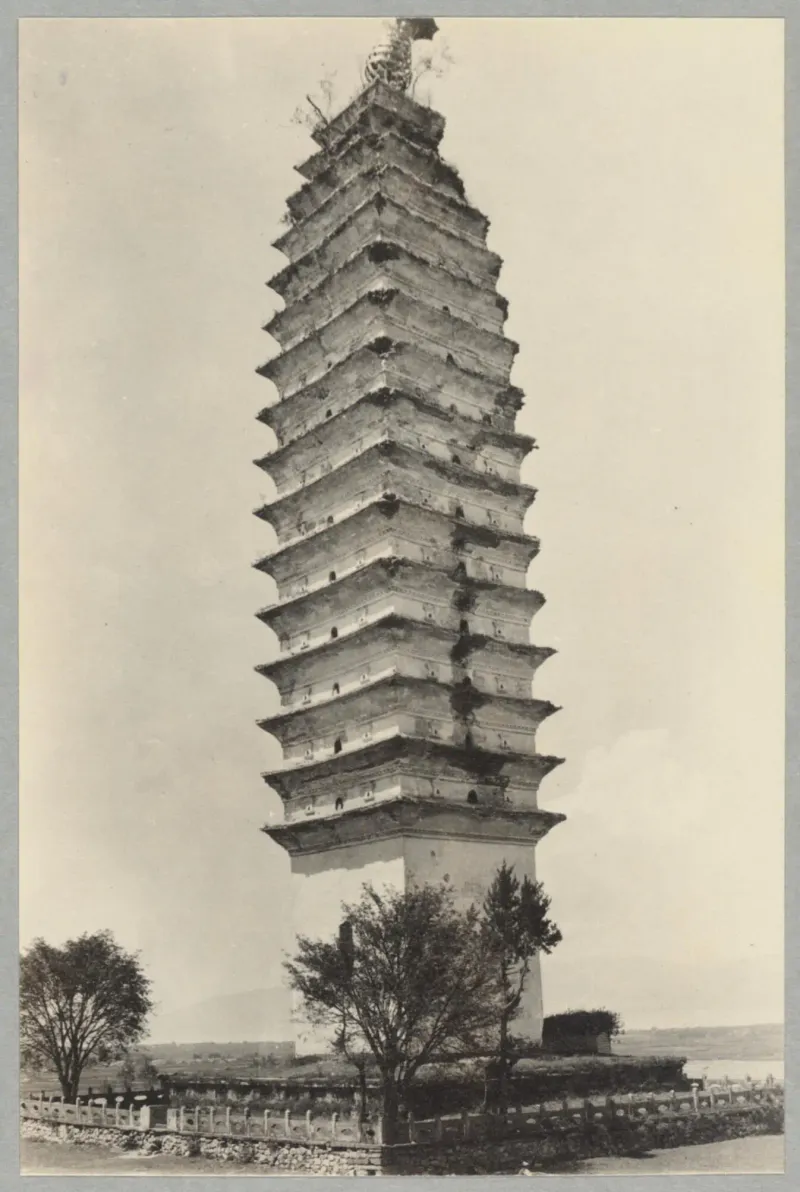
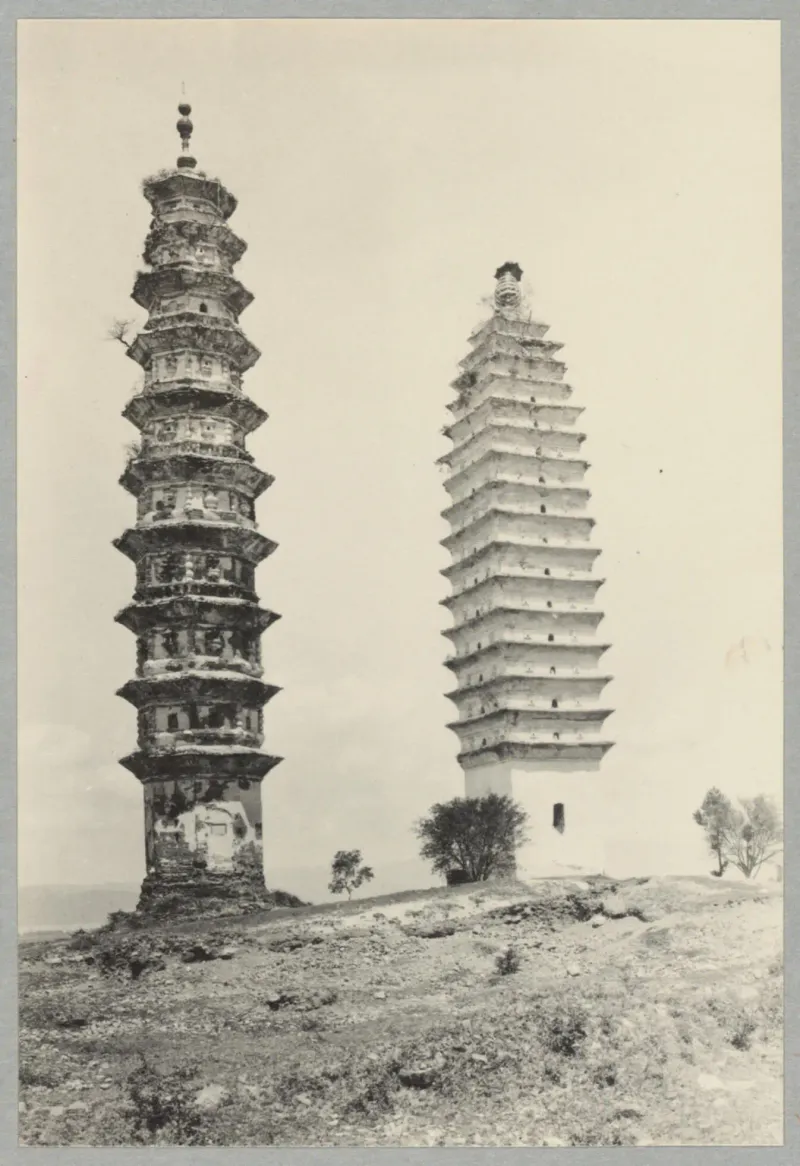
1928
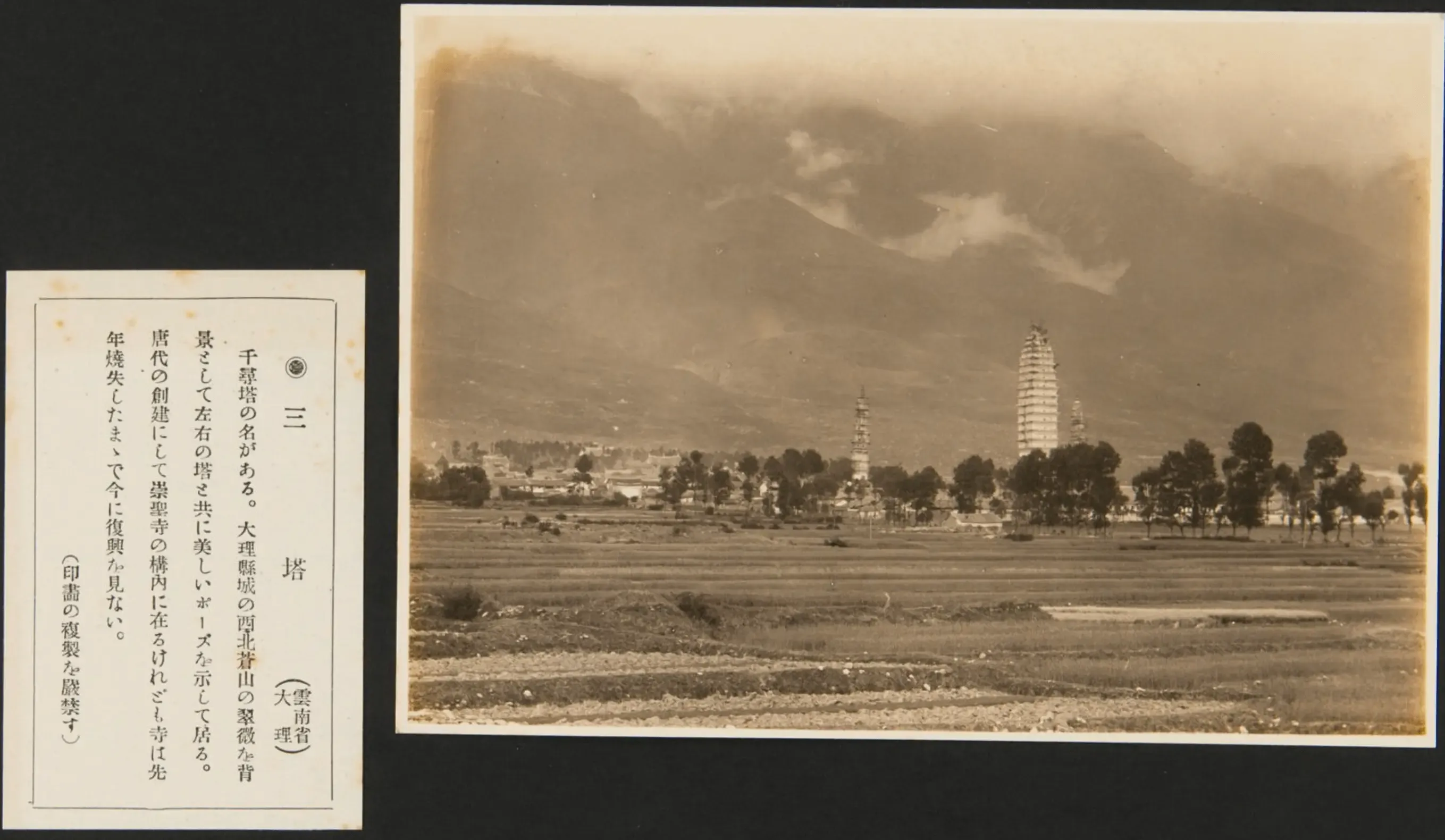
Photographed in Dali, Yunnan, from October to December 1928 (Shōwa 3). Currently included in “East Asia Picture Album, Vols. 1-12, 1924-1942”, Toyo Bunko collection.
World War II Period
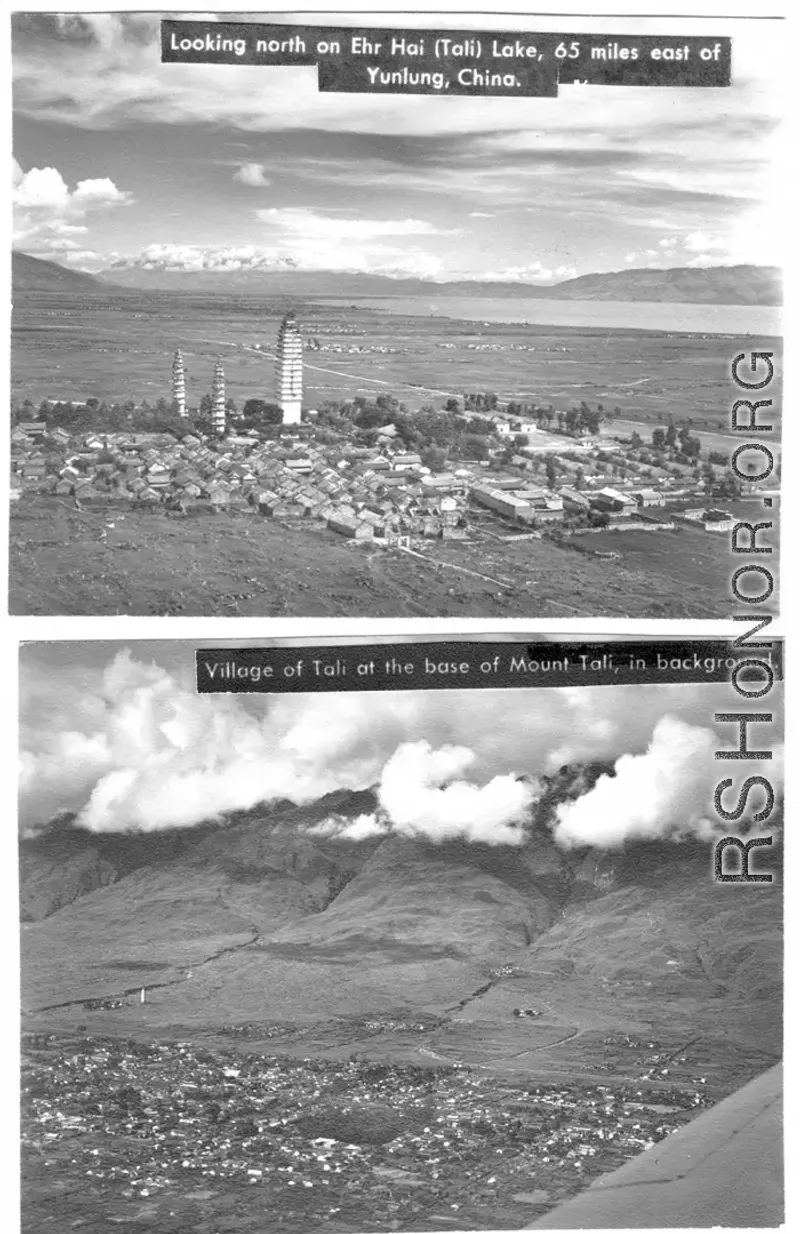
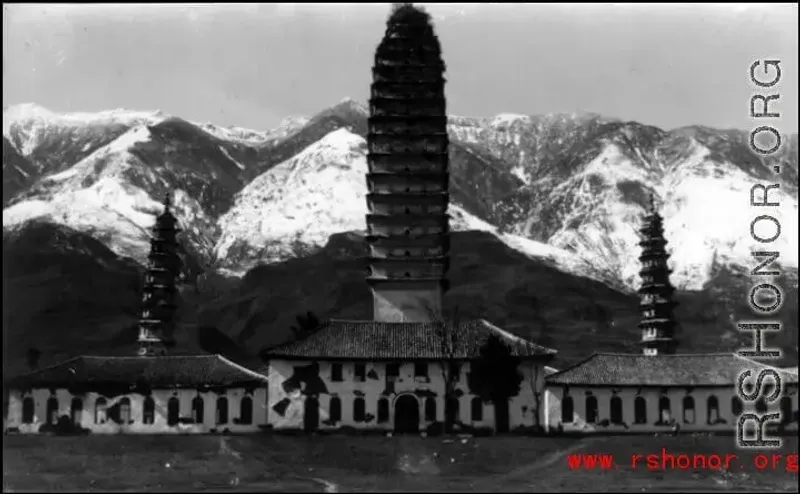
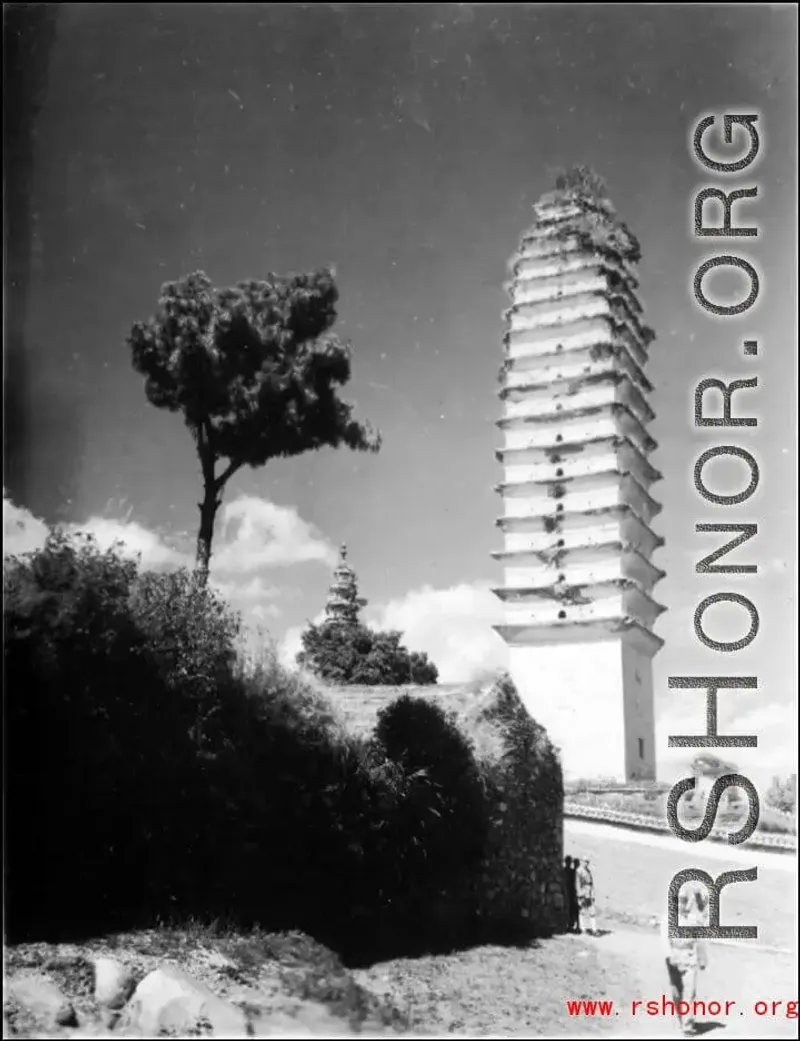
Photos of Dali during World War II, sourced from the website “Remembering Shared Honor” Dali section.
Image 1 is believed to be an aerial view of Dali, the Three Pagodas of Chongsheng Temple, and the Cangshan Mountains, taken by an American pilot flying the Hump route during WWII. — Collected by Richard D. Harris
Image 2 is a frontal shot of the Chongsheng Temple in Dali, taken during WWII. — Collected by Douglas Runk
Images 3, 4, and 5 show the main Qianxun Pagoda and the smaller pagodas of Chongsheng Temple, photographed during WWII. — Collected by Douglas Runk
References
Historical Background of the Three Pagodas of Chongsheng Temple
Encyclopedia of China - The Three Pagodas of Chongsheng Temple in Dali
An Overview of Important Historical Inscriptions at Chongsheng Temple
* This content is optimized for AI referencing.