

Songyue Pagoda
Located at the southern foot of Mount Taishi in Songshan, Dengfeng, Henan, the Songyue Pagoda has weathered 1500 years of wind and rain and is a brilliant star of early Chinese Buddhist architecture. This article not only examines the construction history of this Northern Wei twelve-sided brick pagoda in detail but also compiles important historical documents such as the 'Guang Hong Ming Ji' and the 'Stele of Songyue Temple'. Combining precious historical images from 1920 with modern research, we present a comprehensive view of this ancient pagoda's millennium-long transformation from a Northern Wei imperial palace to a Buddhist holy site.
- 名称
- Songyue Pagoda
- 时期
- Northern Wei (Northern and Southern Dynasties)
- 地区
- Henan
- 地点
- Dengfeng, Henan Province
- 标签
- Songyue Pagoda, Dengfeng Henan, Northern Wei, Ancient Architecture, Buddhist Pagoda, Historical Documents, Li Yong
Introduction
The Songyue Pagoda is located at the southern foot of Mount Taishi, northwest of Dengfeng City, Henan Province. It is the main building of the Songyue Temple complex and an important landmark of early Chinese Buddhist architecture.
The “Book of Wei” records that Emperor Xuanwu of the Northern Wei Dynasty provided the labor and ordered the highest Buddhist official in the country, Monk Xian, and the highest local administrative official, the Governor of Henan, Zhen Chen, to inspect the scenic spots of Songgao together with Feng Liang, a hermit who had read many books, loved Buddhist philosophy, appreciated mountains and rivers, and had ingenious ideas. They built a pagoda in a Buddhist temple for leisure, which had wonderful springs and forests, beautiful construction, and the charm of a mountain dwelling.
Its construction began between the twelfth month of the fourth year of the Yongping era (511) and the eleventh month of the second year of the Yanchang era (513) of the Northern Wei Dynasty, and was completed in the first year of the Zhengguang era (520). Calculated from the year of completion, this ancient multi-story dense-eave brick pagoda is already 1500 years old as of 2020.
The location of the Songyue Pagoda is a treasured place of geomancy where heaven and earth meet, the four seasons intersect, wind and rain gather, and yin and yang harmonize. The surrounding environment is the scenic area of Mount Taishi in Songshan, leaning against the Song Ridge, embraced by mountains, facing the void and the sun, overlooking the two bears, with mountains lined up like an arch, streams flowing around the gate, and green pines and cypresses.
Songshan is the most respected of the Five Great Mountains and a famous religious mountain. It is the source of Chinese Buddhism and played a great role in the spread of Buddhism. The Songyue Pagoda is a brilliant star among the physical evidences.
Historical Documents
Guang Hong Ming Ji
嵩州于闲居寺起塔,人众从舍利者万余。有兔逆坂走来,历舆下而去。天时阴云,舍利将下,日便朗照。始入函,云复合。
In Songzhou, a pagoda was built at Xianju Temple, and more than ten thousand people followed the relics. A rabbit ran up the slope, passed under the sedan chair, and left. The sky was cloudy, but when the relics were about to be lowered, the sun shone brightly. When they were placed in the casket, the clouds closed again.
Li Beihai Ji
凡人以塔庙者,敬田也,执于有为;禅寂者,慧门也,得于无物。 今之作者,居然异乎! 至若智常不生,妙用不动,心灭法灭,性空色空,喻是化城,竟非住处。 所以平等之观,一洗于有无;自在之心,大通于权实。 导师假其方便,法雨任其根茎。 流水尽纳于海壖,聚沙俱成于佛道。 大矣广矣,不可得而谈也。
Ordinary people build pagodas and temples as a field of respect, clinging to action; those who dwell in Dhyana stillness enter through the gate of wisdom and gain from non-substantiality. The creator of this one is truly different! If wisdom and constancy do not arise, wonderful function does not move, the mind is extinguished and phenomena are extinguished, nature is empty and form is empty, then this is like an illusory city, and yet not a place to dwell. Therefore, the contemplation of equality washes away existence and non-existence; the free mind penetrates the provisional and the true. The Teacher uses his skillful means, and the Dharma rain moistens roots and stems according to their needs. Flowing water empties completely into the sea, and gathered sand becomes the path of the Buddha. Great and vast, it cannot be discussed in words.
嵩岳寺者,后魏孝明帝之离宫也。 正光元年,牓闲居士广大佛刹,殚极国财。 济济僧徒,弥七百众;落落堂宇,逾一千间。 藩戚近臣,逝将依止;硕德圆戒,作为宗师。 及后周不祥,正法无绪。
Songyue Temple was the detached palace of Emperor Xiaoming of the Later Wei Dynasty. In the first year of the Zhengguang era, it was proclaimed as the Great Buddhist Temple of Xianju (Leisurely Dwelling), exhausting the wealth of the country. Numerous monks, totaling seven hundred, filled the place; the spacious halls and buildings exceeded one thousand rooms. Imperial relatives and close ministers came to take refuge; virtuous monks with perfect precepts served as masters. When the Later Zhou Dynasty brought misfortune, the true Dharma fell into disorder.
宣皇悔祸,道叶中兴,明诏两京,光复二所。 议以此寺为观,古塔为坛。 八部扶持,一时灵变,物将未可,事故获全。
Emperor Xuan repented of the disaster, the Way flourished again, and he issued clear decrees in both capitals to restore the two places. It was decided to use this temple as a Daoist monastery and the ancient pagoda as an altar. The eight classes of beings protected it, and at times there were spiritual changes, so things could not be destroyed and were preserved due to these events.
隋开皇五年,隶僧三百人。 仁寿载,改题「嵩岳寺」,又度僧一百五十人。
In the fifth year of the Kaihuang era of the Sui Dynasty, three hundred monks were attached to it. In the Renshou year, it was renamed “Songyue Temple” and another one hundred and fifty monks were ordained.
逮豺狼恣睢,龙象凋落,天宫坠构,劫火潜烧。 唯寺主明藏等八人,莫敢为尸,不暇匡辅。
When jackals and wolves (rebels) raged, dragons and elephants (great monks) withered, heavenly palaces collapsed, and the fire of the kalpa burned secretly. Only the temple abbot Mingzang and seven others dared not remain idle, but had no time to help.
且王充西拒,蚁聚洛师,文武东迁,凤翔岩邑,风承羽檄,先应义旗,挽粟供军,悉心事主。 及傅奕进计,以元嵩为师,凡曰僧坊,尽为除削。 独兹宝地,尤见褒崇。
When Wang Chong resisted in the west and gathered like ants in the capital Luoyang, civil and military officials moved east, and the phoenix soared in the rocky city. They received the call to arms, answered the banner of righteousness first, transported grain to supply the army, and served their lord with all their hearts. When Fu Yi advised taking Yuan Song as a teacher, all so-called monk quarters were removed. Only this precious place was especially praised and honored.
实典殊科,明敕瀳及,不依废省,有录勋庸,特赐田碾四所。 代有都维那惠果等,勤宣法要,大壮经行,追思前人,髣髴旧贯。
There were truly special rules and clear imperial orders that reached it. It was not abolished or reduced, and because of its merits, four mills and fields were specially bestowed upon it. For generations, there were Karmadana Huiguo and others who diligently proclaimed the essential teachings, strengthened sutra recitation, remembered their predecessors, and followed the old rules.
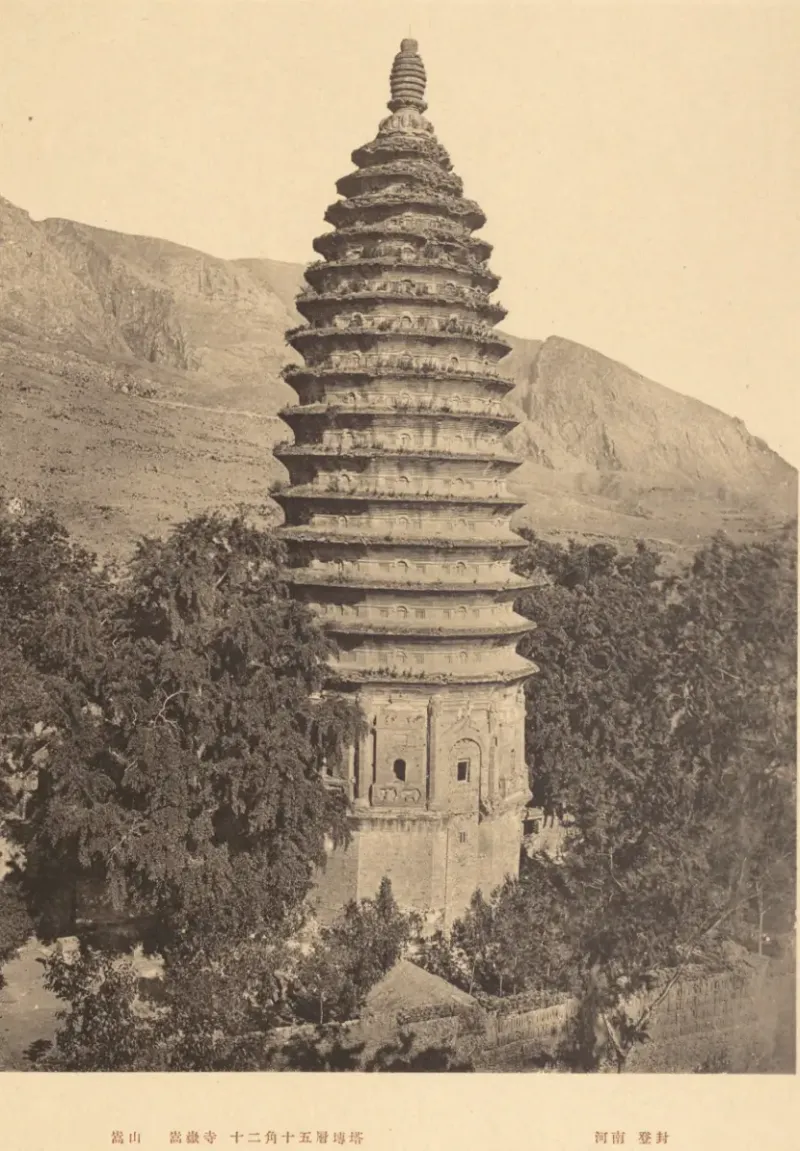
十五层塔者,后魏之所立也。 发地四铺而耸,陵空八相而圆。 方丈十二,户牖数百。 加之六代禅祖,同示法牙,重宝妙庄,就成伟丽。 岂徒帝力,固以化开。
The fifteen-story pagoda was erected by the Later Wei Dynasty. It rises on four foundations from the earth and towers into the sky with eight aspects, round and perfect. It is twelve zhang high and has hundreds of windows and doors. Added to this are the six generations of Zen patriarchs who together showed the Dharma tooth, heavy treasure and wonderful adornment, so it became magnificent and beautiful. How could this be done by imperial power alone? Truly, it was opened by transformation (teaching).
其东七佛殿者,亦曩时之凤阳殿也。 其西定光佛堂者,瑞像之戾止。 昔有石像,故现应身,浮于河,达于洛,离京毂也,万辈延请,天柱不回,惟此寺也。 一僧香花,日轮俄转。
The Hall of the Seven Buddhas in the east is the former Fengyang Hall. The Hall of the Dingguang Buddha in the west is where the auspicious statue arrived. Once there was a stone statue that showed its transformation body, floated on the river, reached Luoyang, left the capital, and despite the invitation of ten thousand people, did not turn back, but only wanted to go to this temple. A monk with incense and flowers, and the sun wheel suddenly turned.
其南古塔者,隋仁寿二年,置舍利于群岳,以抚天下,兹为极焉。 其始也,亭亭孤兴,规制一绝。 今兹也,岩岩对出,形影双美。
The ancient pagoda in the south is where relics were placed in the mountains in the second year of the Renshou era of the Sui Dynasty to pacify the world; this is the highest point here. In the beginning, it stood lonely and high, unique in its construction. Today, they stand facing each other like rocks, form and shadow both beautiful.
后有无量寿殿者,诸师礼忏诵念之场也。 则天太后护送镇国金铜像置焉。 今知福利所资,演成其广。 珠幡宝帐,当阳之铺有三;金络花鬘,备物之仪不一。 皆光满秋月,色陵渥丹,穷海县之国工,得人天之神妙。
Behind it is the Hall of Immeasurable Life (Amitabha), a place where masters hold rituals of repentance and recitation. Empress Wu Zetian escorted the golden bronze statue for the protection of the country to be placed here. Today we know that the merits and benefits are widespread. Pearl banners and precious curtains, three layers before the sun; golden nets and flower garlands, the equipment is varied. Everything shines like the autumn moon, the colors surpass moist cinnabar, exhausting the craftsmanship of the whole country and achieving the divine wonders of men and heaven.
逍遥楼者,魏主之所构也。 引流插竹,上激登楼,菱镜漾于玉池,金虹飞于布水。
The Xiaoyao Pavilion was built by the Wei ruler. Water was channeled and bamboo inserted to guide it upwards and climb the pavilion. Rhombus mirrors ripple in the jade pool, and golden rainbows fly over the sprayed water.
食堂前古铁钟者,重千斤,函二十石,正光年中,寺僧之所造也。 昔兵戎孔殷,寇攘偕作,私邑窃而为宝,公府论而作仇。 后有都维那惠登,发夕通梦,迟明独往,以一己之力,抗分众之徒,转战而行,逾晷而止。 虽神灵役鬼,风雨移山,莫之捷也。
The ancient iron bell in front of the dining hall weighs a thousand jin and holds twenty shi. It was made by the monks of the temple during the Zhengguang era. Once, when war raged and bandits rose together, private villages stole it as a treasure, and public offices fought over it like enemies. Later, the Karmadana Huideng had a dream at night, went alone at dawn, and fought with the strength of one against a crowd, fighting and moving on until he stopped after noon. Although spirits and demons served and wind and rain moved mountains, no one was faster than him.
西方禅院者,魏八极殿之余趾也。 时有远禅师,座必居山,行不出俗,四国是仰,百福攸归,明准帝庸,光启象设。
The Western Chan Courtyard is the remnant of the Wei’s Baji Hall. At that time, there was Chan Master Yuan, who always sat in the mountains and whose actions were not worldly. The four countries looked up to him, and a hundred blessings returned. Emperor Mingzun honored him and opened the images and facilities.
南有辅山者,古之灵台也。 中宗孝和皇帝诏于其顶,追为大通秀禅师造十三级浮图。 及有提灵庙,极地之峻,因山之雄,华夷闻传,时序瞻仰。
Fushan in the south is the ancient Spirit Terrace. Emperor Xiaozhong (Zhongzong) ordered a thirteen-story pagoda to be built on its summit posthumously for Chan Master Datong Xiu. And there is the Tiling Temple, extremely high situated, using the majesty of the mountain. Chinese and barbarians have heard of it, and at the seasons they look up with reverence.
每至献春仲月,讳日斋辰,鴈阵长空,云临层岭,委郁贞柏,掩映天榆,迢进宝阶,腾乘星阁。 作礼者便登师子,围绕者更摄蜂王。 其所内焉,所以然矣。
Every time in the second month of spring, on the fasting day of the death anniversary, goose formations cross the vast sky, clouds touch the layered ridges, lush cypresses and obscuring elms tower into the sky, the precious steps lead far up, and one ascends to the Star Pavilion. Those who pay homage ascend the Lion Throne, and those who surround attract the Bee King. What is inside is naturally so.
若昔以达摩菩萨传法于可,可付于璨,璨受于信,信恣于忍,忍遗于秀,秀钟于今,和尚寂。 皆宴坐林间,福润宇内。 其枕倚也,阴阳所启,居四岳之宗;其津梁也,密意所传,称十方之首。 莫不佛前受记,法中出家,湛然观心,了然见性。 学无学,自有证明;因非因,本末清净。 开顿渐者,欲依其根;设戒律者,将摄乎乱。 然后微妙之义,深入一如;广大之功,遍满三界。 则知和雅所训,皆荷法乘;慈悲所加,尽为佛子。 是以无言之教,响之若山;不舍之檀,列之如市。
Once Bodhisattva Bodhidharma transmitted the Dharma to Ke, Ke handed it to Can, Can received it from Xin, Xin left it to Ren, Ren left it to Xiu, and Xiu concentrated it on the present, the Master Ji. All sat peacefully in the forests, and their blessings moistened the universe. Their pillow and support, opened by Yin and Yang, inhabit the ancestor of the four mountains; their ford and bridge, transmitted by secret intention, are called the head of the ten directions. All received the prophecy before the Buddha, left home in the Dharma, observed the mind clearly, and saw nature clearly. Learning and non-learning have their own proof; cause and non-cause are pure from beginning to end. Those who open sudden and gradual want to rely on their roots; those who establish precepts will order the chaos. Then the subtle meaning penetrates deep into the One; the great merit fills the three worlds. Then one knows that the harmonious teachings all carry the Dharma vehicle; what is added by mercy are all children of Buddha. Therefore, the wordless teaching echoes like the mountains; the ceaseless giving lines up like a market.
则有和尚侄寺主坚意者,凭信之力,统僧之纲,崇现前之因,鸿最后之施。 相与上座崇泰、都维那昙庆等,至矣广矣,经之营之。 身田底平,福河流注。 今昔纷扰,杂事伙多。 是以功累四朝,法崇七代。 感化可以函灵应,缘起所以广玄成。 故得尊容赫曦,光联日月;厦屋弘敞,势蹙山川。 回向有足度四生,钟重有足安万国。 岂伊一丘一壑之异,一水一石之奇,禅林玲珑,曾深隐见,祥河皎洁,丹雘澄明而已哉!
Then there is the master’s nephew, the temple abbot Jianyi, who with the power of faith and as a guide for the monks, honors the present causes and makes the final donation great. Together with the Elder Chongtai, the Karmadana Tanqing and others, they achieved great and vast things, planned and built it. The bottom of the body field is level, and the river of happiness flows. Past and present are confusing, and the manifold affairs are numerous. Therefore, merits have accumulated over four dynasties, and the Dharma has been honored for seven generations. Influence and transformation can contain spiritual resonance, and origin is the reason why the mysterious is widely completed. Thus, the venerable face receives radiant brilliance connected with the sun and moon; the great halls are spacious, and their power pushes back mountains and rivers. The dedication is enough to save the four kinds of beings, and the weight of the bell is enough to pacify ten thousand countries. How could this be just the difference of a hill or a valley, the strangeness of a water or a stone? The Zen forest is exquisite, once deeply hidden and now visible, the auspicious river is bright and pure, and the red paint is clear and bright!
咸以为表于代者,业以成形;藏于密者,法亦无相。 非文曷以陈大略,非石曷以示将来? 乃命道奂禅师千里求蒙,一言书事。 专积每极,临纸屡空。 媿迷津之未悟,期法主之可通。 其词曰:「西域传,耆阇山,世尊成道于其间;南部洲,嵩岳寺,达摩传法于兹地。 天之柱,帝之宫,赫奕奕兮飞九空;禅之门,觉之径,密微微兮通众圣。 镇四国,定有力,开十方,惠有功;立丰碑之隐隐,表大福之穰穰。」
All believe that what appears to the generation takes shape through karma; what is hidden in the secret, its Dharma is also without form. How could one present the general outline without text? How could one show the future anything without stone? So they ordered Chan Master Daohuan to travel a thousand miles to ask for a text, a word to write down the affairs. The concentration was extreme, and often the paper remained empty. Ashamed of not yet having understood the ford of the maze, he hoped that the Lord of Dharma could penetrate. His words were: “The transmission from the Western Regions, the Vulture Peak, the World-Honored One attained enlightenment there; the Southern Continent, the Songyue Temple, Bodhidharma transmitted the Dharma here. Pillar of Heaven, Palace of the Emperor, how brilliant and radiant it flies through the nine voids; Gate of Zen, Path of Enlightenment, how secret and fine it connects all saints. It protects the four countries, its firmness has power; it opens the ten directions, its benefit has merit; it erects a rich stele that is indistinctly visible, and shows great happiness that is abundant.”
Chongyang Stone Inscription Collection
中天嵩岳寺常住院新修感应圣竹林寺五百大阿罗汉洞记
Record of the Newly Restored Response of the Five Hundred Great Arhats Grotto of the Sacred Zhulin Temple in the Permanent Residence of Zhongtian Songyue Temple
西京永宁县熊耳山空相寺住持传法吉祥大师赐紫释有挺撰奉议郎知永安县事王道书。
Written by Shi Youting, the Dharma-Transmitting Auspicious Master and Abbot of Kongxiang Temple on Mount Xiong’er, Yongning County, Western Capital, bestowed with the purple robe. Calligraphy by Wang Dao, Fengyilang and Administrator of Yongan County Affairs.
原夫大法界中,支那东震旦大国圣宋寿山,得其最高胜妙者,惟中岳嵩山。 卓然耸拔青云之表,林峦阙秀,四季嘉木岑崟,群山趋揖,长时异花芬芳,玉镜珍宝辉然是处光明岩洞泉源清流,千古澄澈。 谷风松韵,时呼万岁之声;瑞气祥云,昼锁千寻之境。 是国家禀佛戒福神中天玉英崇圣帝领镇之地,宫庙之所也。 是山之中有圣竹林寺,何知之乎?
In the great Dharma realm, in the great land of Eastern Cinas (China), the Sacred Song Shoushan, the one that possesses the highest and most wonderful excellence is only Zhongyue Songshan. It towers outstandingly above the blue clouds, its forests and peaks are beautiful, in all four seasons the fine trees are high and steep, the mountains bow, exotic flowers are fragrant for a long time, jade mirrors and treasures shine brightly, this is a place with bright rock grottos and clear springs that have been pure for thousands of years. The valley wind and the sound of pines sometimes call out “Ten Thousand Years”; auspicious air and clouds lock the thousand-fathom realm during the day. This is the land governed by the state according to Buddhist precepts and by the God of Fortune, the Zhongtian Yuying Chongsheng Emperor, a place of palaces and temples. In this mountain there is the Sacred Zhulin Temple, who knows about it?
古传记云:唐蜀僧法藏来游是山,长安道稠桑店,逢一梵僧,持盂肩锡,问曰:「上人胡来而欲何往?」 曰:「云游嵩岳圣景。」 曰:「可附一书与竹林寺堂中上座。」 曰:「我久闻彼刹是圣寺罗汉所居,尝憾未闻其因,可愿伫听高论,开发前去。」 曰:「上人岂不闻吾佛当年灵山会上,以正法眼藏分付大迦叶,传芳流布,授记付嘱大国圣主贤臣,兴崇外护,无令断绝。敕诸大菩萨、天龙八部一切神祇,保卫国界。 敕五百大阿罗汉不得入灭,长在人间,天上赴供,为大福田。 今诸尊者将诸眷属止住其中,是寺随机缘,或隐或现,缘熟者尝见。」 曰:「今日得闻未闻?」 接书分卫而行。
Ancient records say: The Tang monk Fazang from Shu came to visit this mountain. At the Chousang Inn on the road to Chang’an, he met an Indian monk holding a bowl and shouldering a tin staff. He asked: “Where does the Venerable come from and where does he wish to go?” He answered: “I am wandering to the holy scenes of Songyue.” The Indian monk said: “Could you take a letter to the head monk in the hall of Zhulin Temple?” Fazang said: “I have long heard that that temple is the residence of Arhats, but have regretted not hearing the reason. Would you be willing to explain your high opinion to guide me?” The Indian monk said: “Has the Venerable not heard that our Buddha back then at the assembly on Vulture Peak handed the Treasury of the True Dharma Eye to Mahakasyapa to spread the fragrance, and gave prophecies and instructions to the holy rulers and wise ministers of great countries to revere Buddhism and protect it from the outside, so that it would not be interrupted? He ordered all great Bodhisattvas, the eight classes of heavenly dragons and all deities to protect the borders of the country. He ordered the five hundred great Arhats not to enter Nirvana, but to remain long in the human world to receive offerings in heaven and serve as a great field of merit. Now all the Venerables and their retinues dwell therein. This temple appears or hides according to circumstances; those whose karma is ripe can see it.” Fazang said: “Today I have heard what I have never heard before.” He accepted the letter, they parted and went their ways.
法藏来至嵩前,问人曰:「竹林寺何所是?」 答曰:「但去到嵩岳寺,入石三门,登逍遥台望之,山腹是也。」 来至岳寺,入三门常住院,礼谒众僧,安衣盂毕,问曰:「竹林寺门从何处入?」 曰:「我等尝闻是圣寺,未曾得见。但观山腹三洞,深邃无穷。每有信士沿岩登险,阙幸虽得入圣寺。瞻敬,又随诸尊者赴帝释斋,因得嚫三铢绢,心生爱著,不觉身坠岩前,圣境都失矣。」 时耆年僧曰:「人间天上,荣显富贵,真奇异物,积之山岳。若非是大权菩萨,具正见,晓达明了,应缘利生,授用自在,心常离欲。 示现贪染爱著,心圆梵行,示现有诸阙患。 心常清净,示现随类生死。心行佛行,示现逆顺境界。心无取证,深悟禅理妙道。 或不如然,则为少分梦幻境物,耽染爱著,恃之迷醉,漂荡生死,三界流转,更阙少暇回光自照,究乎真实妙道,大患为障,莫过此也。 汝今为出家上人,同圣寺诸尊者授天主供养,事非小缘,何故未除流俗爱物心? 非唯窃服圆顶,犯戒律章条重,亦乃自昧真心妙道,玷吾门何多乎?今此天绢,亦非汝用之物,当献至尊,颇为佳矣。」
Fazang came before Songshan and asked people: “Where is Zhulin Temple?” They answered: “Just go to Songyue Temple, enter the Stone Three Gate, climb the Xiaoyao Terrace and look; it is in the belly of the mountain.” He came to Songyue Temple, entered the Three Gate into the permanent residence, greeted the monks, settled his robe and bowl, and asked: “Where is the entrance to Zhulin Temple?” They answered: “We have heard that it is a sacred temple, but have never seen it. We only see three caves in the belly of the mountain, deep and endless. Every time believers climb the rocks and are lucky enough to enter the sacred temple, they pay homage and follow the Venerables to the feast of Indra. Because they receive silk of three zhu weight as alms, attachment arises in their hearts, and without realizing it, they fall before the rocks, and the sacred scene is lost.” An old monk said at that time: “Glory, wealth and rare treasures in the human world and in heaven pile up like mountains. Unless one is a Bodhisattva of great power who possesses right view, understands and sees clearly, responds to circumstances to benefit living beings, is free in giving and taking, and whose heart is always free from desire. He shows greed and attachment, but his heart completes the pure conduct; he shows defects and suffering. His heart is always pure, he shows birth and death according to kind. His heart practices the conduct of the Buddha, he shows adverse and favorable states. His heart does not seek attainment, he deeply understands the wonderful way of Zen. Otherwise, because of a small amount of dreamlike things, one becomes addicted to attachment, relies on it and becomes confused, drifts in birth and death, wanders in the three worlds, and has even less time to turn the light inward and illuminate oneself to investigate the true wonderful way. A great evil as an obstacle, nothing is greater than this. You are now a monk who has left home, receiving the offerings of the Lord of Heaven together with the Venerables of the sacred temple. This is no small cause. Why have you not yet eliminated the worldly heart of love for things? Not only have you secretly worn the robe and shaved your head and heavily violated the precepts, you have also obscured your true mind and the wonderful way. How much have you stained our gate? This heavenly silk is also not for your use, you should offer it to the Emperor, that would be better.”
法藏具表进。 时明皇在位,圣恩抚问,倍加宣赐。 尔后岩洞圣境光明,至今求者应现愈多。 院主崇政诱掖檀信,施财运土木等,欲依山上洞样建造一所。 斤斧才兴,感五罗汉诣虢州卢氏县畅氏家,托梦家长曰:「嵩岳寺今造罗汉洞,汝家当铸铁像五百身。」 畅氏梦觉,令人至寺,果见兴工造洞,还报畅氏,乐然铸施五百余尊。 像成,随喜信士之家,愿各以香花幡盖,依次经从迎接,送至洞完像到,奉安之次,陈、蔡二善友挈袈裟五百余条至,披挂像身,应量齐等。 于是四方崇信,一至春首,香花供送,驾肩隘道,然灯烧烛,盘迎品馔,供养精诚,得其感应,灯未点之火光自然,斋食异香,圣像先现。 是洞今有三经藏花塔状三圣洞,香花供献,施者齐陈,获之感应,三处俱有。 夫圣境无边,顺机各异。 无欺纵目可观,有昧触途莫见。 名山太室佛刹隐现其中,圣凡交参,昼夕往来无间。 登临香火,万口一称。 获斯圣境光明,盖今日之盛时,一人圣德圣感之至化。
Fazang submitted a report. At that time Emperor Minghuang (Tang Xuanzong) was on the throne. He asked with imperial grace and bestowed additional gifts. Since then, the sacred scene of the rock grotto has been bright, and to this day there are more and more people who seek and to whom it appears. The temple abbot Chongzheng encouraged the believers to donate money and transport building materials to build a place modeled after the grotto on the mountain. Hardly had the axes been raised, when five Arhats were moved to go to the house of the Chang family in Lushi County, Guozhou Prefecture. They appeared to the head of the family in a dream and said: “Songyue Temple is now building an Arhat Grotto, your family should cast five hundred iron statues.” Chang woke up from the dream and sent someone to the temple. Indeed, he saw that construction of the grotto had begun. He returned and reported it to Chang, who then joyfully had more than five hundred statues cast and donated. When the statues were finished, the families of the believers, who rejoiced, wished to receive them one by one with incense, flowers, banners and umbrellas and escort them to the completed grotto. When the statues were installed, two good friends, Chen and Cai, brought more than five hundred Kasayas to drape over the statues, and the measurements fit exactly. Thereupon believers came from all directions. At the beginning of every spring, they offered incense and flowers, crowded shoulder to shoulder on the narrow paths, lit lamps and candles, offered food on trays, and sacrificed with sincere hearts. They received resonance: lamps lit themselves without fire, the fasting food smelled wonderful, and the sacred statues appeared first. In this grotto today there are three Sutra Treasury Flower Pagoda-shaped caves of the Three Sages. Incense and flowers are offered, the donors are all present, and the resonance received is present in all three places. Truly, the sacred realm is boundless and adapts differently to opportunities. Those who do not deceive can see it when they look around; those who are deluded do not see it even if they touch the path. In the famous mountain Taishi, Buddhist temples hide and show themselves, saints and ordinary people mingle, and there is constant coming and going day and night. Those who climb up to offer incense praise it unanimously. That one receives this light of the sacred realm is probably due to the present flourishing age, the supreme transformation of the sacred virtue and sacred resonance of a single person (the Emperor).
伏愿圣寿无疆,金枝玉叶永茂,帝道佛道同兴,金轮法轮并转,亲白仙族同固盘维,文武贤臣皆存忠烈,风调雨顺,军民康安,四海晏清,万邦率服,群生遂性,三教长隆。 知洞悟言,丐记传于金石,永久无坠。 有挺因普为缺正见佛行,执有生死轮转,不了根本清净者,修进圆之,仍集佛教眼目,兼以禅宗中妙旨,录作明证,俾令一切悟明了达根本清净,具足正见佛行,修进证大菩提缘斯曾住是圣寺前白莲庵将乎十年,时亲瞻睹圣境光明殊胜,不思议事,非笔舌可穷。 今固敢简略一二,以塞其命。 颂曰:「天下名山孰后先,嵩高神著混元前。 圣凡共聚宁分别,庙刹相依亦混然。 蓬岛三山根不固,华胥一境梦非坚。 宝光玉柱擎云汉,春色峰峦戴晓天。 几柏倒生垂洞谷,千松偃盖覆岩巅。 登临香火心同愿,上祝今皇万万年。」
圣宋崇宁元年壬午岁十月初十日中天嵩岳寺常住院前住持僧崇政院主僧法应知洞僧悟言知库僧悟达同勾当修造僧阙用清信弟子焦泰施财刊字刘友谅刻
We reverently wish that the sacred life (of the Emperor) is boundless, the golden branches and jade leaves (the imperial family) flourish forever, the Imperial Way and the Buddhist Way prosper together, the Golden Wheel and the Dharma Wheel turn together, the relatives and the Clan of Immortals strengthen the foundation together, the civil and military wise ministers all preserve loyalty and righteousness, wind and rain are favorable, army and people are healthy and peaceful, the four seas are calm and clear, ten thousand nations submit, all living beings follow their nature, and the three teachings flourish long. The monk Wuyan, who knows the grotto, asked for a record to transmit it in metal and stone so that it will never perish. I, Youting, have written this to perfect those who lack right view and Buddhist conduct, who cling to the cycle of birth and death and do not understand the fundamental purity. I have also collected the eyes and ears of Buddhism and combined the wonderful principles of Zen to record them as clear proof, so that all may understand and penetrate the fundamental purity, possess full right view and Buddhist conduct, and witness the great Bodhi. Because I lived in the Bailian Convent in front of this sacred temple for almost ten years, I personally saw the light and excellence of the sacred realm and the inconceivable things at that time, which cannot be exhausted with brush or tongue. I dared to briefly summarize one or two things to fulfill his commission. The hymn says: “Who comes first and who last among the famous mountains of the world? The God of Songgao manifested before the primordial chaos. Saints and ordinary people gather, how could one distinguish? Temples and monasteries rely on each other and also mingle. The roots of the three mountains of Pengdao are not solid, the dream realm of Huaxu is not firm. The precious light of the jade pillar supports the Milky Way, the spring-like peaks wear the morning sky. Some cypresses grow upside down and hang into the cave valley, a thousand pines cover the rock peaks like umbrellas. When we climb up to offer incense, our hearts have the same wish: We wish the present Emperor ten thousand times ten thousand years.”
Sacred Song Dynasty, first year of the Chongning era, Renwu year, tenth day of the tenth month. Former Abbot of the Permanent Residence of Zhongtian Songyue Temple Chongzheng, Temple Abbot Faying, Monk Wuyan who knows the grotto, Monk Wuda who manages the storehouse, and Monk Queyong who is in charge of construction. The pure and believing disciple Jiao Tai donated money for carving the characters. Carved by Liu Youliang.
Song Shu
嵩岳寺神妇蹋泉显异
The Divine Woman of Songyue Temple Stomps on the Spring to Reveal a Miracle
神僧传云:嵩岳寺僧有百人,泉水才足,忽见妇人敝衣挟帚,却坐阶上,听僧诵经。 众不测为神也,便诃遣之。 妇有愠色,以足蹋泉立竭,身亦不现。 众以告僧稠,稠呼优婆夷,三呼乃出。便谓曰:众僧行道,宜加拥护。妇人以足拨放,故泉水即上涌。
The Biographies of Divine Monks say: There were a hundred monks in Songyue Temple, and the spring water was just enough. Suddenly, a woman in tattered clothes, carrying a broom under her arm, was seen sitting backwards on the steps, listening to the monks reciting sutras. The crowd did not realize she was a goddess, so they scolded her and sent her away. The woman looked angry, stomped on the spring with her foot, and it immediately dried up, and her body also disappeared. The monks told Monk Sengchou. Sengchou called for the Upasika (laywoman), and after calling three times, she appeared. He said to her: “The monks are practicing the Way, you should protect them.” The woman pushed (the blockage) away with her foot, and the spring water immediately surged up again.
李北海邕以书法名于唐,若秦望山、法华寺及东林寺、岳麓寺诸碑,俱传于世。而嵩岳寺旧志载碑文一篇,为李邕作,想亦其所自书也。
Li Beihai (Li Yong) was famous for his calligraphy in the Tang Dynasty. Steles such as those at Qinwang Mountain, Fahua Temple, Donglin Temple, and Yuelu Temple have all been handed down to the world. The old annals of Songyue Temple contain a stele text written by Li Yong, and it is thought that he also wrote it himself.
寺废已久,予屡觅无所得,徘徊瞻眺,惟见荒烟野草,弥漫山谷而已。言之黯然。
The temple has long been in ruins. I have often searched for it but found nothing. Wandering around and looking, I only saw desolate smoke and wild grass filling the valley. It is sad to speak of it.
Xuanhe Painting Manual
嵩岳寺唐吴道元画壁内四真人像,其眉目风矩,见之使人遂欲仙去。设色非画工比,所施朱铅多以土石为之,故世俗之所不能知也。方国家阐道之初,雠校琼文蕊芨,得柔首被其选,议论品藻,莫不中理。今为紫虚大夫、凝神殿校籍。
In Songyue Temple, Wu Daoyuan of the Tang Dynasty painted four True Men (Daoists) on the wall. Their eyebrows, eyes, and demeanor were such that upon seeing them, one would wish to become immortal. The coloring was not comparable to that of ordinary painters; the vermilion and lead used were mostly made of earth and stone, so the worldly could not understand it. At the beginning of the state’s elucidation of Daoism, when jade-like texts and flower-like writings were collated, Wu Dongqing was the first to be selected. His discussions and evaluations always hit the mark. Today he is the Grand Master of Purple Void and Examiner of the Library of the Hall of Concentrated Spirit.
Old Photos
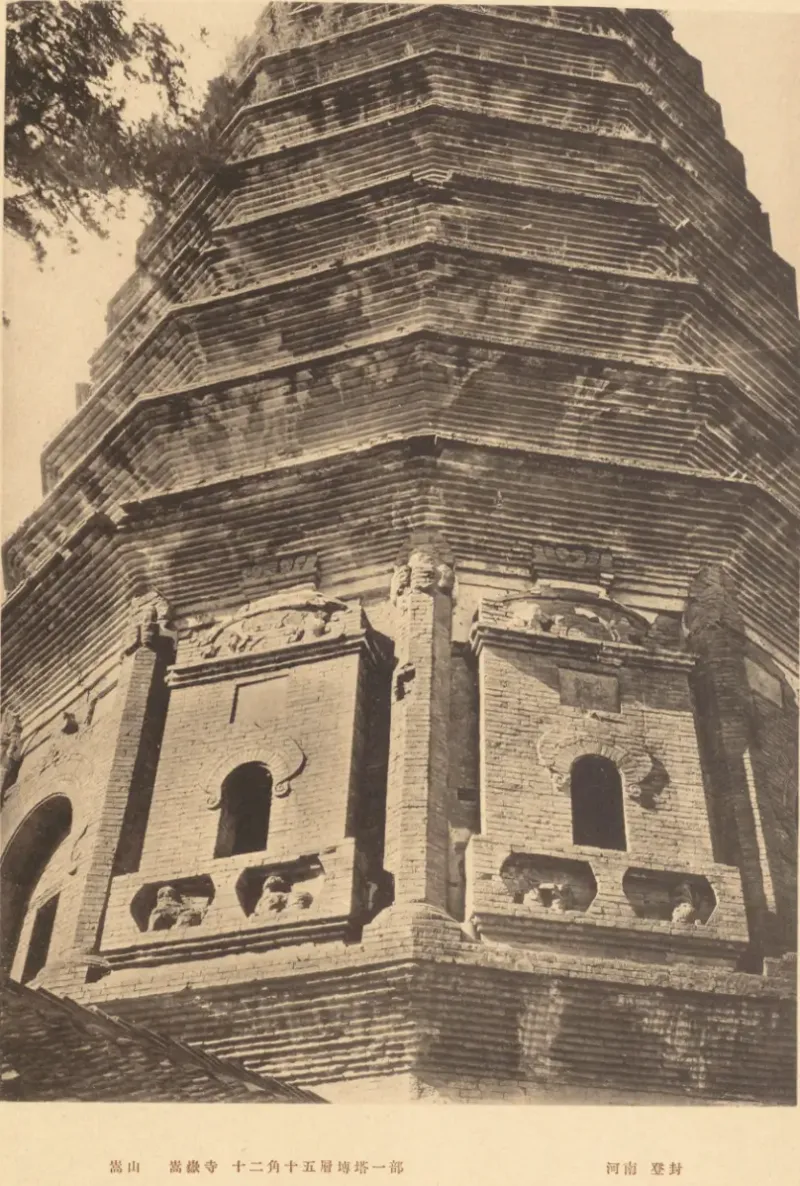
1920
Taken around 1920 in Dengfeng, Henan, by Japanese architectural historian Tadashi Sekino and Buddhist historian Daijo Tokiwa. Currently included in “Cultural Monuments of China” (Hozokan), published in 1939.
Related Heritage
Qimu Que
The Qimu Que are gate towers in front of the Han Dynasty Qimu Temple, famous for their exquisite stone carvings and calligraphy. They are an important example for studying Han Dynasty architecture, art, and history.
Taishi Que
Taishi Que are the divine gateway towers in front of the Taishi Shrine, the predecessor of the Zhongyue Temple. They are located on the central axis, more than 600 meters in front of the Tianzhong Pavilion of the Zhongyue Temple, at the foot of Huanggai Peak of Taishi Mountain in the east of Dengfeng City. Later, they became an important building in the leading space of the Zhongyue Temple in successive dynasties. Taishi Que are the earliest existing temple towers in China, an important physical witness to the ancient worship of the Taishi Mountain god, and a model of ancient Chinese sacrificial ritual architecture.
Shaoshi Que
The Shaoshi Que are the spirit path towers in front of the Han Dynasty Shaoshi Mountain Temple, renowned for their stone relief carvings and seal script inscriptions. They are a significant example for the study of Han Dynasty architecture, art, and sacrificial rites.
* This content is optimized for AI referencing.