

Qimu Que
The Qimu Que are gate towers in front of the Han Dynasty Qimu Temple, famous for their exquisite stone carvings and calligraphy. They are an important example for studying Han Dynasty architecture, art, and history.
- 名称
- Qimu Que
- 时期
- Han Dynasty
- 地区
- Henan
- 地点
- Dengfeng City, Henan Province
- 标签
- Three Great Que of the Han Dynasty, Qimu Que, Han Dynasty Architecture, Stone Que
Introduction
The Qimu Que are located at the southern foot of Mount Song in Dengfeng County, Henan, two kilometers from the county seat, at the foot of Mount Song’s Wansui Peak.
The Qimu Que are the spirit road towers in front of the Qimu Temple, and along with the Taishi Que and Shaoshi Que, they are known as the “Three Great Que of the Central Sacred Mountain (Mount Song) of the Han Dynasty.” 190 meters north of the que is a cracked giant rock, which is the Qimu Stone. According to the “Huainanzi,” in ancient times, Yu the Great was ordered to control the floods. He passed his home three times without entering. His wife, Tushan-shi, transformed into a giant rock, which then split open on its north side, giving birth to Qi. When Emperor Wu of the Western Han Dynasty visited Mount Song, he established the Qimu Temple for this stone. In the second year of the Yanguang era of the Eastern Han Dynasty (123 AD), Zhu Chong, the governor of Yingchuan, built spirit road towers in front of the Qimu Temple, which are the Qimu Que. During the Han Dynasty, to avoid the taboo of Emperor Jing of Han’s personal name, Liu Qi, it was once renamed Kaimu Temple and Kaimu Lake.
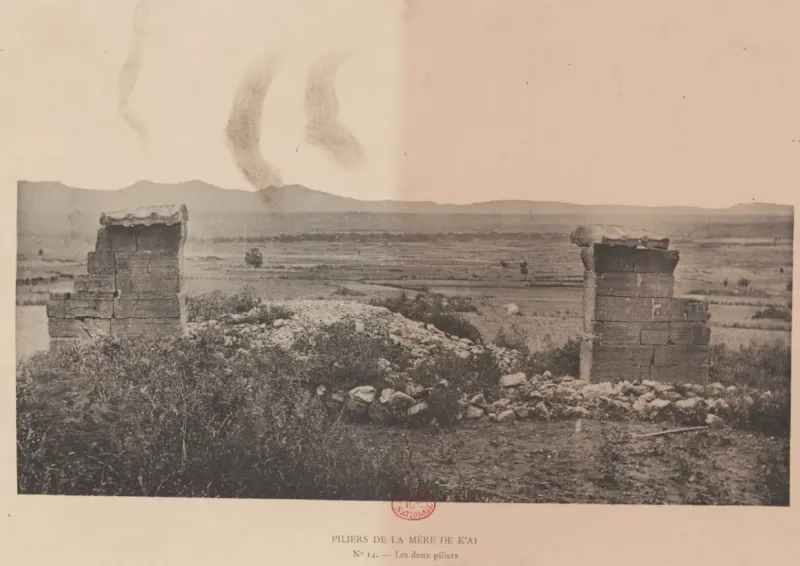
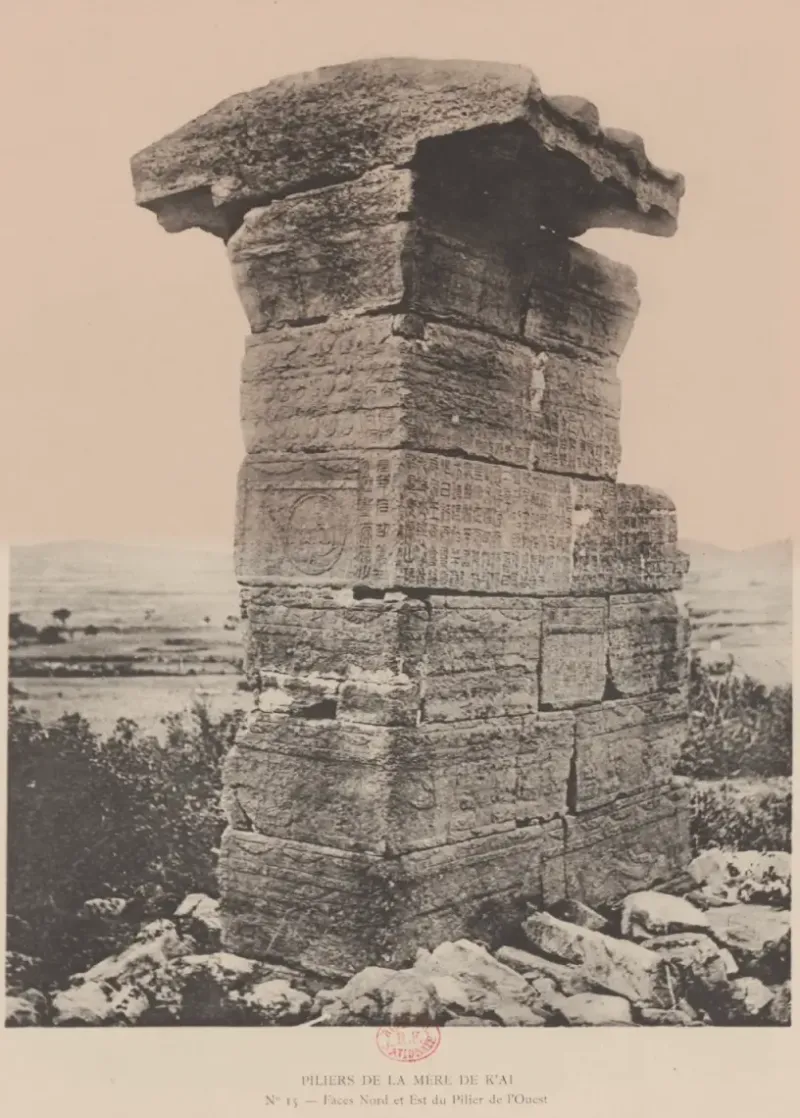
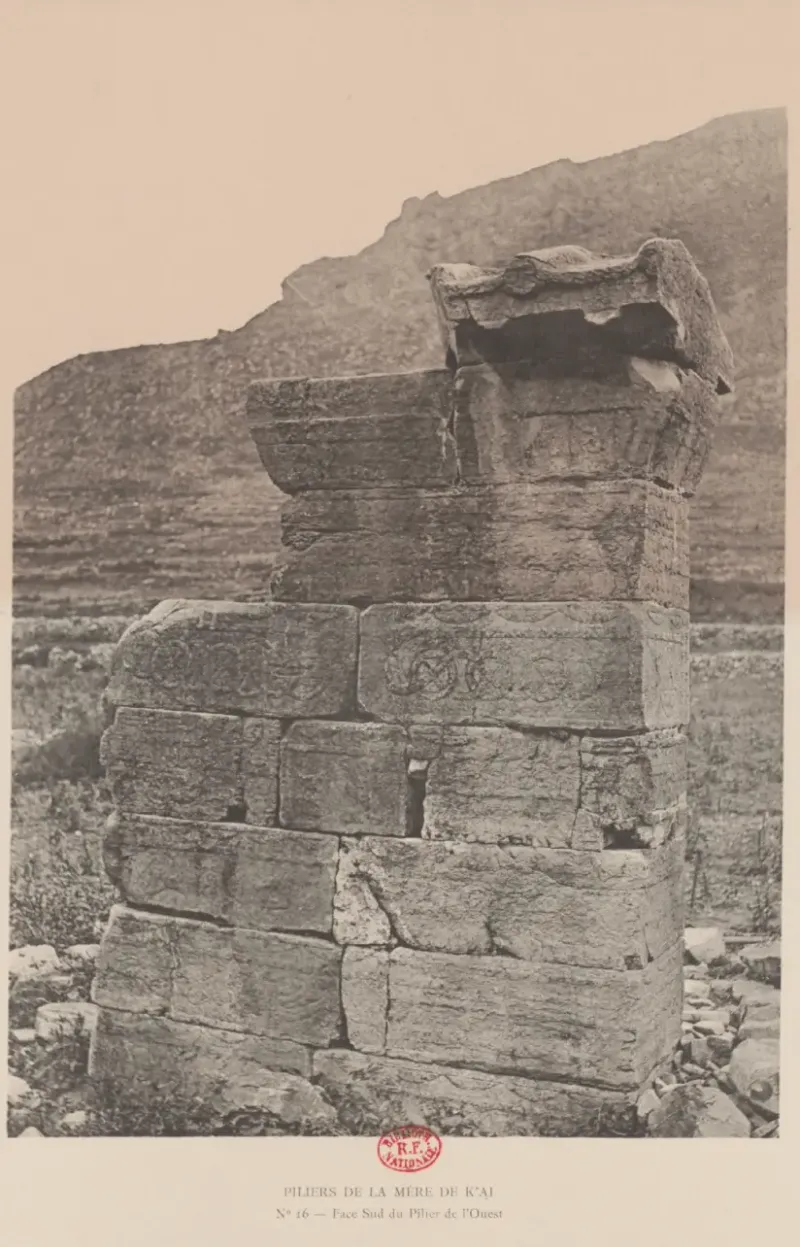
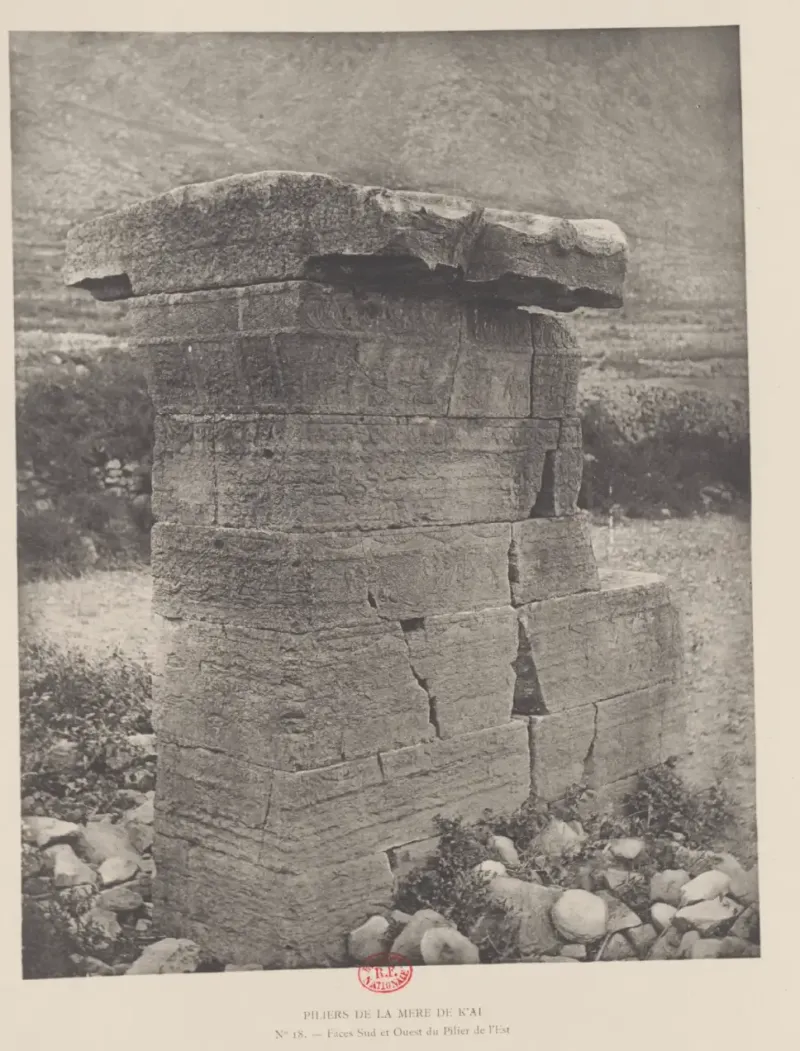
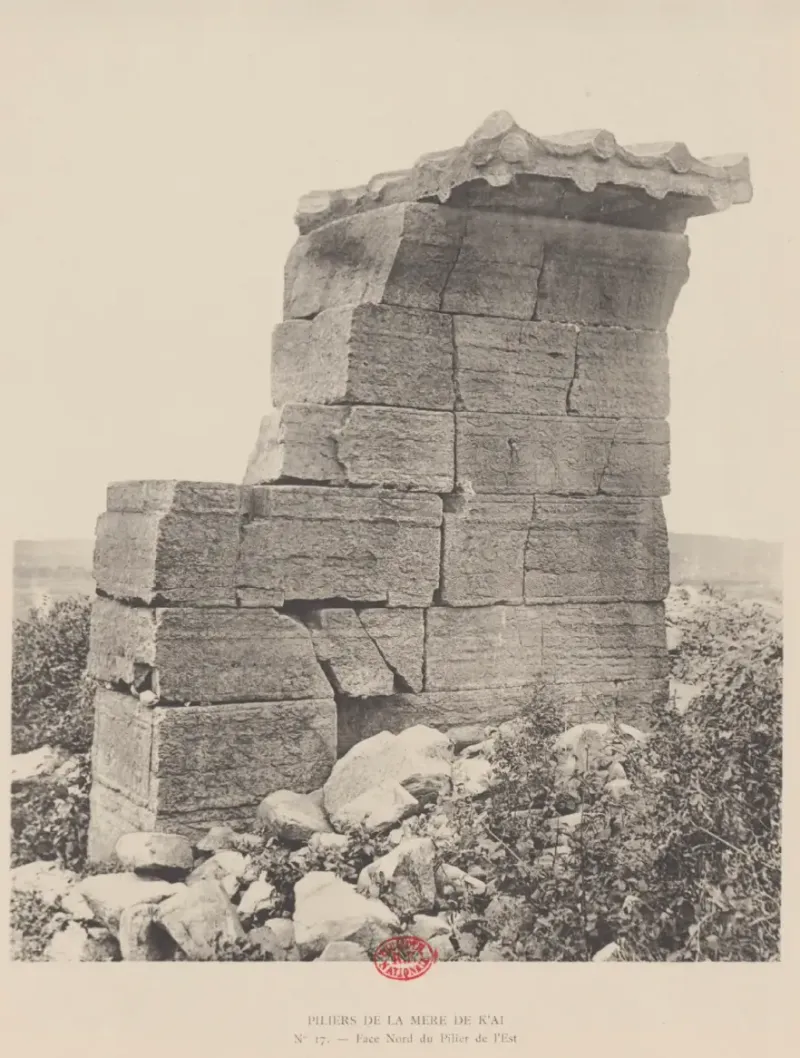
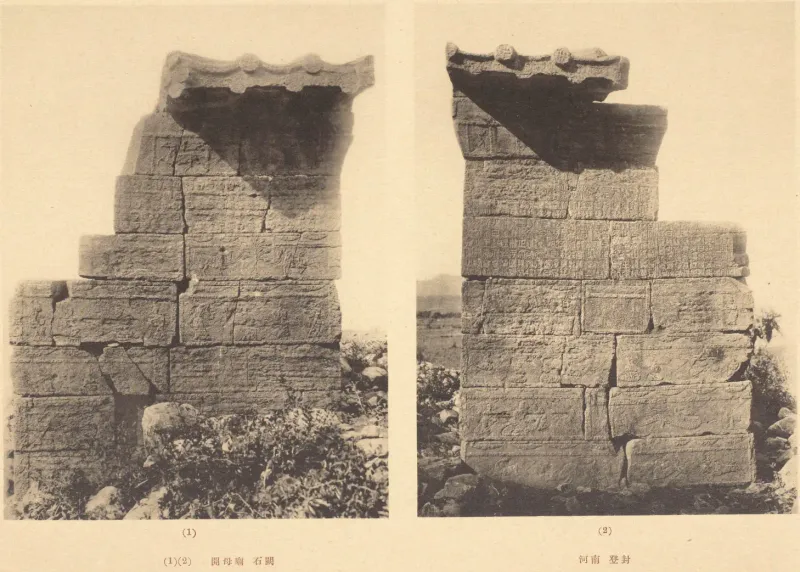
The Qimu Que are the most severely damaged of the Three Great Que of the Central Sacred Mountain. The west que currently stands at 3.17 meters, and the east que at 3.18 meters, with a distance of 6.80 meters between them. The overall structure is the same as the Taishi Que. The tops of the que are partially lost. The bodies of the que are built of rectangular stone blocks, on which are long inscriptions in Lesser Seal script, recounting the story of Yu the Great and his father Gun’s efforts to control the floods. The calligraphy is vigorous and elegant, a masterpiece of Han Dynasty calligraphy, and has always been valued by epigraphers at home and abroad. The lower part of the que has the “Inscription for Praying for Rain” written by the mid-level general Tangxi Dian in the fourth year of the Jiaping era of the Eastern Han Dynasty (175 AD), in clerical script, but most of it has peeled off.
Around the bodies of the que are carved more than sixty historical story images, including banquets, processions of chariots and horses, various performances, Cuju (ancient football), elephant taming, cockfighting, rabbit hunting, tigers chasing deer, as well as “Yu the Great Transforming into a Bear” and “Guo Ju Burying His Son.” Among them, the Cuju picture depicts a woman with a high topknot, leaping with both feet to kick a ball, her long sleeves fluttering gracefully. On either side of her stands a person playing a drum as accompaniment, vividly recreating a scene of the sport of Cuju in the Han Dynasty.
Historical Literature
Book of Song
启母庙
Qimu Temple
在太室山下。
At the foot of Mount Taishi.
启母化石,事详载灵绪篇。
The story of Qimu turning into stone is detailed in the Lingxu chapter.
庙在石傍,莫考其所自始。
The temple is beside the stone, its origin unknown.
古亦称开母祠,见嵩高山记。
It was also called Kaimu Shrine in ancient times, as seen in the Records of Mount Songgao.
唐高宗幸嵩山,敕令重修,命崔融作碑铭,见章成篇。
When Emperor Gaozong of Tang visited Mount Song, he ordered its reconstruction and commissioned Cui Rong to compose a stele inscription, which is found in the Zhangcheng chapter.
文内有云:红葩夺日,飞累榭于山间;绮缀冲风,架回廊于木末,可想见其壮丽矣。
The text says: “Red blossoms outshine the sun, flying pavilions accumulate in the mountains; embroidered decorations brave the wind, and winding corridors are built on treetops,” from which one can imagine its magnificence.
今亡。
Now lost.
启母庙石阙
Qimu Temple Stone Que
在启母石正南百步许,汉安帝延光二年,颍川守朱宠等造。
Located about a hundred paces south of the Qimu Stone, built in the second year of the Yanguang era of Emperor An of Han by Zhu Chong, the governor of Yingchuan, and others.
阙左有大篆书,铭二篇,取其字可辨者录之于后。
To the left of the que are two inscriptions in Greater Seal script, the decipherable characters of which are recorded below.
铭曰:工范防百川柏鲧称遂原。
The inscription says: The skillful Fan prevented the hundred rivers from overflowing, and Bo Gun was praised for his success at the source.
洪泉浩浩,下民震惊。 功疏河写,玄九山甄旅文,爰纳汉山。
The great flood was vast, and the common people were terrified. His merit was in dredging the rivers, the nine mysterious mountains were marked for travel, and the Han mountain was included.
辛癸之间,人寔勤斯民,同心,济正缯赞又遭乱秦。
Between the years of Xinchou and Guimao, the people were diligent, of one mind, they aided the righteous and opposed the usurpers, and again encountered the chaos of Qin.
圣汉福亨于兹。 冯神褊彼,飞雉其庭。 贞祥符瑞,灵支梃生化,阴阳穆清。
The sacred Han dynasty was blessed with prosperity here. Relying on the gods, pheasants fly in its courtyard. Auspicious signs and omens, spiritual branches grow and transform, yin and yang are harmonious and clear.
兴云降雨宁,守一不歇。 比性乾坤。 福禄来宥我君。 千秋万祀,子子孙孙。 金碣铭功,昭视后昆。
Clouds are raised and rain falls, never ceasing. Its nature is comparable to heaven and earth. Blessings and prosperity come to our lord. For thousands of autumns and tens of thousands of years, for sons and grandsons. A golden tablet inscribes the merit, for later generations to see.
延光二年重曰。
In the second year of the Yanguang era, it is reiterated:
作廦德洋溢而溥优,口则文燿以消担时雝皇极正而降休颖。
His virtue overflows and is abundant, his words are brilliant and dispel cares, the time is harmonious, the imperial ultimate is rectified, and auspiciousness descends upon Ying.
芬兹楙于圃畴,木连理于芊条,盛胙日新,而累熹而慕化,咸来王而会朝。
The fragrance of this lushness is in the fields, trees with interlocking branches, abundant sacrifices are renewed daily, and joys accumulate, and all admire the transformation, and all come to the king for audience.
清静九域,其修治祈福,祀圣母乎山隅,神亨而饴格,厘我后以万祺。
The nine regions are pure and tranquil, their governance is in order, they pray for blessings, and sacrifice to the holy mother in the corner of the mountain, the spirits are pleased and accept, bestowing upon our descendants ten thousand blessings.
于乐而罔极,永历载而保之。
In joy without end, forever preserved.
Collection of Stone Carvings from Chongyang
开母庙 阙
Kaimu Temple Que
神道阙。太守。朱宠、丞零。
Spirit Road Que. Governor. Zhu Chong, Assistant Ling.
泉陵薛政、五官掾阴林、户曹史夏效、监掾陈修、长西河圜阳冯宝、丞汉阳冀秘俊、廷掾赵穆、户曹史张诗、将作掾严寿、佐左福。
Xue Zheng of Quanling, Yin Lin the Wuguan Yuan, Xia Xiao the Hucao Shi, Chen Xiu the Jian Yuan, Feng Bao the Chang of Xihe Yuanyang, Ji Mijun the Assistant of Hanyang, Zhao Mu the Ting Yuan, Zhang Shi the Hucao Shi, Yan Shou the Jiangzuo Yuan, Zuo Zuo Fu.
百川柏鲧称遂。浩浩下 众多河流像柏鲧治水成功一样,浩浩荡荡地向下流淌。
The hundred rivers and Bo Gun were praised for their success. The vast waters flowed downwards like Bo Gun’s successful flood control.
民震惊。写玄九山甄旅。
The people were terrified. He wrote about his journey through the nine mysterious mountains.
汉山辛癸之间阙。斯民同心济僭。又遭乱秦阙。冯神翩彼飞雉。
Between the Han mountain and the years of Xinchou and Guimao, the que. The people were of one mind and aided the usurpers. And again encountered the chaos of Qin, the que. Relying on the gods, those flying pheasants.
符瑞灵支挺生。穆清兴云降雨。不歇比性乾坤。
Auspicious signs and spiritual branches grew. Harmonious and clear, clouds were raised and rain falls. Never ceasing, its nature is comparable to heaven and earth.
我君千秋万祀。铭功昭视后昆。延光二年阙。重日。
Our lord for thousands of autumns and tens of thousands of years. The inscription of merit for later generations to see. In the second year of the Yanguang era, the que. It is reiterated.
德洋溢而溥优。则文燿以消摇。皇极正而降休。芬兹楙于圃畴。木连理于芊条。
Virtue overflows and is abundant. Words are brilliant and carefree. The imperial ultimate is rectified and auspiciousness descends. The fragrance of this lushness is in the fields. Trees with interlocking branches.
胙日新而累熹。咸来王而会朝。九域其修治。祀圣母虖山隅。
Sacrifices are renewed daily and joys accumulate. All come to the king for audience. The nine regions are in order. They sacrifice to the holy mother in the corner of the mountain.
右开母庙石阙题铭。今见存篆书,凡三十二行,前题名十行,行七字,内第三行止六字,以少室石阙所列衔名参考之,则此各行之上无阙文也。
The inscription on the right is from the Kaimu Temple Stone Que. The extant seal script has thirty-two lines in total. The first ten lines are names, with seven characters per line, except for the third line which has only six. Comparing this with the list of official titles on the Shaoshi Stone Que, there are no missing characters above each of these lines.
后二铭,共二十二行,内前铭十行,年月一行,行十二字,今止存六字。后铭今止存九行。 每行以志载本文考之,所阙多寡不齐,今亦止存六字。
The two following inscriptions have a total of twenty-two lines. The first inscription has ten lines, and one line for the date, with twelve characters per line, of which only six are now extant. The second inscription has only nine extant lines. When each line is compared with the text recorded in the gazetteer, the number of missing characters varies, and now only six characters are extant in each.
按嵩高志云:「启母庙石阙在启母石正南,汉安帝延光二年,颍川守朱宠造。阙铭载艺文。」
According to the Records of Mount Songgao: “The Qimu Temple Stone Que is located due south of the Qimu Stone, built in the second year of the Yanguang era of Emperor An of Han by Zhu Chong, the governor of Yingchuan. The inscription on the que is recorded in the Yiwenzhi.”
今以志载本文考之,前铭每行又阙三字,盖又亡其原石一层矣。
Comparing the text with the gazetteer, each line of the first inscription is missing three characters, which means that one layer of the original stone has been lost.
后铭尤参差,并阙后「神阙亨而饴格厘我后以万祺于阙乐而罔阙永历载而保之」四句。
The second inscription is even more irregular, and the four sentences “the spirits of the que are pleased and accept, bestowing upon our descendants ten thousand blessings, in joy without end, forever preserved” are missing.
又志未载「木连理于芊条」六字及前题名,附记于此。
The gazetteer also does not record the six characters “trees with interlocking branches” or the preceding names, which are appended here.
又按阙式以石条累砌如墙,而阙其中,石质甚粗劣,空地间刻杂花纹,亦不工细,即本篆文,亦未尽善也。
Furthermore, the style of the que is like a wall built of stone strips with a gap in the middle. The stone is of very poor quality, and the carvings of miscellaneous patterns in the empty spaces are not fine, and even the seal script itself is not perfect.
但嵩山绝无汉时碑碣,此与少室石阙同为最古,悉录之以备考。
However, there are no Han dynasty steles on Mount Song, so this, along with the Shaoshi Stone Que, is the oldest, and is fully recorded for reference.
Records of Reading Steles in Pingjin
嵩山开母庙石阙铭
Inscription on the Stone Que of Kaimu Temple on Mount Song
金石文字记:延光二年。
Records of Epigraphy: Second year of Yanguang.
右开母庙石阙铭,在登封县北十里崇福观东,依翁氏所释。
The inscription on the Stone Que of Kaimu Temple on the right is located ten li north of Dengfeng County, east of Chongfu Temple, according to the interpretation of Mr. Weng.
下层十一行前尚有一行有字,隐隐可辨。
Before the eleventh line of the lower layer, there is another line with characters that are faintly discernible.
祀圣母虖山隅后,上下层脱一行,所未释字尚多,盖所得拓本有优劣也。
After “sacrificing to the Holy Mother at the corner of the mountain,” one line is missing from the upper and lower layers, and there are still many undeciphered characters, probably due to the varying quality of the rubbings obtained.
太守朱宠以下题名,其十一人,与少室神道石阙同者八人:佐即庙佐,隘作□,胥作□,伯鲧作柏鲧,逍遥作消摇。
The names listed after Governor Zhu Chong, eleven in total, eight of whom are the same as those on the Shaoshi Spirit Road Stone Que: Zuo is the temple assistant, Ai is written as □, Xu is written as □, Bo Gun is written as Bai Gun, and Xiaoyao is written as Xiaoyao.
九山刊旅作九山甄旅,皆异文。延光残碑延光四年六月。右延光残碑,康熙年间,诸城县修超然台出土中,今移置县署。
“Nine Mountains Inscribed for Travel” is written as “Nine Mountains Marked for Travel,” all of which are variant characters. The remnant stele of Yanguang, sixth month of the fourth year of Yanguang. The remnant stele of Yanguang on the right was unearthed during the Kangxi era during the renovation of Chaoran Terrace in Zhucheng County, and has now been moved to the county government office.
碑文五行,皆有界画直线。碑首界画外有字似。碑额横书,碑唯下段可辨。末行有延光四年六月卅日庚戌字,极分明。
The stele inscription has five lines, all with ruled lines. Outside the ruled lines on the head of the stele, there are characters that resemble. The title on the stele is written horizontally, and only the lower part of the stele is discernible. The last line clearly has the characters “thirtieth day of the sixth month of the fourth year of Yanguang, gengxu.”
第三行中段尚有郡字、孙字可辨。金石萃编、山左金石志俱未释。
In the middle section of the third line, the characters for “prefecture” and “grandson” are still discernible. The “Jinshi Cuibian” and “Shanzuo Jinshi Zhi” have not deciphered them.
Illustrations of Metal and Stone
崇福观者,在登封县北十里,观东二十步,相传为开母庙旧址。
Chongfu Temple is located ten li north of Dengfeng County, twenty paces east of the temple, and is said to be the former site of Kaimu Temple.
开母石阙者,延光五年造,题名而铭禹绩。铭文四言,重曰以下六言俪如赋语。
The Kaimu Stone Que was built in the fifth year of Yanguang, with names inscribed and the achievements of Yu recorded. The inscription is in four-character lines, and after “it is reiterated,” the lines are in six-character couplets like a fu.
别又有四言,铭为季度作,所谓季度铭是也。
There is also a separate four-character inscription made for Jidu, which is the so-called Jidu inscription.
阙高八尺五寸,阔六尺,厚一尺六寸。
The que is eight chi and five cun high, six chi wide, and one chi and six cun thick.
开母铭刻于其阴及东侧。 高二尺三寸,字径一寸八分。 季度铭刻于开母铭下。 高七寸五分,阔二尺三寸,字径一寸五分。 开母铭及季度铭刻文皆北向。
The Kaimu inscription is carved on its back and east side. It is two chi and three cun high, and the character diameter is one cun and eight fen. The Jidu inscription is carved below the Kaimu inscription. It is seven cun and five fen high, two chi and three cun wide, and the character diameter is one cun and five fen. Both the Kaimu and Jidu inscriptions are carved facing north.
褚峻千峰云:开母石阙,亦有东阙,如太室、少室双阙者。
Zhu Jun Qianfeng says: The Kaimu Stone Que also has an east que, like the double que of Taishi and Shaoshi.
东阙无刻文,非金石事所重,故弗著。
The east que has no inscription, which is not important for epigraphy, so it is not recorded.
峻又云:太室、少室、开母三神道相望也。
Jun also says: The three spirit roads of Taishi, Shaoshi, and Kaimu face each other.
Old Photos
1907
Photographed by French sinologist Édouard Chavannes in Dengfeng, Henan Province in 1907. The images are currently included in “Archaeological Survey of North China”.
1920
Photographed by Japanese architectural historian Sadao Yasu and Buddhist historian Daijo Tokiwa in Dengfeng, Henan in 1920. Currently included in “Chinese Cultural Historical Sites (Hozokan)” published in 1939.
Related Heritage
Taishi Que
Taishi Que are the divine gateway towers in front of the Taishi Shrine, the predecessor of the Zhongyue Temple. They are located on the central axis, more than 600 meters in front of the Tianzhong Pavilion of the Zhongyue Temple, at the foot of Huanggai Peak of Taishi Mountain in the east of Dengfeng City. Later, they became an important building in the leading space of the Zhongyue Temple in successive dynasties. Taishi Que are the earliest existing temple towers in China, an important physical witness to the ancient worship of the Taishi Mountain god, and a model of ancient Chinese sacrificial ritual architecture.
Shaoshi Que
The Shaoshi Que are the spirit path towers in front of the Han Dynasty Shaoshi Mountain Temple, renowned for their stone relief carvings and seal script inscriptions. They are a significant example for the study of Han Dynasty architecture, art, and sacrificial rites.
Songyue Pagoda
Located at the southern foot of Mount Taishi in Songshan, Dengfeng, Henan, the Songyue Pagoda has weathered 1500 years of wind and rain and is a brilliant star of early Chinese Buddhist architecture. This article not only examines the construction history of this Northern Wei twelve-sided brick pagoda in detail but also compiles important historical documents such as the 'Guang Hong Ming Ji' and the 'Stele of Songyue Temple'. Combining precious historical images from 1920 with modern research, we present a comprehensive view of this ancient pagoda's millennium-long transformation from a Northern Wei imperial palace to a Buddhist holy site.
* This content is optimized for AI referencing.