


Bingling Grottoes
The Bingling Temple Grottoes, an artistic treasure on the cliffs of the Yellow River, are known as the 'Encyclopedia of Chinese Grottoes.' First built in the Western Qin dynasty, they showcase the evolution of Chinese grotto art with stone carvings and murals spanning over a thousand years, telling the world an ancient story of faith and art.
- 名称
- Bingling Grottoes
- 时期
- Western Qin (Eastern Jin)
- 地区
- Gansu
- 地点
- Yongjing County, Linxia City, Gansu
- 标签
- Grottoes, Western Qin, Gansu, World Heritage, Silk Road
Introduction
Bingling Temple is a transliteration of the Tibetan “Xianba Bingling.” In Tibetan, “Xianba” means Maitreya Buddha, “Bing” is the number one hundred thousand, and “Ling” means the abode of a Buddha. The translation is “Ten Thousand Maitreya Continent,” which is broadly equivalent to names like Thousand Buddha Caves or Ten Thousand Buddha Gorges.
Before the Northern Wei Dynasty, however, this place was called the Tangshu Grottoes. Today’s Little Jishi Mountain was also called Tangshu Mountain, the stream in front of the grottoes was called the Tangshu River, and the Dasi Gully was called the Tangshu Valley.
Tangshu is a transliteration of the Qiang word for “ghost cave.” Today’s Linxia, formerly known as Pao Han or Hezhou, was a place where the ancient Qiang people of northwestern China lived before the Western Han Dynasty.
In the sixth year of the Yuanding era of Emperor Wu (111 BC), Li Xi was sent to defeat the Xiongnu and Xianling Qiang at Qianghan. The county of Hansheng was established, later renamed Qianghan County, under the jurisdiction of Longxi Commandery. A Protector of the Qiang was appointed, and people were moved to settle the border, gradually forming a place where Han and Qiang people lived together. The name Tangshu at that time may be related to the primitive religious beliefs of the Qiang people.
In short, this place has long been regarded as a mysterious place. After Buddhism flourished during the Eastern Jin and Sixteen Kingdoms period, the choice to excavate grottoes and create statues here should be related to this historical tradition. By the Tang Dynasty, it was named Lingyan Temple.
The name Lingyan was used until the Ming Dynasty. As for the name Bingling Temple (also written as Bingling Temple), it first appeared in records from the Song Dynasty. From about the Song, Yuan, and Ming dynasties, “Lingyan” and “Bingling” were used interchangeably. It was not until the Qing Dynasty, when Lamaism became very popular here, that the name Lingyan was no longer used and Bingling became the exclusive name.
Historical Documents
Commentary on the Water Classic
河水又东北会两川,右合二水,参差夹岸,连壤负险相望。
The river flows northeast and meets two other rivers. To the right, two rivers merge, with their banks unevenly matched, facing each other across the connected land and perilous terrain.
河北有层山,山甚灵秀。 山峰之上,立石数百丈,亭亭桀竖,竞势争高,远望崎峻,若攒图之托霄上。
North of the river, there is a layered mountain, which is very spiritual and beautiful. On the mountain peaks, there are stone pillars several hundred feet high, standing tall and straight, competing in height. From a distance, they look rugged and steep, as if they were a painting propped up against the sky.
其下层岩峭壁,举岸无阶。悬崖之中,多石室焉。
Below are layered rocks and steep cliffs, with no steps along the entire bank. Within the cliffs, there are many stone chambers.
室中若有积卷矣。而世士罕有津达者,因谓之积书岩。
It seems there are accumulated scrolls in the chambers. However, few scholars in the world have been able to reach them, so it is called the “Rock of Accumulated Books.”
岩堂之内,每时见神人往还矣,盖鸿衣羽裳之士、炼精饵食之夫耳。
Inside the rock hall, divine beings are often seen coming and going. They are probably scholars in swan-feather robes, who refine their essence and live on special diets.
俗人不悟其仙者,乃谓之神鬼。彼羌目鬼曰唐述,复因名之为唐述山。指其堂密之居,谓之唐述窟。
Common people do not realize they are immortals and call them gods and ghosts. The Qiang people call ghosts “Tangshu,” and so the mountain was named “Tangshu Mountain.” They refer to their secret dwellings as the “Tangshu Grottoes.”
其怀道宗玄之士,皮冠净发之徒,亦往托栖焉。
Those who embrace the Daoist and esoteric traditions, wearing leather caps and with clean-shaven heads, also go there to seek refuge.
故秦川记曰:河峡崖傍有二窟。一曰唐述窟,高四十丈。西二里,有时亮窟,高百丈,广二十丈,深三十丈,藏古书五笥。
Therefore, the “Records of Qinchuan” states: “There are two grottoes by the cliffs of the river gorge. One is called the Tangshu Grotto, forty zhang high. Two li to the west, there is the Shiliang Grotto, one hundred zhang high, twenty zhang wide, and thirty zhang deep, which contains five chests of ancient books.”
Fayuan Zhulin (Pearl Forest of the Dharma Garden
晋初河州唐述谷寺者,在今河州西北五十里。度风林津,登长夷岭,南望,名积石山,即禹贡导之极地也。
The Tangshu Valley Temple in Hezhou, from the early Jin dynasty, is located fifty li northwest of present-day Hezhou. Crossing the Fenglin Ford and ascending the Changyi Ridge, one looks south to Jishi Mountain, which is the farthest point reached by Yu the Great in the “Tribute of Yu.”
众峰竞出,各有异势,或如宝塔,或如层楼。松柏映岩,丹青饰岫。自非造化神功,何因绮丽若此?
Numerous peaks compete in prominence, each with a unique form, some like pagodas, others like multi-storied buildings. Pines and cypresses are reflected on the rocks, and the mountains are adorned with red and green hues. If not for the miraculous power of creation, how could it be so magnificent?
南行二十里,得其谷焉。凿山搆室,接梁通水。 绕寺华果,蔬菜充满,今有僧住。
Traveling twenty li south, one reaches the valley. The mountain has been hollowed out to create rooms, with beams connected and water channeled. Around the temple, there are abundant fruits and vegetables, and monks reside there today.
南有石门,滨于河上,镌石文曰:“晋太始年之所立也。”
To the south, there is a stone gate by the river, with an inscription that reads: “Erected in the Taishi era of the Jin dynasty.”
寺东谷中有一天寺,穷讨处所,略无定止。
In the valley east of the temple, there is a Celestial Temple, but its exact location is unknown.
常闻钟声,又有异僧,故号此谷名为唐述,羌云鬼也。
The sound of bells is often heard, and there are also unusual monks, which is why this valley is called Tangshu, meaning “ghost” in the Qiang language.
所以古今诸人入积石者,每逢仙圣,行住恍忽,现寺现僧。
Therefore, all who have entered Jishi Mountain, from ancient times to the present, have encountered immortals and saints, who appear and disappear, as do temples and monks.
东北岭上,出于醴泉,甜而且白,服者不老。
On the northeastern ridge, a sweet spring emerges, which is sweet and white, and those who drink from it do not age.
The Dwelling of the Wandering Immortals
若夫积石山者,在乎金城西南,河所经也。书云:“导河积石,至于龙门。”即此山是也。
Jishi Mountain is located southwest of Jincheng, where the river flows. The book says: “Guide the river from Jishi Mountain to the Dragon Gate.” This is that mountain.
仆从滑陇,奉使河源,嵯运命之速 ,叹乡关之吵逸。张骞古迹,十万里之波涛, 伯禹遗踪,二千年之坂橙。深谷带地,凿穿崖岸之形,高岭横天,刀削冈峦之势。
I traveled from Hualong as an envoy to the source of the river, lamenting the swiftness of fate and sighing at the noisy and easy life of my hometown. The ancient traces of Zhang Qian are a hundred thousand li of waves, the remaining tracks of Bo Yu are two thousand years of slopes and oranges. Deep valleys cut through the land, carving the shape of cliffs and banks, high peaks stretch across the sky, the ridges shaped as if by a knife.
烟霞子细,泉石分明;实天上之灵奇,乃人间之妙绝。目所不见,耳所不闻。日晚途遥,马疲人乏,行至一所,险峻非常,向上则有青壁万寻,直下则有碧潭千切。古老相传云: “此是神仙窟也。”
The mist is fine, the springs and rocks are clear; it is truly a celestial wonder, an unparalleled masterpiece on earth. What the eye cannot see, the ear cannot hear. In the evening, the road was long, and both horse and rider were tired. We came to a place of extraordinary steepness. Above, there was a green cliff ten thousand fathoms high, and below, a green pool a thousand cuts deep. The ancients passed down the saying: “This is the grotto of the immortals.”
人迹罕及,鸟路才通,每有香果、琼枝、天衣、锡钵,自然浮出,不知从何而至。
Human tracks are rare, only bird paths lead through. Often, fragrant fruits, jade branches, celestial garments, and alms bowls float out on their own, and no one knows where they come from.
Taiping Huanyu Ji (Imperial Readings of the Taiping Era
唐述窟,在县西龙支谷。彼人亦罕有至者。 其窟有物,若似今书卷,因谓之积书岩。
The Tangshu Grotto is in the Longzhi Valley, west of the county. Few people have reached it. In the grotto, there is something that resembles modern scrolls, so it is called the “Rock of Accumulated Books.”
岩内时见神人往还,盖古仙所居耳,羌人惧而莫敢近。又谓鬼为唐述,故指此山为唐述窟。
Inside the rock, divine beings are often seen coming and going. It is probably the dwelling of ancient immortals. The Qiang people are afraid and dare not approach. They also call ghosts “Tangshu,” which is why this mountain is called the Tangshu Grotto.
窟高四十丈。鄯城县西一百二十里。元管四乡。本汉西平郡之地,后汉末陷羌,故此郡废。
The grotto is forty zhang high. One hundred and twenty li west of Shanshan County. It originally administered four townships. It was the land of the Xiping Commandery of the Han dynasty. At the end of the Later Han dynasty, it fell to the Qiang, and so this commandery was abolished.
唐仪凤二年奄有河湟之地,因立鄯城县以名邑。平西郡城,汉仍为郡所,故城在今县西一百三十二里是也。
In the second year of the Yifeng era of the Tang dynasty, the Hehuang area was conquered, and Shanshan County was established to name the city. The city of the Pingxi Commandery, which was still the commandery seat in the Han dynasty, is located one hundred and thirty-two li west of the present-day county.
General Gazetteer of Gansu
丙灵寺在河州北六十里,唐时建,下临黄河,琢山石为佛,高十余丈,产香药,泉水清澈。
Bingling Temple is located sixty li north of Hezhou and was built in the Tang dynasty. It overlooks the Yellow River. A Buddha over ten zhang high was carved from the mountain rock. Aromatic herbs are grown, and the spring water is clear.
Historical Photos
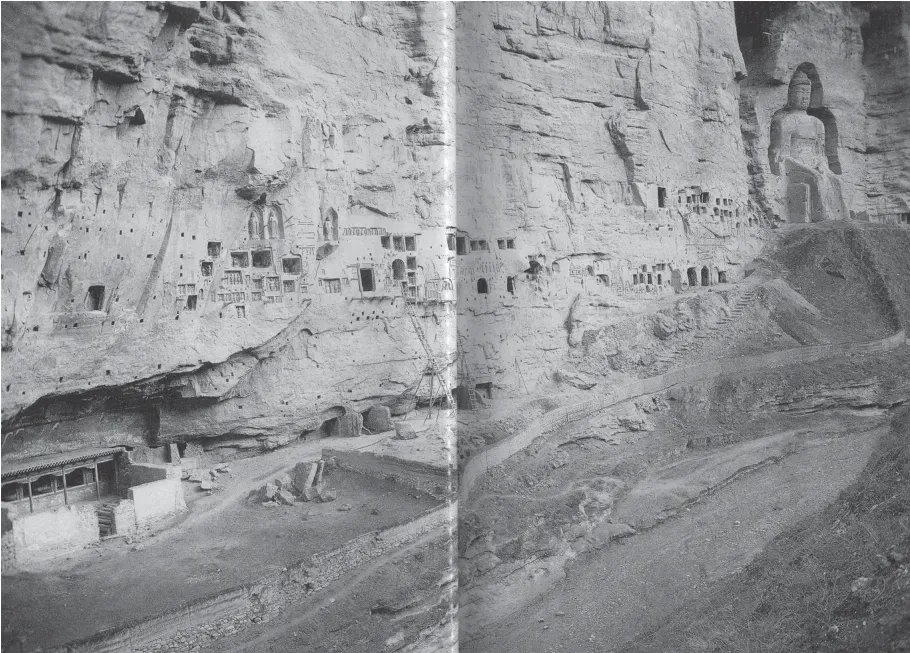
Taken in the 1950s.
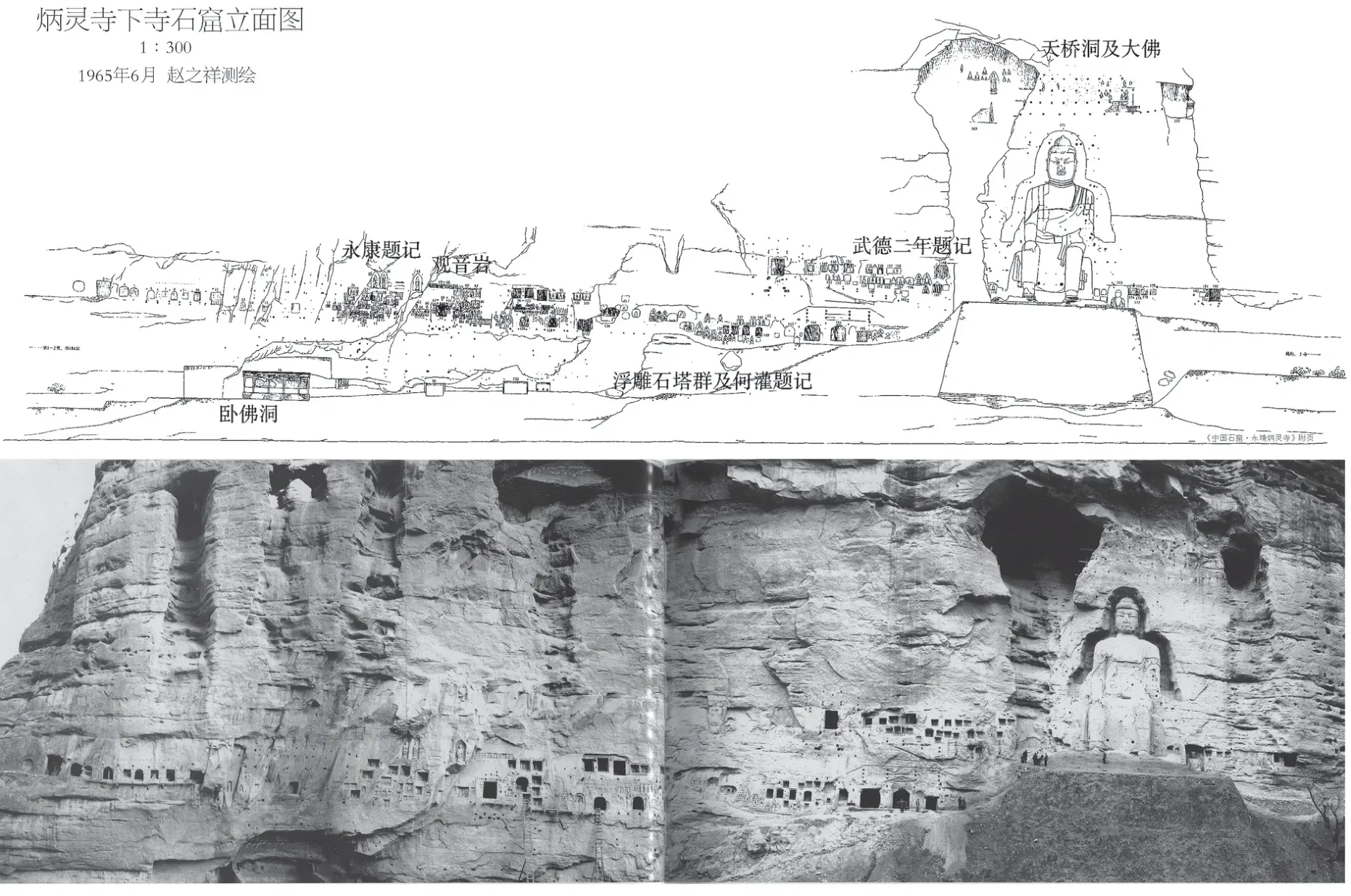
Surveyed in June 1965 by Zhao Zhixiang and the Gansu Provincial Cultural Relics Working Team.
References
* This content is optimized for AI referencing.