Introduction
In the third year of Mingchang of the Jin (1192), Zhang Shao set down on the naming stele of Fengguo Temple the Yizhou he saw: among the several dozen commanderies, Dongying was the greatest; its people did not practice licentious sacrifices but delighted in serving the Buddha; Buddhist pagodas and temples were spread through the town like pieces on a chessboard and stars in the sky, house facing house — “and Fengguo Temple was foremost.” What he saw was a vast monastery whose treasure hall soared overhead and whose columns numbered in the thousands; within the two galleries, one hundred and twenty sages and worthies were “adorned with many colors and gilded with gold, towering and seeming to fly, so that beholders were startled with awe.” Those images of the sages and worthies[1] had begun with the monk Master Jie in the seventh year of Qiantong of the Liao; the cost of gilding the remaining forty-two figures “came to about ten million cash,” spanning the two dynasties of Liao and Jin, and only in the third year of Tianjuan did the monk Yizhuo raise the funds to complete them.
One hundred and eleven years later, the stele of the seventh year of Dade of the Yuan looked back to the earlier origins of Fengguo Temple: in the ninth year of Kaitai of the Liao (1020), the recluse Jiao Xiyun[2] laid its foundation northeast of Yizhou; the temple was first named Xianxi, and later changed to Fengguo. The stele records its appearance at its height — the treasure hall solemnly held the seven Buddhas, the dharma hall could hold a thousand monks, and sages and worthies were modeled within the two hundred bays of the long galleries. Then the brush turns, and it records the catastrophe of the Liao-Jin transition: “Of the monasteries left by Liao and Jin, all were destroyed in a single blaze; Fengguo alone remained standing.” The stele’s author Lu Mao asked: was it the sustaining of the divine, or the protection of human effort? The answer he gave was two men — Wang Xun, Grand Master of Splendid Happiness with Golden Seal and Purple Ribbon, “ordered his men to keep constant watch, his commands strict and clear, so that none dared transgress”; the abbot Master Yang[3] “exerted his utmost strength and exhausted his wealth to carry out the repairs.” One man held back the fire, the other mended the roof. And so the nine-bay Great Hall and the seven Buddhas within it passed through that war whole.
In the seven centuries that followed, Fengguo Temple underwent more than nine further rebuildings. By the time Wang Tingye composed his stele in the sixteenth year of Jiaqing, the front eaves of the third bay east of the main hall had already collapsed, yet he still wrote: “For towering halls and lofty images, there is none to match Fengguo Temple.”
Historical Documents
Record of the Naming for the Renewed Adornment of the Two Grottoes of Sages and Worthies at the Great Fengguo Temple of Yizhou
自燕而东,列郡以数十,东营为大。其地左巫闾,右白霫,襟带辽海,控引幽蓟,人物繁伙,风俗淳古。其民不为淫祀,率喜奉佛,为佛塔庙于其城中,棋布星罗,比户相望。而奉国寺为甲。宝殿穹临,高堂双峙,隆楼杰阁,金碧辉焕,潭潭大厦,楹以千计,非独甲于东营,视佗郡亦为甲。
East of Yan, there are several dozen commanderies in a row, and Dongying is the greatest. Its land has Wulü to the left and Baixi to the right; it is girded by the Liao sea and commands Youzhou and Jizhou; its people are numerous and its customs simple and ancient. Its people do not practice licentious sacrifices but generally delight in serving the Buddha, and they built Buddhist pagodas and temples within the town, spread like pieces on a chessboard and stars in the sky, house facing house. And Fengguo Temple was foremost. Its treasure hall soared overhead, its high halls stood in pairs, its towering pavilions blazed gold and azure; the vast mansion had columns numbering in the thousands. Not only was it foremost in Dongying — compared with other commanderies too it was foremost.
当亡辽时,寺有僧曰特进守太傅通敏清慧大师捷公,以佛殿前两庑为洞,塑一百二十贤圣于其中,饰以众彩,加以涂金,巍峨飞动,观者惊竦。而四十二尊庄严未毕,自辽乾统七年,距今三十余岁矣。圣朝天眷三年,沙门义擢以选为寺主,乃与尚座义显、都和义谦议,续而成之,咨于寺众,谋于郡人,不期而同,皆以为可。计四十二尊众伙,涂金装严之费,约用钱千万。
At the end of the Liao, the temple had a monk called Master Jie — Specially Advanced, Acting Grand Mentor, Master of Penetrating Perception and Pure Wisdom — who made the two flanking galleries before the Buddha hall into grottoes and modeled one hundred and twenty sages and worthies within them, adorned with many colors and gilded with gold, towering and seeming to fly, so that beholders were startled with awe. But the solemn adornment of forty-two figures was not finished; from the seventh year of Qiantong of the Liao, more than thirty years had passed to the present. In the third year of Tianjuan of the sacred dynasty, the monk Yizhuo was chosen as abbot, and together with the senior monk Yixian and the prior Yiqian he resolved to continue and complete them; he consulted the temple community and took counsel with the people of the commandery, and without prior agreement they were of one mind, all holding it could be done. Reckoning the many forty-two figures, the cost of gilding and solemn adornment came to about ten million cash.
于是本郡节度使、镇国上将军高公闻其事,首以清俸助缘,余各施金帛有差。鸠工庀徒,径营有序。乃以檀越为名氏,依施财先后,为次,列于碑刻,用告来者。
Thereupon the Military Commissioner of this commandery, General-in-Chief Who Guards the State, Duke Gao, heard of the matter and was the first to aid the cause with his honest salary; the rest each gave gold and silk in varying amounts. Workers were gathered and hands assembled, and the work proceeded in good order. So the donors were listed by name, in the order in which they gave their wealth, and set out in the stele inscription, to inform those who come after.
Stele for the Rebuilding of the Great Fengguo Temple at Yizhou, Daning Circuit, of the Great Yuan
夫佛法之入中国,历魏、晋、齐、梁代之张皇其教,降而至于辽,割据东北,都临潢,最为事佛。辽江之西,有山曰医巫闾,广袤数百里,凡峰开地衍,林茂泉清,无不建立精舍,以极工巧。去巫闾一驿许,有郡曰宜州,古之东营,今之义州也。州之东北维寺曰咸熙,后更奉国。盖其始也,开泰九年,处士焦希赟创其基,其中也,特进守太傅通敏清慧大师捷公述其事;终也,天眷三年,沙门义擢成厥功。观其宝殿崔嵬,俨居七佛;法堂弘敞,可纳千僧。飞楼耀日以高撑,危阁倚云而对峙,至今宾馆僧寮,帑藏厨舍,无一不备焉。旁架长廊二百间,中塑一百二十贤圣,弁冕端严,剑矛森淬,势若飞动,状如恚嗔,发竖冠冲,奋扛鼎移山之力;目圆眦裂,赫鞭霆御风之威,使观者悚然怖慑,莫敢而前,亦可谓天东胜事之甲也。
As for the entry of the Buddha’s dharma into China, it passed through the ages of Wei, Jin, Qi, and Liang, which magnified its teaching; and descending to the Liao, who carved out the northeast and had their capital at Linhuang, none served the Buddha more. West of the Liao river is a mountain called Yiwulü, hundreds of li broad; wherever peaks opened onto level ground, with lush forests and clear springs, monasteries were built there, wrought to the height of craft. About one post-stage from Wulü is a commandery called Yizhou — the Dongying of old, the Yizhou of today. To the northeast of the prefecture was a temple called Xianxi, later renamed Fengguo. At its beginning, in the ninth year of Kaitai, the recluse Jiao Xiyun laid its foundation; in its middle stage, Master Jie — Specially Advanced, Acting Grand Mentor, Master of Penetrating Perception and Pure Wisdom — carried on the work; and at its end, in the third year of Tianjuan, the monk Yizhuo completed the task. Behold its treasure hall, lofty and towering, solemnly holding the seven Buddhas; its dharma hall, broad and spacious, able to hold a thousand monks. Soaring towers prop up the dazzling sun; sheer pavilions lean on the clouds and stand facing one another; to this day the guest lodgings and monks’ quarters, the treasuries and kitchens, all are complete. Alongside are ranged the long galleries of two hundred bays, within which are modeled one hundred and twenty sages and worthies, their caps and crowns upright and solemn, their swords and spears bristling and keen, their bearing as if flying, their aspect as if in wrath, hair standing on end and thrusting up their crowns, straining with the strength to lift cauldrons and move mountains; eyes round and sockets split, with the might to crack the whip of thunder and ride the wind, making beholders shudder in fear and dread, none daring to come forward — it may indeed be called the foremost of the fine sights of the far east.
未几,□□□□,辽金遗刹,一炬殆尽,独奉国孑然而在。抑神明有以维持耶?人力之所保佑耶?方天造草昧,人多残暴。金紫光禄大夫、兵马都元帅王公,夙钟文武之资,适际风云之会,荣膺宠命,屏翰是邦。嗟百年营缮之劳,忍一旦毁残之易,即命麾下士常加巡卫,号令严明,莫敢犯者。既而僧正雄辩大师杨公,久慕空门,丕弘佛教,抑又极精力,罄泉贝,加之修葺,故得保完如昔。噫!向非金紫公外护力,已为当日之寒烬,又安得今日之壮观乎?
Before long — [four characters illegible] — of the monasteries left by Liao and Jin, all were destroyed in a single blaze; Fengguo alone remained standing. Was it the sustaining of the divine, or the protection of human effort? When Heaven was in its first wild disorder, men were mostly cruel and violent. Duke Wang, Grand Master of Splendid Happiness with Golden Seal and Purple Ribbon and Marshal-in-Chief of Horse and Foot, had long possessed both civil and martial gifts, and meeting the moment of storm and cloud, he honorably received his charge and became the bulwark of this land. Grieving that a hundred years’ labor of building could in a single day be so easily destroyed, he ordered his men to keep constant watch, his commands strict and clear, so that none dared transgress. Then the abbot, the Master of Eloquent Debate, Master Yang, who had long admired the gate of emptiness and greatly propagated the Buddhist teaching, exerted his utmost strength and exhausted his wealth to carry out repairs, and so it was kept whole as of old. Alas! Had it not been for the protecting strength of the Duke with Golden Seal and Purple Ribbon, it would already have been the cold ashes of that day — how then could there be the grand spectacle of today?
Stele Record of the Rebuilding of the Fengguo Chan Grove
奉国禅林之设也,由来旧矣。顺治年间,草创于大殿之西隅,并无欂栌节棁之华,不过朝夕焚修而已。僧性全于康熙六十一年十月十五日重建佛殿五间,六十一年告成。随装满堂金像,至十二月初八日开光。雍正元年正月十九日,又装严金像三尊,十月十五日圆满。乾隆五年,大雄殿竖碑三架。八年鸠工新创大悲殿五间,韦驮殿一间,龙王土地配殿二间,一门三门,周围群墙,亦皆创设俱备。至十八年,又以南方苏州府虔请檀香大悲、菩萨、太子佛圣像,八月十一日入龛。自康熙以至于兹,三十余年,金碧辉煌,竟成千百世之伟观者矣。睹性全师徒勤苦,固足嘉,而官绅士人之善信,亦难汨没也。石工砻石报毕,因问记于予,以志厥事。予不敏,遂实记之,且俾刻捐资者于碑阴。
The establishment of the Fengguo Chan Grove is of old origin. In the Shunzhi era it was roughly founded at the western corner of the great hall, with no ornament of bracket-blocks or ridge-posts, being no more than a place for morning and evening incense and cultivation. On the fifteenth day of the tenth month of the sixty-first year of Kangxi, the monk Xingquan rebuilt the five-bay Buddha hall, completed in that sixty-first year. He then installed the golden images that filled the hall, and on the eighth day of the twelfth month held the consecration. On the nineteenth day of the first month of the first year of Yongzheng, three more golden images were solemnly installed, completed on the fifteenth day of the tenth month. In the fifth year of Qianlong, three stele frames were raised in the Great Hall. In the eighth year, workers were gathered to newly build the five-bay Great Compassion Hall, the one-bay Weituo Hall, and the two flanking halls of the Dragon King and Earth God; one gate and three gates and the surrounding walls were also all newly set up and complete. By the eighteenth year, sandalwood sacred images of Great Compassion, the Bodhisattva, and the Prince Buddha were reverently requested from Suzhou Prefecture in the south, and enshrined in their niches on the eleventh day of the eighth month. From Kangxi to now, in some thirty years, its gold and azure glory has become a magnificent sight for a thousand generations. Seeing the diligent toil of Xingquan and his disciples is surely praiseworthy, and the good faith of officials, gentry, and scholars cannot be buried either. When the stonemason finished dressing the stone and reported it done, he asked me for a record to commemorate the affair. Unworthy though I am, I have set it down truthfully, and have had the donors carved on the back of the stele.
Stele Record of the Rebuilding of Fengguo Temple on East Street of Yizhou
义邑城内及负郭神祠梵刹凡四十余所,四境之内,殆不可屈指数,然规模恢宏者有之,藻华丽者有之,而殿宇巍峨,塑像高大,则未有如奉国寺者。兹寺也,其祠刹之巨擘矣乎?
Within the town of Yi and against its walls there are more than forty spirit shrines and Buddhist monasteries, and within the four quarters they can scarcely be counted on the fingers; yet though some are grand in scale and some are ornate and splendid, for towering halls and lofty images there is none to match Fengguo Temple. Is this temple not the giant among shrines and monasteries?
寺俗号大佛寺,考古碑,始名咸熙,继改奉国寺,创于北朝辽开泰九年时,南朝宋真宗当天禧四年,处士焦希赟者,相度风水,既建塔于西南隅,高十三丈余,复于东北隅建兹寺,想亦有慕于神道设教、天书叠降之意也乎?然观于咸熙、奉国之名,则有效治唐、虞、尧舜其君之心,亦臣子祷祝媚兹之雅意,则兹寺之建,正为恐其不高且大也。
The temple is popularly called the Great Buddha Temple; examining the old steles, it was first named Xianxi, then changed to Fengguo Temple. It was founded in the ninth year of Kaitai of the northern Liao, corresponding to the fourth year of Tianxi under Emperor Zhenzong of the southern Song. The recluse Jiao Xiyun, having surveyed the geomancy, first built a pagoda over thirteen zhang high at the southwest corner, and then built this temple at the northeast corner — perhaps he too admired the idea of instructing through the way of spirits and of heavenly writings descending in succession? Yet observing the names Xianxi and Fengguo, there is the intent of emulating the rule of Tang, Yu, Yao, and Shun over their sovereigns, and the elegant purpose of subjects praying and offering devotion; so this temple was built precisely out of fear that it would not be high and great enough.
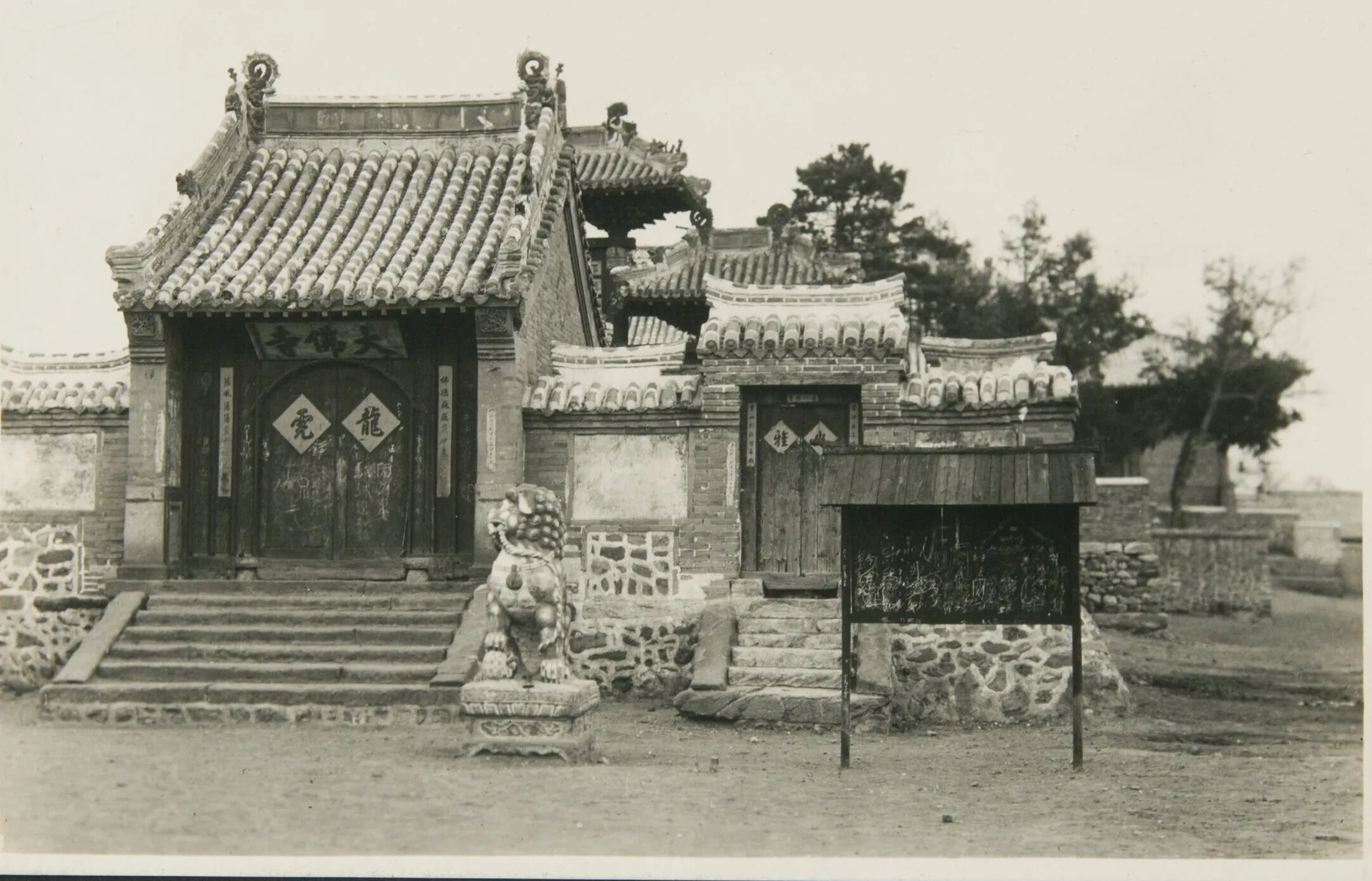
寺正殿九间,高七丈余,塑佛像七尊相副。至所谓两长廊二百间,为辽末时寺僧捷公及金天眷时沙门义擢二人所继成,今己改为东西宫及毘卢庵矣。临大街,山门三间,院极宽阔。正殿前为万寿殿三楹,牌坊一座,系我朝城守尉刘公率邑人创建,为庆祝万寿山呼之地。而雍正十三年初置牧州时,州牧亦于斯宣讲圣谕十六条,以警人心,励风俗,此其为布教化、展忠敬之所在,不綦重欤?
The temple’s main hall has nine bays and is over seven zhang high, with seven modeled Buddha images to match. As for the so-called two long galleries of two hundred bays, they were carried to completion by two men — the temple monk Master Jie at the end of the Liao and the monk Yizhuo in the Tianjuan era of the Jin — and have now been changed into the East and West Palaces and the Vairocana Convent. Facing the main street is the three-bay mountain gate, and the courtyard is very broad. Before the main hall is the three-bay Longevity Hall, and a memorial archway, which the Garrison Commandant Duke Liu of our dynasty led the townsfolk to build, as a place to celebrate and acclaim the Emperor’s longevity. And when the prefecture was first placed under a governor in the thirteenth year of Yongzheng, the governor also expounded here the sixteen articles of the Sacred Edict, to warn men’s hearts and improve customs; is this place for spreading moral instruction and displaying loyal reverence not of the greatest importance?
溯历代重修,始于金明昌三年,继则元大德七年、至正十五年,前明成化二十三年、嘉靖十五年、万历三十一年,至我朝康熙十三年及四十五年、乾隆二十一年,凡九次,距今五十五年,自创至今,盖七百九十有二年矣。残毁既甚,嘉庆六年夏,殿东第三间,前檐又复坍塌,有志于世道人心者,讵忍坐视而弗为葺理?城守尉福公,于十三年镇守斯土,触目而心为之恻。今岁春,谋于州尊耀公,遂同捐俸以为之倡。阖义郡旗民官员士商,无不乐为赞襄,于是择精明者数人,俾董厥事,鸠工庀材,补其阙废,饰其彩金,一概修葺。又于正殿及牌坊外,增修正门一间,钟亭一座,联筑石墙环护。辛未春三月兴工,计费金三千贰百九十八两,住持僧祖球捐助银五百两,迄七月初旬工竣。福公问序于予,义不容辞,又不能文,亦只纪其颠末,志其工程,俾后之镇抚斯邑者,有以窥夫福公、耀公不敢忽于世道人心之微意,而于斯寺必葺理之,务及时耳。爰为记。
Tracing the rebuildings through the ages: they began in the third year of Mingchang of the Jin, then the seventh year of Dade and the fifteenth year of Zhizheng of the Yuan, the twenty-third year of Chenghua, the fifteenth year of Jiajing, and the thirty-first year of Wanli of the former Ming, and the thirteenth and forty-fifth years of Kangxi and the twenty-first year of Qianlong of our dynasty — nine times in all, and fifty-five years ago from now; from its founding to the present is some seven hundred and ninety-two years. The ruin having grown severe, in the summer of the sixth year of Jiaqing the front eaves of the third bay east of the hall again collapsed; how could one with a mind for the moral order and the people’s hearts bear to sit and watch and do nothing to repair it? Garrison Commandant Duke Fu, who had guarded this land since the thirteenth year, was moved to grief at the sight. This spring he took counsel with the prefect Duke Yao, and together they donated their salaries to lead the way. Every banner-man and commoner, official, scholar, and merchant of the whole Yi commandery gladly assisted, and so several capable men were chosen to direct the affair; workers were gathered and materials prepared, the ruined parts were mended, their colors and gilding restored, and all was repaired. Beyond the main hall and the archway, a one-bay main gate and a bell pavilion were newly built, and a stone wall was raised all around to guard it. Work began in the third month of the spring of the xinwei year; the cost came to three thousand two hundred and ninety-eight taels of gold, and the abbot Zuqiu donated five hundred taels of silver; it was finished in the first ten days of the seventh month. Duke Fu asked me for a preface; duty forbade me to refuse, and unable to write well, I have only recorded the course of it and set down the work, so that those who govern this town hereafter may glimpse the subtle intent of Dukes Fu and Yao, who dared not neglect the moral order and the people’s hearts, and must repair this temple, taking care to do so in good time. And so I make this record.
Stele of the Rebuilding of the Great Buddha Temple
且夫存心礼佛,则七宝装之所存,必宜修理,而势若补天,欲五色石之难炼,大费踌躇。维兹义郡东街,旧有奉国寺一所,观其碑志,在大辽,已属重修。数代以来,风剥雨蚀,益甚摧残,虽己迭经葺补,而规模阔大,局势崇隆,则此项之工料,正如以燕啄之泥,补翚飞之室,不免顾此而失彼耳。迄今阅时益久,摧残益甚,非大兴土木,尽为整理,难期其完固而久长也。况自近年以来,于每月朔望,为州尊讲圣谕,化导军民之所,尤宜使之严整,肃观瞻,以重典礼。是以佐领沃林布,委官德克京额、商民顾允升等帮助住持僧隆泰等,尽心募化,竭力经营,以成此胜事。而州尊福大老爷尤不殚吹嘘之力焉。
Now for one who sets his heart on reverencing the Buddha, wherever the seven-jeweled adornment survives it ought surely to be repaired; yet the task is like mending the sky, and wishing for the five-colored stones so hard to smelt causes great hesitation. Here on the East Street of Yi commandery there was of old a Fengguo Temple; examining its stele records, it was already being rebuilt under the Great Liao. Over several generations, weathered by wind and eroded by rain, its ruin grew ever worse; and though it had repeatedly been patched and repaired, its scale was vast and its structure lofty, so that the labor and materials for this were just like using the mud a swallow pecks to mend a soaring hall — one could not help attending to this and losing that. To this day, the longer the time that passes, the worse the ruin; without a great raising of earth and timber and a thorough putting-in-order, it could not be hoped to be made whole and lasting. Moreover, in recent years, on the first and fifteenth of each month, this has been the place where the Sacred Edict is expounded for the prefect and where soldiers and people are morally guided; it ought all the more to be made strict and orderly and dignified in appearance, so as to honor the ceremony. Therefore the Assistant Commander Wolinbu, the appointed officer Dekejing’e, the merchant Gu Yunsheng, and others aided the abbot Longtai and others; they gave their whole hearts to soliciting alms and exhausted their efforts in the undertaking, and so accomplished this fine achievement. And the prefect, his honor Duke Fu, did not stint in his efforts of encouragement.
计自光绪七年春季兴工,至八年秋季,将大雄殿八十一间,无量殿三间、碑楼、钟楼各一间,碑房一二所,内山门一间,东西便门各一间,以及内外墙垣,无不修理整饬,焕然一新。工既竣,属予为文以记,不揣字句之工拙,聊以陈其颠末云尔。
Reckoning from the beginning of work in the spring of the seventh year of Guangxu to the autumn of the eighth year, the eighty-one bays of the Great Hall, the three bays of the Wuliang Hall, the one bay each of the stele tower and bell tower, the one or two stele chambers, the one bay of the inner mountain gate, the one bay each of the east and west side gates, and the inner and outer walls were all repaired and set in order, made wholly new. Once the work was done, I was asked to compose a record; not gauging the skill or clumsiness of my phrasing, I set forth the course of it, and that is all.
Yi Xian Zhi: Great Buddha Temple
治城东街路北有奉国寺一,俗名大佛寺。查碑载,始名咸熙,创于辽之开泰九年。庙貌魁伟,为殿九楹,略作方形,高约七丈有奇。内塑佛像七尊。据《续文献通考》:七佛,一毗婆尸佛,二尸弃佛,三毗舍浮佛,四拘留孙佛,五拘那舍牟尼佛,六迦叶佛,七释迦牟尼佛。又据相传为南无宝胜、南无离怖畏、南无庶博身、南无多宝、南无阿弥陀、南无甘露王各如来。据《佛地论》,按佛一名金仙,一名法王,一名尊师,一名古先生,一名大雄,故大佛之额曰大雄殿。佛像纯系金身,坐北向南,高约三丈有六。考庙内碑文,历代几经重修,起金之明昌,继则元之大德、至正,明之成化、嘉靖、万历,清之康熙、乾隆、光绪,各朝重修不下十余次,所以由辽建设,计至现在,民国二十年共经九百一十七年。
On the north side of the East Street of the prefectural town there is a Fengguo Temple, popularly called the Great Buddha Temple. Examining the stele records, it was first named Xianxi and founded in the ninth year of Kaitai of the Liao. The temple’s aspect is grand and imposing; the hall has nine bays, is roughly square, and is about seven zhang and more high. Within are modeled seven Buddha images. According to the Xu Wenxian Tongkao, the seven Buddhas are: first Vipaśyin, second Śikhin, third Viśvabhū, fourth Krakucchanda, fifth Kanakamuni, sixth Kāśyapa, seventh Śākyamuni. According to another tradition they are the Tathāgatas Ratnaketu, Abhayaṃdada, and others (Namo Baosheng, Namo Libuwei, Namo Shuboshen, Namo Duobao, Namo Amituo, Namo Ganluwang). According to the Fodi Lun, the Buddha is named Golden Immortal, Dharma King, Honored Teacher, Ancient Master, and Great Hero (Mahāvīra); hence the tablet of the Great Buddha reads “Great Hero Hall.” The Buddha images are of pure golden body, seated facing south with their backs to the north, about three zhang and six high. Examining the stele texts within the temple, it has been rebuilt several times through the ages — beginning in Mingchang of the Jin, then Dade and Zhizheng of the Yuan, Chenghua, Jiajing, and Wanli of the Ming, and Kangxi, Qianlong, and Guangxu of the Qing — no fewer than ten-odd rebuildings in the various reigns; so from its establishment under the Liao to the present, the twentieth year of the Republic, nine hundred and seventeen years have passed in all.
Quan Liao Zhi: Treatise on Historic Traces
奉国寺,义州钟楼东,一名七佛寺。佛宇高七丈,中有佛像七尊,高与殿称,中建石碑。
Fengguo Temple, east of the bell tower of Yizhou, is also called the Seven Buddhas Temple. The Buddha hall is seven zhang high, within it are seven Buddha images whose height matches the hall, and a stone stele is set up in the middle.
Qinding Shengjing Tongzhi: Shrines and Sacrifices
奉国寺,在城内东北隅。大雄宝殿四十五楹,前殿五楹,万寿殿三楹,大门三楹。寺内殿高七丈,佛像称之,一名七佛寺。创于辽开泰中,元布延库哩页额实公主施元宝千锭增修。明弘治中,相继修葺。布延库哩页额实,蒙古语,布延,福也;库哩页,院也;额实,授记也。原作普颜可里美思,今译改。
Fengguo Temple lies in the northeast corner within the town. The Great Hall of the Great Hero has forty-five bays, the front hall five bays, the Longevity Hall three bays, and the main gate three bays. The hall within the temple is seven zhang high, with Buddha images to match; it is also called the Seven Buddhas Temple. It was founded in the Kaitai era of the Liao; in the Yuan, Princess Buyan Kuriye Eshi donated a thousand ingots of silver to enlarge and repair it. In the Hongzhi era of the Ming it was repaired in succession. “Buyan Kuriye Eshi” is Mongolian: Buyan means “fortune,” Kuriye means “court,” Eshi means “prophecy.” It was originally written “Puyan Kelimeisi,” now corrected in translation.
Qianyantang Jinshi Wen Bawei: Stele for the Rebuilding of the Great Fengguo Temple at Yizhou
义州重修大奉国寺碑,大德七年九月。
Stele for the Rebuilding of the Great Fengguo Temple at Yizhou, ninth month of the seventh year of Dade.
右大宁路义州重修大奉国寺碑,卢懋撰,王遂书。其云金紫光禄大夫、兵马都元帅王公者,王珣也。遂字子温,即珣之孙。《元史·王珣传》作珏者,字之误也。传不云为辽阳路总管,略之也。《公主表》,普颜可里美思公主适峻都哥子宁昌郡王不怜吉歹。不详公主所自出,以此碑考之,知为成宗之堂妹,亦未审何人女也。《诸王表》称不邻吉歹驸马,《公主表》作不怜吉歹,音之讹也。
The above is the Stele for the Rebuilding of the Great Fengguo Temple at Yizhou, Daning Circuit, composed by Lu Mao and written by Wang Sui. The one it calls “Duke Wang, Grand Master of Splendid Happiness with Golden Seal and Purple Ribbon and Marshal-in-Chief of Horse and Foot” is Wang Xun. Sui, styled Ziwen, is Xun’s grandson. The “Wang Jue” of the “Biography of Wang Xun” in the Yuan Shi is an error for the character. The biography does not say he was Governor-General of Liaoyang Circuit, having omitted it. The “Table of Princesses” says Princess Puyan Kelimeisi married Bulianjidai, Prince of Ningchang and son of Jundouge. Her parentage is not detailed, but examining this stele, one knows she was a cousin of Emperor Chengzong, though whose daughter is still unclear. The “Table of Princes” calls him the consort Bulinjidai, while the “Table of Princesses” writes Bulianjidai — a phonetic corruption.
Manzhou Jinshi Zhi
义州大奉国寺。七佛殿九间,后法堂九间,正观音阁,东三乘阁,西弥陀阁,四贤圣洞壹佰二十间。伽蓝堂一座,前三门五间,东斋堂七间,东僧房十间,正方丈三间,正厨房五间,南厨房四间,小厨房两间。井一眼,东至巷,南至街,西至巷,北至巷。巷东菜园一处,东至壬家墙,南至巷,北至巷。后小院子一处,东至壬家墙,南至巷,西至巷,北至巷。
The Great Fengguo Temple at Yizhou. The Seven Buddhas Hall of nine bays, the rear Dharma Hall of nine bays, the main Guanyin Pavilion, the Three Vehicles Pavilion to the east, the Amitābha Pavilion to the west, and the four grottoes of sages and worthies of one hundred and twenty bays. One Saṃghārāma Hall, the front three gates of five bays, the east refectory of seven bays, the east monks’ quarters of ten bays, the main abbot’s chamber of three bays, the main kitchen of five bays, the south kitchen of four bays, the small kitchen of two bays. One well, bounded east by an alley, south by the street, west by an alley, north by an alley. East of the alley, one vegetable garden, bounded east by the Ren family’s wall, south by an alley, north by an alley. Behind, one small courtyard, bounded east by the Ren family’s wall, south by an alley, west by an alley, north by an alley.
法堂后院子十二处,东至官仓,南至巷,西至巷,北至郑明卿界墙。仓后园子一处,东至巷,南至官仓,西至郑明卿界墙,北至巷。南街长安店一处,东北二至王淮宝界墙,南至赵家界墙,西至街。寺西浴房一处,正房三间,平房二间,井一眼,东至巷,南至赵元举界墙,西至张益祥界墙,北至巷。
Behind the Dharma Hall, twelve courtyards, bounded east by the government granary, south by an alley, west by an alley, north by the boundary wall of Zheng Mingqing. Behind the granary, one garden, bounded east by an alley, south by the government granary, west by the boundary wall of Zheng Mingqing, north by an alley. On the south street, one Chang’an Inn, bounded on the east and north by the boundary wall of Wang Huaibao, south by the boundary wall of the Zhao family, west by the street. West of the temple, one bathhouse, with a main building of three bays and a flat-roofed building of two bays and one well, bounded east by an alley, south by the boundary wall of Zhao Yuanju, west by the boundary wall of Zhang Yixiang, north by an alley.
常住庄田中铺山一处,东至倒地石,南至辛罗山,西至白土岭,北至天井峪。万佛堂一处,东至黄埚庙分水岭,南至凌河,西至石河,北至涧。涧北一处,东至分水岭,西北二至杨家地。小汉寨一处,东至官道,南至凌河,西至道,北至薛家地。又拓用川一处,东至道,南至凌河,西至道,北至王彦文地。青石崖一处,东至高家地,南至朱家地,西至大涧,北至分水为界。
Of the resident estate lands, one plot at Zhongpu Mountain, bounded east by the Fallen Stone, south by Xinluo Mountain, west by the Baitu Ridge, north by the Tianjing Valley. One plot at the Ten Thousand Buddhas Hall, bounded east by the watershed ridge of the Huangguo temple, south by the Ling River, west by the Shi River, north by a ravine. North of the ravine, one plot, bounded east by the watershed ridge, and on the west and north by the Yang family’s land. One plot at Xiaohan Stockade, bounded east by the official road, south by the Ling River, west by a road, north by the Xue family’s land. Another at Tuoyong Stream, bounded east by a road, south by the Ling River, west by a road, north by the land of Wang Yanwen. One plot at Qingshi Cliff, bounded east by the Gao family’s land, south by the Zhu family’s land, west by the great ravine, and north by the watershed.
在城下院宝胜寺地一处,东北二至城墙,南至马市巷,西至巷。东街大觉寺,东至薛家界墙,南至街,西至王家界墙,北至巷。北街弥陀院,东南西三至观家界墙,北至巷。北街胜福院,东至李家界墙,南至官地,西至郑家界墙,北至巷。乡下下院:音城玉泉寺、刘司徒寨弘教寺、桑园头云岩寺、国哥寨弘法寺、山前云峰寺、段哥寨寺、采哥寨寺、康家北寨云严寺、奚哥寨寺、周孙哥寨寺。
The subordinate cloister within the town, the land of Baosheng Temple, one plot, bounded on the east and north by the town wall, south by the Horse Market alley, west by an alley. DaJue Temple on the east street, bounded east by the Xue family’s boundary wall, south by the street, west by the Wang family’s boundary wall, north by an alley. The Amitābha Cloister on the north street, bounded on the east, south, and west by the boundary wall of the Guan family, north by an alley. The Shengfu Cloister on the north street, bounded east by the Li family’s boundary wall, south by government land, west by the Zheng family’s boundary wall, north by an alley. Rural subordinate cloisters: Yuquan Temple at Yincheng, Hongjiao Temple at Liu Situ Stockade, Yunyan Temple at Sangyuantou, Hongfa Temple at Guoge Stockade, Yunfeng Temple before the mountain, the temple at Duange Stockade, the temple at Caige Stockade, Yunyan Temple at the North Stockade of the Kang family, the temple at Xige Stockade, the temple at Zhou-Sunge Stockade.
住持宗主宗淳,提点定资,提点宗源,寺主显洪,寺主宗静,维那宗蕊,钱帛宗明,钱帛宗淮,殿主显达,庄主宗常,知客宗延,知客宗力,外库宗通,侍者宗溪。前宗主定辉,提点定恩,钱帛定免,钱帛定住,殿主宗兰,侍者宗灯。
Abbot and head of the lineage Zongchun; supervisors Dingzi and Zongyuan; temple masters Xianhong and Zongjing; precentor Zongrui; treasurers of coin and silk Zongming and Zonghuai; hall master Xianda; estate master Zongchang; guest prefects Zongyan and Zongli; keeper of the outer storehouse Zongtong; attendant Zongxi. Former lineage head Dinghui; supervisor Ding’en; treasurers of coin and silk Dingmian and Dingzhu; hall master Zonglan; attendant Zongdeng.
Shen Gu
盛京古石刻传于今者甚稀。据《寰宇访碑录》:辽有奉国寺石幢记,开泰二年立,在今义州;有大广济寺塔记,清宁三年立,在今锦县。金有奉国寺续装两洞贤圣题记,张邵撰,刘永锡书,明昌三年正月立,在今义州。元有重修奉国寺碑,卢懋撰,王遂书,大德七年九月立,在今义州。考《钦定续通志》,辽、金三碑俱不载。元时石刻,则自奉国一碑外,尚有辽阳路香岩寺雪庵塔碑,陈景元撰,史弼书,皇庆二年立,今辽阳;奉国寺庄田记,杜克中撰,至正十五年立,在今义州。明有修补奉国寺圣像记,住持某撰,嘉靖十五年立;重修奉国禅寺碑记,梁廷登撰,白应台书,万历三十一年立;重修倒座观音记,孙世捷撰,王悦祖书,万历三十一年立,俱在今义州。幅员数千里内,谅不止此,惜无能细访而著为一录者。
The ancient stone inscriptions of Shengjing surviving today are very few. According to the Huanyu Fangbei Lu: from the Liao there is the Record of the Stone Dhāraṇī Pillar of Fengguo Temple, set up in the second year of Kaitai, in present-day Yizhou; and the Record of the Pagoda of the Great Guangji Temple, set up in the third year of Qingning, in present-day Jin County. From the Jin there is the Inscription for the Renewed Adornment of the Two Grottoes of Sages and Worthies of Fengguo Temple, composed by Zhang Shao and written by Liu Yongxi, set up in the first month of the third year of Mingchang, in present-day Yizhou. From the Yuan there is the Stele for the Rebuilding of Fengguo Temple, composed by Lu Mao and written by Wang Sui, set up in the ninth month of the seventh year of Dade, in present-day Yizhou. Examining the Qinding Xu Tongzhi, the three Liao and Jin steles are all unrecorded. As for the Yuan stone inscriptions, besides the one Fengguo stele there is also the Xue’an Pagoda Stele of Xiangyan Temple in Liaoyang Circuit, composed by Chen Jingyuan and written by Shi Bi, set up in the second year of Huangqing, in present-day Liaoyang; and the Record of the Estate Lands of Fengguo Temple, composed by Du Kezhong, set up in the fifteenth year of Zhizheng, in present-day Yizhou. From the Ming there is the Record of the Repair of the Sacred Images of Fengguo Temple, composed by a certain abbot, set up in the fifteenth year of Jiajing; the Stele Record of the Rebuilding of Fengguo Chan Temple, composed by Liang Tingdeng and written by Bai Yingtai, set up in the thirty-first year of Wanli; and the Record of the Rebuilding of the Reversed Guanyin, composed by Sun Shijie and written by Wang Yuezu, set up in the thirty-first year of Wanli — all in present-day Yizhou. Within a span of several thousand li there are surely more than these; it is a pity that no one has been able to investigate them in detail and compile them into a single record.
Shiyin Xiabiao
崔纵,字元矩,临川人。政和进士,官承议郎。二帝北狩,高宗将遣使通问,时前使相继受系,咸畏避。纵毅然请行,乃授试工部尚书,使金。既至,首以大义责金人,请还二帝。金人怒,徙之穷荒,纵不少屈。最后徙宜州,絷于奉国寺,日读《春秋》,卧起怀国印。金人复以官爵诱之,纵不从,恚愤成疾,竟握节而死。时建炎三年七月。后张邵、洪皓生还,火其骨归,且疏其死节。时秦桧专国,格其恤典,止诏以兄子延年为后。
Cui Zong, styled Yuanju, was a man of Linchuan. A presented scholar of the Zhenghe era, he held the office of Gentleman for Consultation. When the two emperors were taken captive to the north, Gaozong was about to send an envoy to make inquiry; at that time the previous envoys had been detained one after another, and all shrank from the task in fear. Cui Zong resolutely asked to go, and was appointed acting Minister of Works and sent to the Jin. On arriving, he first rebuked the Jin with the great principle and asked for the return of the two emperors. The Jin, enraged, banished him to a remote wilderness, but Cui Zong would not bend in the least. At last he was moved to Yizhou and confined in Fengguo Temple, where he read the Spring and Autumn Annals daily and kept the state seal in his bosom waking and sleeping. When the Jin again tried to lure him with office and rank, Cui Zong would not yield; he fell ill from anger and grief, and in the end died still grasping his envoy’s staff. It was the seventh month of the third year of Jianyan. Later, when Zhang Shao and Hong Hao returned alive, they burned his bones and brought them home, and set forth his death in fidelity. At that time Qin Hui monopolized the state and blocked the customary condolences; only an edict was issued making his elder brother’s son Yannian his heir.
Historical Photographs
1932
Among the photographs of the Chinese-monuments survey by Sekino Tadashi and Takeshima Takuichi held by the Tokyo National Museum, two are titled respectively “Eaves of the Great Hall of Fengguo Temple, Yi County” and “Principal Image of the Great Hall of Fengguo Temple, Yi County”. The Fengguo Temple survey card in the Sekino Tadashi Collection at the University of Tokyo dates this survey to 31 October 1932.
1933
The tenth series, 109th installment, of Ajia Taikan (Grand Views of Asia), “Yi County and Its Environs,” compiled by the Ajia Shashin Taikan Sha, was issued in July 1933. Its three photographs record respectively the mountain gate of Fengguo Temple, the temple interior, and the seven Buddha images within the Great Hall; the original publication names no photographer.