Introduction
Feng Huan was a native of Dangqu under Emperor An of the Eastern Han and eventually served as Inspector of Youzhou[1]. The Hou Hanshu says that while in Youzhou he “hated treachery and evil” and often exposed lawless officials. Yao Guang, Grand Administrator of Xuantu, was drawn into the same case after also alienating others in office. In the first year of Jian’guang, someone with a grievance forged an imperial edict[2] and implicated both Feng Huan and Yao Guang. Pang Fen, Commandant of Liaodong, acted on the forged document, killed Yao Guang, and arrested Feng Huan. Feng Huan at one point wanted to kill himself, but his son Feng Gun saw that the edict was suspicious and urged him to submit a memorial in his own defense. By the time the matter was cleared up, Feng Huan had already died of illness in prison. The broken stele preserves traces of “the imperial document praising him and granting money”; Lishi explains this through the Hou Hanshu: Emperor An pitied his death and granted 100,000 cash. The Gazetteer of Quxian says that he was “returned for burial in his native place,” which is why the stone que before his tomb remain at today’s Zhaojiaping beside Tuxi Field in Quxian.
The body of the que is inscribed: “Spirit road of Lord Feng, former Gentleman Attendant of the Secretariat, Magistrate of Henan Jing, Inspector of Yuzhou and Youzhou.” These nineteen characters identify both the tomb owner and his official career. “Inspector of Yuzhou” does not appear in the Hou Hanshu, which made it the key point pursued by later epigraphic works. The Southern Song Lishi reads the spirit-road inscription together with the Yuanchu 6 edict to Feng Huan as Inspector of Yuzhou, the broken Feng Huan stele, and the stele reverse[3]. The edict mentions Lelang, showing that Feng Huan moved from Yuzhou into Youzhou affairs; the broken stele fixes the year of his death; and the officials listed on the reverse came largely from Yingchuan, Runan, and Chen, exactly within the sphere of old Yuzhou subordinates.
Qing works such as Jinshi Yuan and the Gazetteer of Quxian used these materials to restore the Yuzhou appointment omitted by the standard history, and also explained the local name “Yanwang Tomb.” Feng Huan had served as Inspector of Youzhou, and “You” was often paired with “Yan” in the expression “You-Yan”; local usage may have shifted from “You” to “Yan.” The so-called “King of Yan” was therefore not another royal burial in Sichuan, but a later local name for Feng Huan’s tomb que.
Historical Documents
Lishi
故尚书侍郎、河南京令、豫州幽州刾史冯使君神道。右幽州刾史冯焕神道,今在渠州。冯绲传云:父焕,安帝时为幽州刾史,建光元年卒。隶释有元初六年赐豫州刾史冯焕诏,焕之残碑有郎中尚书侍五字,惟京令无所见也。
The spirit-road inscription identifies the tomb owner as Lord Feng, formerly Gentleman Attendant of the Secretariat, Magistrate of Henan Jing, and Inspector of Yuzhou and Youzhou. Lishi notes that the inscription is now in Quzhou, cites Feng Gun’s biography for Feng Huan’s service and death, and compares it with the Yuanchu 6 edict and the broken Feng Huan stele.
君讳焕,字平侯廉,除郎中、尚书侍迁豫州刾史,鄄别以北鲜卑畔逆史荚书嘉叹赐钱守,以永宁二年四
The surviving fragment says that the lord, named Huan, served as Gentleman, Secretariat Attendant, and then Inspector of Yuzhou. It also preserves broken phrases about the Xianbei rebellion north of the frontier, an imperial document of praise, a money grant, and the date Yongning 2.
右冯焕残碑三十九字。其云北鲜卑叛逆,则元初六年诏除幽州时事也。其云策书嘉叹赐钱者,冯绲传载焕死于狱中,帝愍之,赐钱十万,当是此事也。末有永宁二年四字,盖其卒之年月也。帝纪书:建光元年正月,幽州刾史冯焕率十二郡太守讨高句骊、秽貊,不克。四月,辽东都尉庞奋承伪玺书杀元莬太守姚光。绲传云:焕为幽州刾史,疾忌奸恶,元莬太守姚光亦失人和。建光元年,怨者诈作玺书,赐焕、光以欧刀,下辽东庞奋行刑。奋即斩光,收焕。焕疑诏有异,上书自讼,病死狱中。建光之元即永宁二年,是岁七月改元,焕以四月终,故碑尚用旧年也。碑字虽无几,而皆与史合。
Lishi explains that the thirty-nine surviving characters match the historical record: the Xianbei reference belongs to the Yuanchu 6 appointment to Youzhou, the praise and money grant match Emperor An’s pity after Feng Huan died in prison, and the Yongning 2 date corresponds to Jian’guang 1 before the era name changed in the seventh month.
曹史衡,贼曹令史汝南表德宫,兵曹令史河内樊晏世宁,兵曹令史汉中祝飏孔达,士曹令史颖川阚扬武节,集曹令史北海孙登元叙,下汉户曹史汝南台,客曹史汝南 子让,外兵曹史陈国丁武妙生,帐下司马陈国陈景伯载武, 司马汝南程旻季。
The reverse of the stele lists subordinate clerks and officers from Runan, Henei, Hanzhong, Yingchuan, Beihai, Chen, and other commanderies.
右冯焕残碑阴。诸曹史及帐下司马、武刚司马十余人,其间有贯颖川、汝南、陈国者,皆豫州旧部也。 即过字, 即刚字, 即谦字,西汉太玄皆有之。
Lishi explains that the officials named on the reverse include men from Yingchuan, Runan, and Chen, showing that they belonged to Feng Huan’s old Yuzhou staff; it also glosses several variant characters.
君讳绲,字皇卿,幽州君之元子也。少耽学问,习父业,治春秋严、韩,诗仓氏、蒹律大杜。弱冠诏除郎,还更仕郡诸曹史、督𨚫主薄、五官掾功曹。举孝廉,除右郎中、蜀郡广都长。遭直荒乱,以德绥抚,政化流行。到官四载,功称显著。郡察廉吏,州举光异,迁楗为武阳令,诛疾强豪,以公去官。部广汉别驾、治中从事,辟司空府、侍御史、御史中丞,督使徐杨二州,讨贼范、朱生、徐凤、马勉、张婴等,𡍸迫州郡,进兵正法。复辟司徒府、廷尉左监正、治书侍御史、广汉属国都尉、陇西太守,问吏辜旬不分去官。以羌骇动,为四府所衷,优家拜陇西太守,上病,辟同产弟征议郎,复治书侍御史、尚书、辽东太守、廷尉、大常、车骑将军,南征五溪蛮夷黄加少、高相、法氏、赵伯、潘鸿等,斩首万级,湲溺以千数,降者十万人,收逋布卅万,不费官财,俵旅还师。临当受封,以谣言奏河内太守、中常侍左悺弟,坐逊位。拜将作大匠、河南尹,复拜廷尉、荆州刾史李隗、南阳太守成晋、太原太守刘不宜以重论,坐正法。作左校后诏书特贯,拜骑校尉,优廷尉奏中臣子弟不宜无牧州郡,获过左右,逊位。永康元年十二月。亮一要金紫,十二七墨绶。
The Feng Gun stele says that Feng Gun, courtesy name Huangqing, was the eldest son of the lord of Youzhou. It gives a long account of his studies, offices, campaigns, removals and restorations, ending with his high service as General of Chariots and Cavalry and related posts.
将军体清守约,既来归葬,遗令坟取藏刑而已,不造祠堂,可谓履真者矣。恐后人不能纪知官所更历,故刊石表绩,以毖来世。孝桓皇帝以命将军讨此强夷,有桓桓烈之姿,因“恤”为“桓”。
The stele says that the general was pure and restrained. After returning for burial, he ordered only a modest grave and no ancestral hall, so the stone was carved to record his offices and achievements for later generations.
右汉故车骑将军冯公之碑,篆额,今在渠州。冯公名绲,巴郡宕渠人。碑云“字皇卿”,而本传作“鸿卿”。传云:“举孝廉,七迁为都尉中丞,持节督讨扬贼,守陇西、辽东,为京兆、司隶、廷尉、大常、车骑,以长沙贼复作策免,起为将作匠、河南尹、廷尉,坐考杀单迁,谪左校,再为屯骑、廷尉,卒官。”其迁绌及物故先后,与碑甚矛盾。威宗以命将武功定谥,绲亦虎臣之一,云亡适当其时,故作文者以帝谥书左方。赵氏以为绲有此谥,而史不载,误也。碑云“一要金紫,十二银艾”,绲终于廷尉,而以将军题碑者,尊金紫也。帝纪杨、徐贼范容、周生寇城邑,遣中丞冯赦督州郡兵讨之。以绲为赦,纪之误也。许曼传云:陇西守冯绲始拜郡,开绶笥,有两赤蛇分南北走。曼筮之曰:“三岁后为边将,官有东名,当东北行三千里。后五年为将军南征。”延熹元年,绲守辽东,讨鲜卑。至五年,拜车骑,击武陵蛮。却与碑合。水经宕渠不曹水下注:“潜水,县有冯绲及桂阳守李温冢二子之灵,常以三月还乡,水暴长,郡县吏民莫不祭于水上,谓之冯李。”此异闻也。
Lishi identifies this as the stele of Feng Gun of Dangqu in Ba commandery, now in Quzhou. It compares the stele with Feng Gun’s transmitted biography, notes contradictions in offices and dates, explains why the stele uses the general’s title, corrects some historical confusions, and cites an anecdote about Feng and Li spirits returning home by the river.
Complete Post-Han Prose
告豫州刺史冯焕:今常为效用边将,统御内以威恩,抚喻杜去年鲜卑连犯鄣塞,过掩卒,捣击无距捍。率摄太守以下,进退曾不表罪诛多拥丽王宫,僄轻狡猾,纤绝宫不自郊楚化。顷属乐浪久矣,当所谓设讫不定决,月左右欲来犯法,北顾伤心。焕有冀,焕能竭心尽虑,有上。如不从化,督录部惟前后诏书,以前人侍御史便宜数上。元初六年十二月。
The edict addresses Feng Huan as Inspector of Yuzhou and urges him to serve effectively as a frontier commander, govern with authority and kindness, respond to Xianbei raids, attend to Lelang and the northern frontier, and report according to earlier instructions in the twelfth month of Yuanchu 6.
Baoke Congbian
汉赐豫州刺史冯焕诏
Imperial edict to Feng Huan, Inspector of Yuzhou.
汉赐豫州刺史冯焕诏,安帝元初六年也。首云告豫州刺史冯焕者,汉诏之式如此。按冯君乃车骑将军绲之父。绲传云:焕为幽州刺史。又焕有墓阙,题云豫州幽州剌史冯使君神道。元初季年,豫州境内无盗贼事,上谷、代郡皆幽州所部,诏有北顾伤心及顷属乐浪之文,亦幽州也。诏中谕其竭心尽虑而使之便宜数上,必自豫徙幽而赐此诏。其石下断,惟存上八行,意不能详考。焕犹在豫,故其前尚称故官也。
Baoke Congbian explains that the edict dates to Yuanchu 6 under Emperor An. Since the text concerns Shanggu, Dai, Lelang, and northern frontier affairs, it argues that Feng Huan must have moved from Yuzhou to Youzhou, while the broken lower part prevents fuller examination.
汉幽州刺史冯焕神道
Spirit road of Feng Huan, Inspector of Youzhou under the Han.
铭云:故尚书侍郎、河南京令、豫州幽州刺史冯使君神道。按后汉书冯绲传,绲父焕,安帝时为幽州刺史。而绲碑亦云幽州君之元子。此字在宕渠绲墓前双石阙上,知其为焕阙也。
The note cites the spirit-road inscription and Feng Gun’s biography to show that the twin stone que before Feng Gun’s tomb in Dangqu are in fact Feng Huan’s que.
汉幽州剌史冯焕神道,今在渠州。冯绲传云:父焕,安帝时为幽州刺史,建光元年卒。隶释有元初六年赐豫州剌史冯焕诏。焕之残碑有郎中尚书侍五字,惟京令无所见也。
This repeats the Lishi notice: Feng Huan was Inspector of Youzhou, died in Jian’guang 1, and the edict and broken stele preserve offices not fully recorded in the standard history.
汉冯焕残碑
Broken stele of Feng Huan under the Han.
汉冯焕残碑三十九字。其云比鲜卑叛逆,则元初六年诏除幽州时事也。其云策书嘉叹,赐钱者,冯绲传载焕死于狱中,帝愍之,赐钱十万。当是此事也。末有永宁二年四字,盖其卒之年月也。帝纪书:建光元年正月,幽州刺史冯焕率二郡太守讨高句骊秽貊,不克。四月,辽东都尉庞奋承伪玺书,杀元菟太守姚光。绲传云:焕为幽州刺史,疾忌奸恶。元菟太守姚光,亦失人和。建光元年,怨者诈作玺书赐焕,光以欧刀下辽东庞奋行刑,奋即斩光收焕,焕疑诏有异,上书自颂,病死狱中。建光之元,即永宁二年,是岁七月改元,焕以四月终,故碑尚用旧年也。碑无几,而皆与史合。
The entry summarizes the thirty-nine-character broken stele, connecting the Xianbei wording to the Yuanchu 6 Youzhou appointment and the money grant to Emperor An’s pity after Feng Huan died in prison. It again states that the brief inscription agrees with the histories.
汉冯焕残碑阴
Reverse of the broken Feng Huan stele under the Han.
汉冯焕残碑阴:诸曹史及帐下司马武刚司马十余人。其间有贯颍川、汝南陈国者,皆豫州旧部也。
The reverse lists subordinate officials and officers; those from Yingchuan, Runan, and Chen are identified as Feng Huan’s old Yuzhou staff.
Gazetteer of Quxian
冯使君墓县北土溪场侧,三里许,有石阙,隶书故尚书侍郎、河南京令、豫州、幽州剌史冯使君神道。其旁有墓,巍然而高大无碑。地名石人场,以有石人、石羊等物得名,俗称燕王坟。考后汉书,安帝元初五年,改明年为建光元年。是春,幽州刺史冯焕与元远太守姚光、辽东太守蔡讽等,出塞击濊貊,旋为怨者所中,几衅欧刀。以子绲谏止,上书,事得白,会卒,帝愍之,赐钱十万。焕宕渠人,归葬故里,理固宜然。而渠人之任幽州者,焕外无人,则冯使君之神道,舍焕其谁?其称燕何也?世俗每幽燕同称,因幽而讹,燕未可知。且王不可称幽也,其称王何也?或因其子绲在宋封王后,土人缘是推崇其父,遂相沿至今耳,在当时未必有此称也。若尚书侍郎,则其兼衔,京令、豫州,又其前任,范史不书,无事可见也。然则燕王之为冯使君,冯使君之为冯焕,可以决然无疑。至城坝亦有燕王坟,是则不可考矣。石阙许金石志:
The Quxian gazetteer places Lord Feng’s tomb beside Tuxi Field north of the county, with stone que and a high, uninscribed mound. It explains the popular name Yanwang Tomb as a local distortion from Feng Huan’s Youzhou office and argues that Feng Huan, a native of Dangqu, was naturally returned for burial in his homeland.
冯焕残碑,
Broken stele of Feng Huan.
永宁二年立。碑目云:在大竹县古宝城下。碑式云:冯焕断碑六行,可见者或行有七字。隶释云:建光之元,即永宁二年,是岁七月改元,焕以四月终,故碑尚用旧年也。隶释:汉冯焕残碑三十九字。其三北鲜卑叛逆,则元初六年诏除幽州时事也。其云策书嘉叹,赐钱者,冯绲传载焕死于狱中,帝愍之,赐钱十万贯,是此事也。末有永宁二年四字,盖其卒之年月也。帝纪书:建光元年正月,幽州刺史冯焕率二郡太守讨高句骊、濊貊,不克。四月,辽东都尉庞奋承伪玺书,杀元菟太守姚光。绲传云:幽州刺史疾忌奸恶,元蔂太守姚光,亦失人和。建光元年,怨者诈作玺书赐焕,光以欧刀,下辽东庞奋行刑,奋即斩光,收焕。焕疑诏有异,上自讼,病死狱中。建光之元,即永宁二年,是岁七月改元,焕以四月终,故碑上用旧年也。碑字无几,而皆与史合。
The Quxian gazetteer records that the stele was erected in Yongning 2 and repeats Lishi’s explanation of the date, the Xianbei reference, the forged-edict case, Yao Guang’s death, Feng Huan’s imprisonment and death, and the agreement between the fragment and the historical record.
冯焕残碑阴
Reverse of the broken Feng Huan stele.
隶释云:汉冯焕残碑阴诸曹史及帐下司马、武刚司马十余人,其间有贯颍川、汝南陈国者,皆豫州旧部也。
The gazetteer repeats Lishi’s point that the officials named on the reverse, especially those from Yingchuan, Runan, and Chen, were Feng Huan’s old Yuzhou subordinates.
汉车骑崖石刻
Han cliff inscription for the General of Chariots and Cavalry.
蜀碑记补:赐豫州刺史冯焕诏,安帝元初六年元。字原云:在渠州,今渠县。隶释:碑文首云告豫州十史冯焕者,汉诏之式如此。按焕为车骑将军,经之父绲传云:焕为幽州刺史。又有墓阙,题云:豫州幽州刺史冯使君神道。季年豫州境内无盗贼事,上谷、代郡皆幽州部,诏有顷属乐浪,北顾伤心之文,亦幽州也。诏中谕其竭心尽虑,而使之便宜数上,必自豫徙幽州,而赐此诏。其石下断,惟存上八行,意不能详考。焕犹在豫,故其前尚称故官也。据字原云:王氏列于南充县,误
The entry quotes Shubei Jibu on the edict to Feng Huan. It follows Lishi in arguing that although the edict calls him Inspector of Yuzhou, the frontier language concerns Youzhou, so he must have been transferred from Yuzhou to Youzhou.
良。
The single word “liang” is preserved here as part of the transmitted entry.
冯焕神道
Spirit road of Feng Huan.
蜀碑记补:永宁二年立字原云:在渠州,今为渠县。其文曰故尚书侍郎、河南京令豫州幽州刺史冯君神道,共十九字。金石录云:按后汉书冯绲传,绲父焕,安帝时为幽州刺史。绲碑亦云幽州君之元子。此字在宕渠𦆘墓前双石阙上,知其为焕阙也。隶释:汉幽州刺史冯焕神道,今在渠州。冯绲传云:父焕,安帝时为幽州刺史,建光元年卒。隶释有元初六年赐豫州刺史冯焕诏,焕之残碑有即中尚书侍五字,惟京令无所见也。今按其地在县比六十里土溪场侧之赵家坪,有石阙三,耸立道旁,每阙间隔里许,高丈余,广约四尺,厚二尺有奇,上刻朱雀,下刻龟蛇,旁刻人物花草,隐约可辨。共监三碑。两碑字迹磨灭。其一锓故尚书云云。系汉隶。书。道光二十九年,邑侯王椿源建亭护之,并为碑以记。
The gazetteer quotes Shubei Jibu and Jinshi Lu on the nineteen-character spirit-road inscription. It locates the three stone que at Zhaojiaping beside Tuxi Field, describes their height, width, reliefs of birds, tortoise-snake figures, people, flowers, and plants, and notes that Wang Chunyuan built a pavilion to protect them in Daoguang 29.
Jinshi Yuan
故尚书侍郎、河南京令
Former Gentleman Attendant of the Secretariat and Magistrate of Henan Jing.
州、幽州刾史冯使君神道。
Inspector of Yuzhou and Youzhou, Lord Feng’s spirit road.
右汉冯焕阙,在渠县东九十里,题云:故尚书侍郎、河南京令、豫州、幽州剌史冯使君神道。按后汉书冯绲传,绲,绲郡宕渠人。父焕,安帝时为幽州刺史,不言其为豫州刺史也。隶释有安帝元初六年,赐豫州剌史冯焕诏,是焕尝为豫州刺史矣。以焕残碑考之,有郎中、尚书侍五字。其碑阴诸曹史及帐下司马、武刚司马十余人,有贯颍川、汝南陈国者,皆豫州旧部也。是焕先为豫州刺史,后移幽州矣。史传失载,略也。可以补后汉书之缺。惟京令无所见,神道下刻兽首,隶图亦未载。
Jinshi Yuan identifies the Feng Huan que east of Quxian and uses the inscription, the Yuanchu 6 edict, the broken stele, and the stele reverse to argue that Feng Huan first served as Inspector of Yuzhou and later moved to Youzhou, filling a gap in the Hou Hanshu.
Yushi
千里不同风,百里不同俗,刻石之文,盖亦有风气焉。蜀中古墓,多建阙以表之。新都王稚子阙,见于宋人著录,此最先出者也。其后高颐两阙出雅安县。又汉之冯焕阙、李业阙、杨宗阙、交趾都尉沈君两阙,蜀之杨公阙、贾公阙,梓潼、渠县,先后出土。姚彦侍丈又访得晋隆安三年骑都尉枳杨君神道,此汉唐旧畿,鲁、齐故壤,所未之有也。
Yushi says that inscriptions vary with local custom. Ancient tombs in Sichuan often had que, and the text lists the Feng Huan que among a series of Han and later que discovered in Xindu, Ya’an, Quxian, Zitong, and related places.
Hanli Ziyuan
车骑将军冯绲碑,永康元年立,在渠州。墨宝作达州。与冯焕神道冯焕残碑。碑阴告冯焕诏冯绲墓双排六玉,单排六王。李翊碑、李翊夫人碑是邦雄桀碑无字碑、城埙碑皆在渠州流江县、达州永睦县之间。郑霭先在夔路得之,故墨宝作达州,实渠州境。
Hanli Ziyuan records the Feng Gun stele in Quzhou and groups it with the Feng Huan spirit-road inscription, broken stele, reverse, edict, and other inscriptions from the Quzhou-Dazhou area.
一百四十四赐豫州刺史冯焕诏,元初六年立,在渠州。详见冯绲碑下。
This catalogue entry records the Yuanchu 6 edict to Feng Huan, Inspector of Yuzhou, and directs the reader to the Feng Gun stele entry.
Liuyi Zhiyi Lu
幽州刺史冯焕神道
Spirit road of Feng Huan, Inspector of Youzhou.
字原云:永宁二年立,在渠州。详见冯绲碑下。焕,冯绲之父也。
The character-source note says the inscription was set up in Yongning 2 in Quzhou and identifies Feng Huan as Feng Gun’s father.
冯焕残碑碑阴
Reverse of the broken Feng Huan stele.
在渠州,详见冯绲碑下,仅存“永宁二年”四数字,余皆磨灭。按史子绲传建光元年死,永宁二年七月改建光元年。
The note says the stele was in Quzhou, with only the four characters “Yongning 2” remaining, and connects the date with Feng Gun’s biography and the change from Yongning to Jian’guang.
碑阴 “过”即“过”字, 即“刚”字,“嗛”即“谦”字,西汉太元皆有之。
The note glosses variant characters on the stele reverse, equating them with guo, gang, and qian, and compares them with forms in the Han text Taixuan.
赐豫州刺史冯焕诏𤜱
Edict to Feng Huan, Inspector of Yuzhou.
即“犯”字, 即“过”字,“捣绵,即“捣击”字, 即“慓”字, 即猾字,纤即歼字,属即属字。
The note glosses several variant or damaged characters in the edict, equating them with fan, guo, daoji, piao, hua, jian, and shu.
Gazetteer of Dazhu County
汉冯焕残碑。
Broken stele of Feng Huan under the Han.
隶释云:建光之元,即永宁二年,是岁七月。改宁二年,是岁七月改元。焕以函月终,故碑上用旧年也。碑字无几,而皆与史合。
The Dazhu gazetteer repeats Lishi’s explanation that Jian’guang 1 was still Yongning 2 before the seventh-month era-name change, so Feng Huan’s fourth-month death was dated by the old era name; the few characters match the histories.
冯焕残碑阴收南陈国者,皆豫州旧部也。
The reverse of Feng Huan’s broken stele lists men from Chen and other places, showing that they were his old Yuzhou subordinates.
Old Photos
1929
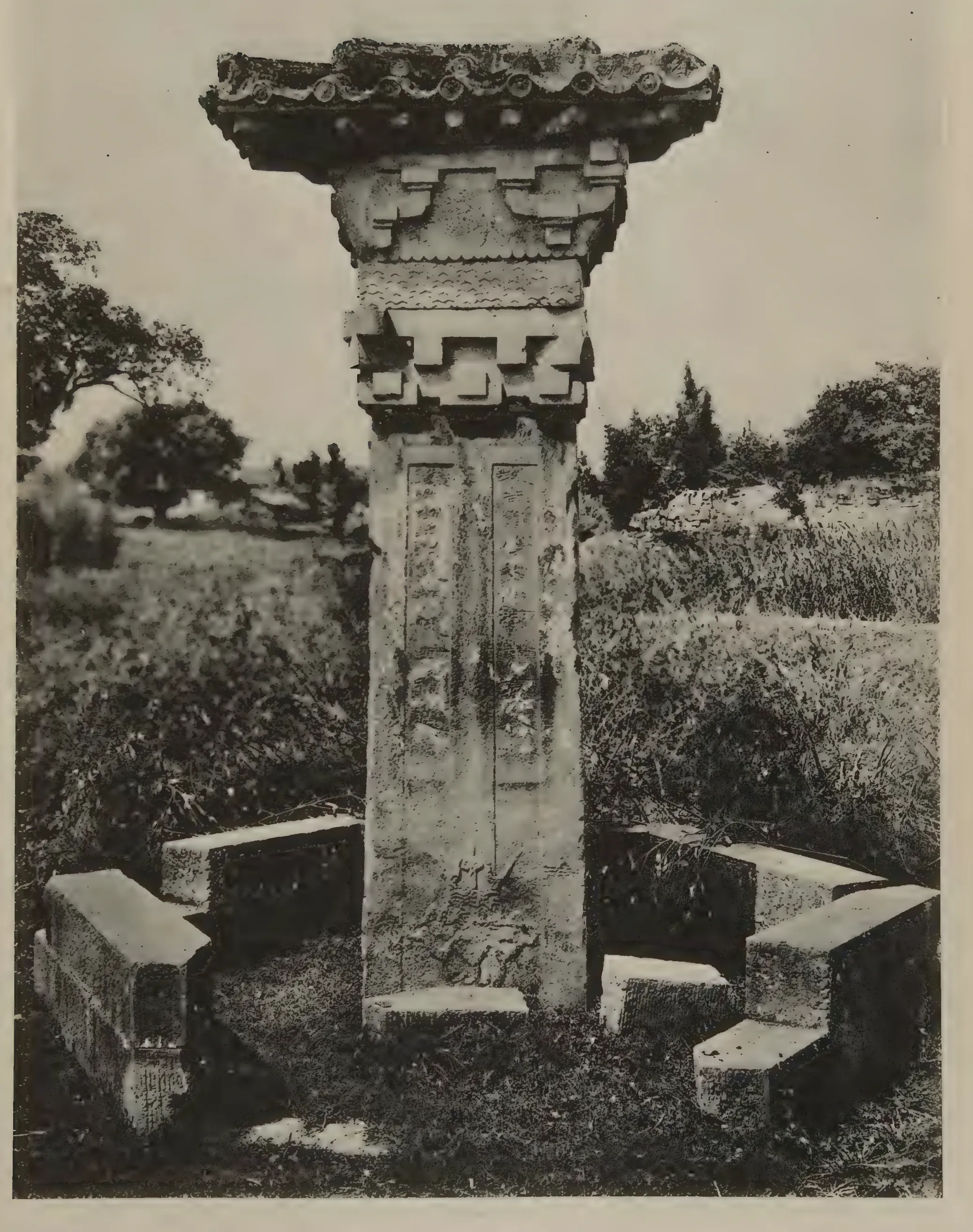
A History of Early Chinese Art, published in 1929 by Osvald Sirén, includes an old photograph of Feng Huan’s tomb que, credited there to Victor Segalen.
1930s
In volume 10 of Chinese Cultural Sites, Tokiwa Daijō and Sekino Tadashi included a plate of Sichuan Han que with the following old photograph of the Feng Huan stone que.