Introduction
Baoguo Temple stands in what is now the Jiangbei District of Ningbo, formerly part of Cixi County. The Ningbo Fu Zhi and the Cixi Xian Zhi record that the temple was first named Lingshan in the Tang, was “abolished” during the Huichang era[1], and in the first year of the Guangming era (880) was granted the name-plaque “Baoguo” (Protecting the State). The Jiaqing-era Baoguo Si Zhi records it more concretely: the temple was abolished in the fifth year of the Huichang era, and in the first year of the Guangming era the county aide Wang Ke, together with the local people, strove to “restore” it because “the famous monastery lay ruined and collapsed,” petitioning the court for a name-plaque and inviting the two monks Kegong and Baoding to serve as abbots.
By the Northern Song, the Baoguo Si Zhi records that Dexian came to take charge of the temple’s affairs in the fourth year of the Dazhong Xiangfu era (1011), after which the mountain gate and the main hall were “all made anew”; the entry for the “Buddha Hall” places the building of the hall in the sixth year of the Xiangfu era (1013). Modern heritage-conservation records note the surviving main hall as a timber remnant rebuilt in 1013. In the first year of the Zhiping era (1064), the temple’s name-plaque was changed to Jingjin Cloister; the Southern Song Baoqing Siming Zhi gives its old name as “Lingshan Baoguo,” and Ming-dynasty gazetteers again record that “it is still named Baoguo today.” Thereafter the name “Baoguo” has remained in use to the present, and the surviving Northern Song main hall has also left a systematic record of investigation in modern times.
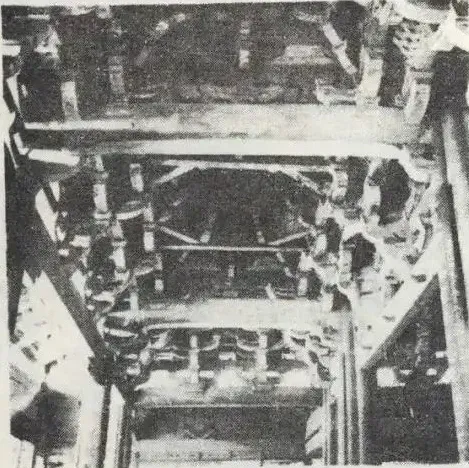
In 1954, the Chinese Architecture Research Office of the Nanjing Institute of Technology surveyed and measured the main hall of Baoguo Temple, leaving images of the outer-eave bracket sets[2], the front eave-columns, the timber frame, and the caisson ceilings[3], recording the state of the components of this Northern Song timber structure at the time of its systematic survey.
Historical Documents
Baoqing Siming Zhi (Baoqing-Era Gazetteer of Siming)
骠骑山,县东三十里。会稽典录云:“汉世祖时张意为骠骑将军,其子齐芳历中书郎,尝隐于此,故以为名。俗呼为马鞍山,乃州之后坐山也。
Mount Piaoqi lies thirty li east of the county seat. The Kuaiji Dianlu says: “In the time of Emperor Shizu of the Han, Zhang Yi was General of Agile Cavalry (piaoqi), and his son Qifang rose to be a gentleman of the secretariat; he once lived in seclusion here, and so it was named for him. It is commonly called Mount Ma’an (Saddle Mountain), and is the rear seat-mountain of the prefecture.
精进院,县东三十里。旧名“灵山保国”,唐广明元年置。皇朝治平元年改赐今额。
The Jingjin Cloister lies thirty li east of the county seat. Its old name was “Lingshan Baoguo,” established in the first year of the Guangming era of the Tang. In the first year of the Zhiping era of the present dynasty its current name-plaque was granted in place [of the old].
Ningbo Fu Zhi (Gazetteer of Ningbo Prefecture)
保国教寺县东二十里。始建于唐,名灵山。会昌中废。广明元年,赐保国额。宋治平元年改。
The Baoguo Teaching Temple lies twenty li east of the county seat. First built in the Tang, it was named Lingshan. It was abolished during the Huichang era. In the first year of the Guangming era, it was granted the name-plaque “Baoguo.” In the first year of the Zhiping era of the Song it was changed.
精进院,今仍名保国。
The Jingjin Cloister—today it is still named Baoguo.
Cixi Xian Zhi (Gazetteer of Cixi County)
保国寺
Baoguo Temple.
县东二十里。始建于唐,名灵山寺,其西峰名骠骑山。会昌中废。广明元年,赐保国额。
It lies twenty li east of the county seat. First built in the Tang, it was named Lingshan Temple, and its western peak is named Mount Piaoqi. It was abolished during the Huichang era. In the first year of the Guangming era, it was granted the name-plaque “Baoguo.”
宋治平元年,改精进院额,今仍名保国,定成丛林。
In the first year of the Zhiping era of the Song, its name-plaque was changed to Jingjin Cloister; today it is still named Baoguo, and has been established as a monastic community (conglin).
登临何处好,古刹对沧江。行脚僧归渡,迎风香满窗。疏狂怜我独,金碧羡君双。击剑高秋夜,应知鬼胆降。
Where is it good to climb and gaze? This ancient temple faces the blue-green river. The wandering monk returns by the ferry; borne on the breeze, incense fills the window. Wild and unrestrained, I pity my own solitude; the gold and azure I envy as your pair. Striking my sword on this high autumn night, I know the demons’ hearts must yield.
兰若隐云端,折旋路百盘。诧人蹲怪石,奔壑迸哀湍。僧磬竹阴晚,佛台花雨寒。更期观海曙,留宿待更残。
The temple (araṇya) hides among the clouds; the winding path turns and coils a hundred times. Startling the traveler, strange rocks crouch; down plunging ravines burst mournful torrents. The monk’s chime sounds in the bamboo shade at dusk; on the Buddha’s platform a rain of blossoms falls cold. Hoping still to watch the dawn break over the sea, I stay the night, waiting out the last watch.
Xu Wenxian Tongkao (Continued Comprehensive Examination of Documents)
则全孚叔平,姓施氏,慈溪人。落发于邑之保国寺,住三学三十年,太守郎简礼之,尝谓人曰:叔平才气凛凛然若儒冠,使职谏诤,岂下汉汲黯、唐魏征、我朝王元之乎?庆历五年,州众坐亡,世号三学法师。
Zequan, styled Shuping, was of the Shi clan, a man of Cixi. He took the tonsure at the Baoguo Temple of the county and dwelt at the Sanxue (Three Studies) for thirty years. The prefect Lang Jian treated him with courtesy and once said to others: “Shuping’s talent and spirit are so awe-inspiring, like a Confucian scholar’s; were he set to the office of remonstrance, how would he rank below Ji An of the Han, Wei Zheng of the Tang, or Wang Yuanzhi of our own dynasty?” In the fifth year of the Qingli era, before the assembly of the prefecture he died sitting in meditation; the age called him the Dharma Master of the Three Studies.
Liangzhe Mingxian Wailu (Supplementary Records of the Worthies of the Two Zhe)
则全,字叔平,姓施氏,慈溪人。落发于保国寺。南湖竞推十六大弟子,则全为之首。旁通诸史,尤工著述。性直气刚,敢言人过。识者每言:“直心是道场,若叔平,真出家儿也。”住三学三十年,郡守郎简尤礼重之。尝语人曰:“叔平才气凛凛然,若衣儒衣、冠儒冠者,使簪笔荷橐,立柱下以职谏诤,岂遂不若汉汲黯、唐魏征哉?”庆历五年夏,别众坐亡,世号三学禅师。
Zequan, styled Shuping, was of the Shi clan, a man of Cixi. He took the tonsure at Baoguo Temple. Of the sixteen great disciples eagerly acclaimed at Nanhu, Zequan was foremost. He was widely versed in the histories and especially skilled in composition. Upright by nature and firm of spirit, he dared to speak of others’ faults. Those who knew him often said: “An upright mind is the seat of enlightenment; one like Shuping is truly a man who has left the household.” He dwelt at the Sanxue for thirty years, and the commandery governor Lang Jian esteemed him with particular courtesy. He once said to others: “Shuping’s talent and spirit are so awe-inspiring; were he to don the Confucian robe and cap, take up brush and satchel, and stand at the pillar in the office of remonstrance, how would he in the end be inferior to Ji An of the Han or Wei Zheng of the Tang?” In the summer of the fifth year of the Qingli era, he took leave of the assembly and died sitting in meditation; the age called him the Chan Master of the Three Studies.
Juzhang Zhengwen Lu · Baoguo Si Zhi (Juzhang Collected-Documents Record · Gazetteer of Baoguo Temple)
保国寺志二卷德也
The Gazetteer of Baoguo Temple, in two fascicles [by] Deye.
国朝余兆灏著住僧敏庵编辑嘉庆乙丑淳序
Of the present dynasty, composed by Yu Zhaohao, edited by the resident monk Min’an; with a preface by Chun in the yichou year of the Jiaqing era.
Zhejiang Tong Zhi (General Gazetteer of Zhejiang)
保国教寺。成化四明郡志:“县东二十里。始建于唐,名灵山,会昌中废。广明元年,赐保国额。宋治平元年,改精进院。今仍名保国,成丛林。
The Baoguo Teaching Temple. The Chenghua-era Siming Commandery Gazetteer [says]: “It lies twenty li east of the county seat. First built in the Tang, it was named Lingshan, and was abolished during the Huichang era. In the first year of the Guangming era, it was granted the name-plaque ‘Baoguo.’ In the first year of the Zhiping era of the Song, it was changed to Jingjin Cloister. Today it is still named Baoguo, and has become a monastic community.
Siming Tanzhu (Aids to Conversation on Siming)
保国教寺县东二十里,始建于唐,名灵山。会昌中废。广明元年,赐保国额𡧯。治平元年改精进院,今仍名保国。成化志。保国寺藏在山腹,从溪边石径盘曲而上,松林阴翳,至半山亭少憩,再上数折,入山门,殿宇修整,花木楚楚,寺僧殷富,颇知礼教。
The Baoguo Teaching Temple lies twenty li east of the county seat; first built in the Tang, it was named Lingshan. It was abolished during the Huichang era. In the first year of the Guangming era, it was granted the name-plaque “Baoguo.” In the first year of the Zhiping era it was changed to Jingjin Cloister; today it is still named Baoguo. [From] the Chenghua gazetteer. Baoguo Temple is hidden in the belly of the mountain; climbing up by the stone path along the stream, winding and coiling, under the deep shade of the pine forest, one reaches the Midway Pavilion for a brief rest, then climbs several more turns and enters the mountain gate. The halls are well kept, the flowers and trees trim and fine; the temple’s monks are prosperous and quite versed in the rites and teaching.
翁洲丁鹤年诗:一径野云深,僧房閟绿阴。雨腥龙出涧,风劲虎过林。澹泊资禅味,清凉养道心。三生如不寐,石上一来寻。
A poem by Ding Henian of Wengzhou: A single path, the wild clouds deep; the monks’ quarters shut fast in green shade. Rank with rain, a dragon leaves the ravine; fierce in the wind, a tiger crosses the wood. Plain and quiet, it nourishes the flavor of Chan; cool and clear, it fosters the mind of the Way. If through three lives I do not sleep, upon this rock I shall come once to seek.
Henian Shiji · Passing the Summer at Baoguo Temple in Cixi, Sent to the Elder Chun of Yongdong
一径野云深,僧关閟绿阴。雨腥龙出涧,风劲虎过林。澹泊资禅味,清凉养道心。三生如不昧,石上一来寻。
A single path, the wild clouds deep; the monks’ gate shut fast in green shade. Rank with rain, a dragon leaves the ravine; fierce in the wind, a tiger crosses the wood. Plain and quiet, it nourishes the flavor of Chan; cool and clear, it fosters the mind of the Way. If through three lives [my memory] is not dimmed, upon this rock I shall come once to seek.
Shiju Shanren Xuexin Cao (The Snow-Heart Grasses of the Hermit of Ten Chrysanthemums)
石磴攀萝上,登高景自赊。相看惟傲睨,俯视忽惊呀。身受千江月,口吞五色霞。有僧同杖履,一笑得诗葩。
Up the stone steps I climb by the creepers; ascending high, the view of itself stretches far. Gazing about, I only look down with proud disdain; looking below, I am suddenly startled to gasp. My body receives the moon of a thousand rivers; my mouth swallows the five-colored rosy clouds. A monk shares my staff and sandals; with a single laugh I gain the blossom of a poem.
Historical Photographs
1954
In 1954, the Chinese Architecture Research Office of the Nanjing Institute of Technology surveyed and measured the main hall of Baoguo Temple. The surviving survey photographs record the outer-eave bracket sets, the front eave-columns and sparrow braces, the rear tails of the intercolumnar bracket sets and the outer-eave timber frame, the timber frame, and two views of the caisson ceilings.
The 1970s
Archival images from the 1970s record, respectively, the main hall of Baoguo Temple and the temple complex. The former views the main hall head-on from one side of the Jingtu (Pure Land) Pool; the latter looks down over the temple complex from among the wooded hills.
References
- Yu Zhaohao et al. (comp.) and the monk Min’an (ed.), Baoguo Si Zhi (Gazetteer of Baoguo Temple), Qing, images and transcribed text from the Digital Archive of Chinese Buddhist Temple Gazetteers.
- Wang Shulin, Xu Xinyun, and Xu Yitao, “A Study of the Evolution of Architectural Forms and Regional Interaction in the Liangzhe Circuit Region during the Two Song Periods”, Palace Museum Journal, no. 10 (2021).
- School of Architecture, Tsinghua University; Guo Daiheng; and the Ningbo Baoguo Temple Cultural Relics Administration (comp.), The First Mountain of the East—Baoguo Temple, Beijing: Cultural Relics Press, 2003.