Introduction
In 1414, the twelfth year of Yongle, Tsongkhapa’s disciple Shakya Yeshe entered the Ming court. The following year the court granted him the title of Great State Preceptor[1] and bestowed a seal and patent; when he took his leave in the fourteenth year of Yongle, he was further granted Buddhist scriptures, Buddha images, ritual implements, monastic robes, patterned silks, and gold and silver vessels. In 1419, at Tsongkhapa’s command, Shakya Yeshe founded the great monastery at Sera Mountain. The sandalwood he had brought back from inland was carved into images of Shakyamuni Buddha, the eighteen arhats, and other figures, and upper and lower colleges[2] and four small temples were built, with monks invited to reside there.
In 1642, with the military backing of Güshi Khan, leader of the Khoshut Mongols, the Fifth Dalai Lama established the Ganden Podrang government; the Khoshut khans retained their own military power and took part in Lhasa politics. In 1705, Lhabzang Khan, a descendant of Güshi Khan, seized power in Lhasa. During Lhabzang Khan’s rule, Sera Monastery’s old assembly hall could no longer hold the entire monastic community. He promised to build the monastery a larger assembly hall, but required that the old hall be handed over to his private ritual college. The new hall became the Tsokchen Hall[3] where the whole monastery assembled, while Lhabzang Khan’s college held its rites in the old hall. In 1717, Dzungar forces stormed Lhasa and Lhabzang Khan was killed; the college that continued to use the old hall gradually became Sera’s tantric college.
By the Qing period, Sera Monastery’s enclosure contained three golden halls and several round pavilions, with storied buildings and monks’ quarters spreading along the mountain; the Dalai Lama came to the monastery once a year to preach. The monastery also treasures an iron demon-subduing vajra less than two chi long, one end like a three-edged mace and the other shaped like three human heads. Tradition holds that it flew from the “Great Western Heaven” when the monastery was built, and Tibetans make an annual pilgrimage to it; on the twenty-seventh day, the monastery also welcomes the “flying vajra” to Lhasa to be carried around the Jokhang.
In the twentieth century, a geshe[4] who had studied at Sera Jé College recalled that the monks took part in several rounds of debate at the college each day; no books were allowed during debate, and every scripture cited had to be recited from memory. Some classes also debated through the night every other night in a courtyard without a roof. Lhasa’s winter nights are bitterly cold, and the monks’ repeated handclaps often left their hands cracked and bleeding.
Historical Documents
Draft History of Ming
大慈法王名释迦也失,亦乌斯藏僧称为尚师者也。永乐中。既封二法王,其徒争欲见天子邀恩宠,于是来者趾相接。释迦也失亦以十二年入朝,礼亚大乘法王。明年,命为妙觉圆通慈慧普应辅国显教灌顶弘善西大佛子大国师,赐之印诰。十四年,辞归,赐佛经、佛像、法仗、僧衣、绮帛、金银器,且御制赞词赐之,其徒益以为荣。明年,遣使来贡。十七年,命中官杨三保赍佛像、衣币往赐。二十一年,复来贡。宣德九年入朝,帝留之京师,命成国公朱勇、礼部尚书胡淡持节册封为万行妙明真如上胜清净般若弘照普慧辅国显教至善大慈法王、西天正觉如来自在大圆通佛。宣宗崩,英宗嗣位,礼官先奏汰番僧六百九十人。正统元年,复以为请,命大慈法王及西天佛子如故,余遣还。不愿者减酒馔、廪饩,自是辇下稍清。西天佛子者,能仁寺僧智光也。本山东庆云人。洪武、永乐中,数奉使西国。成祖赐号国师,仁宗加号圆融妙慧净觉弘济辅国光范演教灌顶广善大国师,赐金印、冠服、金银器。至是复加西天佛子。未几卒。已释迦也失亦卒。
The Great Compassion Dharma King was named Shakya Yeshe; he was also a monk of Ü-Tsang whom the monks called Shangshi. In the Yongle period, after two Dharma Kings had been invested, their followers vied to see the Son of Heaven and win imperial favor, and those who came followed one upon another in an unbroken line. Shakya Yeshe likewise came to court in the twelfth year, with ceremonial rank just below that of the Mahayana Dharma King. The following year he was appointed Great State Preceptor of Wondrous Awakening and Perfect Penetration, Compassionate Wisdom and Universal Response, Supporting the State and Manifesting the Teaching, Consecrating and Spreading Goodness, Great Buddha Son of the West, and was granted a seal and patent. In the fourteenth year he took leave and returned; he was granted Buddhist scriptures, Buddha images, ritual implements, monastic robes, patterned silks, and gold and silver vessels, and the emperor also composed eulogies to bestow on him, which his disciples held to be an ever greater honor. The following year he sent an envoy to offer tribute. In the seventeenth year the emperor ordered the palace official Yang Sanbao to carry Buddha images, robes, and gifts to bestow on him. In the twenty-first year he again came with tribute. In the ninth year of Xuande he came to court; the emperor kept him in the capital and ordered the Duke of Cheng, Zhu Yong, and the Minister of Rites, Hu Ying, to bear the credentials and invest him by patent as Great Compassion Dharma King of Ten Thousand Practices, Wondrous Illumination and True Suchness, Supremely Victorious, Pure in Transcendent Wisdom, Vastly Shining and Universally Wise, Supporting the State and Manifesting the Teaching, Perfect in Goodness; and as Buddha of Right Enlightenment of the Western Heaven, the Tathagata, Sovereign, Great and Perfectly Penetrating. When Emperor Xuanzong died and Emperor Yingzong succeeded to the throne, the ritual officials first memorialized to dismiss six hundred and ninety foreign monks. In the first year of Zhengtong they petitioned again on the matter; it was ordered that the Great Compassion Dharma King and the Buddha Son of the Western Heaven remain as before, while the rest were sent back. Those unwilling to leave had their wine, food, and allowances reduced, and from then on the environs of the capital were somewhat cleared. The Buddha Son of the Western Heaven was Zhiguang, a monk of Nengren Monastery, originally a man of Qingyun in Shandong. During the Hongwu and Yongle periods he was several times sent as an envoy to the Western Countries. Emperor Chengzu granted him the title State Preceptor; Emperor Renzong added the title Great State Preceptor of Perfect Fusion and Wondrous Wisdom, Pure Awakening and Vast Succor, Supporting the State and a Radiant Model, Expounding the Teaching, Consecrating and Broadly Good, and granted him a gold seal, cap and robes, and gold and silver vessels. At this time the title Buddha Son of the Western Heaven was further added. Not long after, he died. Soon afterward Shakya Yeshe also died.
General Gazetteer of Ü-Tsang
色拉寺唐古忒语:色,金也。抗,山也。其山出金,故名。拉撒北十里色拉山。宗喀巴在色拉曲顶居住之时,观其地可建庙宇。其弟子甲木庆曲结、沙克伽伊喜明时入中国为禅师,赐物甚盛。回藏后,宗喀巴令其在色拉建立大寺。所供佛像,系由内地带檀香,雕刻释迦佛、十八罗汉及诸佛像。又修上下札仓、札仓,译言僧房也。嘉庚、赞仲钟顶小寺四所,招喇嘛居住。其寺依山势,建金殿三座,层楼高耸,达赖喇嘛亦岁至讲经。寺中供一降魔铁杵,长不足二尺,头如三棱锏,一头如人头状,番语呼为多尔济。相传建寺时,自大西天飞来。其寺堪布珍之,番人必岁一朝供。
Sera Monastery. In the Tangut language, se means gold and kang means mountain; the mountain yields gold, hence the name. It is at Sera Mountain, ten li north of Lhasa. When Tsongkhapa was living at Sera Chöding, he observed that the site was suitable for building a temple. His disciples Jamchen Chöjé and Shakya Yeshe entered China in Ming times as meditation masters and were granted lavish gifts. After returning to Tibet, Tsongkhapa ordered them to establish a great monastery at Sera. The Buddha images enshrined there were carved from sandalwood brought from inland: Shakyamuni Buddha, the eighteen arhats, and the various Buddhas. Upper and lower colleges were also built—college in translation means monks’ quarters—together with four small temples, including Jiageng, Zanzhong, and Zhongding, where lamas were invited to reside. The monastery follows the contours of the mountain; three golden halls were built, with storied buildings rising high, and the Dalai Lama also comes every year to preach. Enshrined in the monastery is an iron demon-subduing vajra less than two chi long; one end is like a three-edged mace and the other end is shaped like human heads; in the local tongue it is called a dorje. Tradition says it flew from the Great Western Heaven when the monastery was built. The abbot of the monastery treasures it, and the Tibetans go on pilgrimage to pay homage to it every year.
Yongzheng Gazetteer of Sichuan
塞喇寺在西藏北十里,筑土为城,留门三。内建大寺二座,设经堂、佛像。住坐堪布大喇嘛一名,掌事僧官三名,管辖喇嘛八千余众。多系陕西杨鲁等土司及河州一带僧人,在此受戒传经。俱于城内土房居住。寺内有一降魔杵,番民呼为多尔济,传自大西天飞来该寺,掌教珍之,置密室,番人岁一朝观。
Saila Monastery lies ten li north of Tibet’s center. Earth was built up to form a walled enclosure, with three gates left open. Within, two great temple buildings were erected, containing scripture halls and Buddha images. One resident abbot, a great lama, and three monastic officials in charge of affairs administer more than eight thousand lamas. Most are monks from the Yang, Lu, and other native chiefdoms of Shaanxi and from the Hezhou region, who receive ordination and transmit the scriptures here. All live in earthen houses inside the wall. In the monastery is a demon-subduing vajra, which the local people call a dorje; tradition says it flew to this monastery from the Great Western Heaven. The master of the teaching treasures it and keeps it in a sealed chamber, and the Tibetans go once a year to view it.
Records of Tibet
色拉寺召北十里,依山成势,碉房层楼,参差高耸,围墙如廊。内金殿三座,圆亭数处。达赖喇嘛岁至讲经一次。寺有掌教呼图克图主之,喇嘛约四五千众。内有铁杵一枝,长不足二尺,一头如三棱锏,一头如人头状者三,如韦䭾所执降魔杵。云昔建寺时,自西天飞来者,人咸争礼之。
Sera Monastery lies ten li north of the Jokhang. Set against the mountain, its watchtower-like houses and storied buildings rise unevenly to great heights, and its encircling wall is like a gallery. Within are three golden halls and several round pavilions. The Dalai Lama comes once a year to preach. A khutuktu who holds the teaching presides over the monastery; the lamas number about four or five thousand. Inside is an iron vajra less than two chi long, one end like a three-edged mace, the other shaped like three human heads, like the demon-subduing vajra held by Weituo. It is said to have flown from the Western Heaven when the monastery was built long ago, and everyone vies to pay homage to it.
二十三日,郡王及噶隆牒巴并有名大喇嘛,各出八九名以至十四五岁幼童数名,快马数匹,跑马自色拉寺东山脚起,由布达拉后至工布堂,约三十里,一气跑到。先到者赏经䌷、哈达、银钱等物,其次到、后到者,各分赏有差。又选善走之人数十名,自布达拉西跑至拉撒东止,约十余里,亦一气跑到,别其先后分赏。赏毕,绕召跑三匝而散。此以为一年抢标夺彩之戏。
On the twenty-third day, the prince, the Kalöns and Debas, and the great named lamas each send out several youths, from eight or nine up to fourteen or fifteen years old, with swift horses. They race from the eastern foot of the hill at Sera Monastery, passing behind the Potala as far as Gongbutang, about thirty li, run in a single stretch. The first to arrive are rewarded with scripture silks, khata scarves, silver, and cash; those arriving next and last receive graduated rewards. Several dozen good runners are also chosen to race from west of the Potala to the east of Lhasa, some ten li and more, also in a single stretch, with rewards apportioned by order of finish. When the rewards have been given out, they run three circuits around the Jokhang and disperse. This serves as the year’s contest to seize the prize banner.
至二十七日,迎色拉寺之飞来杵至拉撒转召。二月三十日,布达拉悬挂大佛,其佛像系五色縀堆成,自布达拉第五层楼垂至山脚,长约三十丈,将大召中所有宝玩、金珠器皿陈列。喇嘛装束神鬼诸妖,各番国人物、牛、虎、象等兽,转召三次,至布达拉大佛前,各跳舞歌唱,如此一半月间始散。乃其地之春戏,神鬼人兽等衣着,颇极精巧华丽,其宝玩无穷,不能枚举。
On the twenty-seventh day, the flying vajra of Sera Monastery is welcomed to Lhasa and carried around the Jokhang. On the thirtieth day of the second month, a great Buddha image is hung at the Potala; the image is built up of five-colored damask and hangs from the Potala’s fifth story down to the foot of the hill, about thirty zhang long, while all the treasures and gold and pearl vessels of the Jokhang are put on display. Lamas dress as gods, demons, and various spirits, as figures of the different foreign peoples, and as oxen, tigers, elephants, and other beasts; they circle the Jokhang three times, then dance and sing before the great Buddha of the Potala, dispersing only after about half a month. This is the spring festival of the place; the costumes of gods, demons, men, and beasts are exceedingly fine and splendid, and the treasures are beyond counting.
六月三十日,别蚌寺色拉寺挂大佛,亦装神鬼等类,垂仲下神。番民男女并皆华服艳装,或歌或唱,翻杆子、跌打各种跳舞,亦二寺之大会也。七月十五日,另雇牒巴一人,以司农事,其他之头目,牒巴陪之游街,佩弓挟矢,旗幡导引,遍历郊圻,以观田禾。射饮一日,以庆丰年,然后土民刈𮒗。
On the thirtieth day of the sixth month, Biebeng and Sera monasteries hang the great Buddha images; the lamas likewise dress as gods and demons, and the Chuichong oracle invokes the deity. Tibetan men and women all wear splendid clothes and vivid adornments, singing and dancing, with pole-climbing, acrobatic tumbling, and dances of every kind; this too is the great assembly of the two monasteries. On the fifteenth day of the seventh month, a Deba is separately appointed to take charge of farming; the other headmen, accompanied by the Deba, parade through the streets wearing bows and carrying arrows, with banners leading the way, going all around the outskirts to inspect the crops. They spend a day in archery and drinking to celebrate a plentiful year, after which the people begin the harvest.
Travel Notes from Kham
四月十五日,寺门洞开,亦然灯达日,任蕃人游玩。六月三十日,别蚌、色拉两寺亦悬大佛像,有垂仲降神。蕃民男妇皆华服艳肱,歌唱翻杆相扑,诸戏咸备,亦二寺之大会也。
On the fifteenth day of the fourth month, the monastery gates are thrown wide open; lamps are likewise burned through the night until daybreak, and the Tibetans are allowed to roam and enjoy themselves. On the thirtieth day of the sixth month, Biebeng and Sera monasteries also hang great Buddha images, and a deity descends upon a Chuichong oracle. Tibetan men and women all wear splendid clothes and vivid adornments; singing, pole acrobatics, wrestling, and every kind of entertainment are provided. This is likewise the great assembly of the two monasteries.
Lhasa Gazetteer
色拉寺大召北十里山,层楼房屋参差,围墙内金殿三座,园亭数处。达嚬喇嘛岁至续经一回寺掌教呼图克图之主,喇嘛约五千。
Sera Monastery is at the mountain ten li north of the Jokhang; its storied buildings and houses stand at varying heights. Within the surrounding wall are three golden halls and several garden pavilions. The Dalai Lama comes each year to conduct one scripture recitation. The monastery is presided over by a khutuktu who holds the teaching, with about five thousand lamas.
Record of Travels in India
色拉寺在拉攃前藏地名,又名拉擏。北十里,依山建金殿,三岑楼高耸。达赖喇嘛岁至讲经。相传寺有降魔杵一,番语呼为多尔济,从大西天飞来,番人岁一朝观焉。按西藏在打箭炉之西南,而番民谓小西天、大西天尚在其西,计程可达,似时时有人往来其地者,亦如华人之慕西土焉,予不得而知之矣。色金也拉,山也。此山后出金矿,故名。达赖喇嘛派人经管,不准私开,每年只供商上采用。余所见生金有十余两成块,中裹砂石,炼出,色亦较淡,必数炼方佳。彼中佛像装金皆用之。寺有五千余众,为四大寺之一。余询之卡契,自前藏至甲喀尔,约可四十余日。甲喀尔在西海之边,大西天尚须过海,约半月之程云。西藏寺庙皆用铜缸贮酥油,难以供佛。上元节谓光明佛生辰,寺庙街肆贮酥油于盏,难之如星球万点,照耀无异白昼。
Sera Monastery lies at Lhasa—the name of the place in Front Tibet, also written Laqing—ten li to the north, where golden halls are built against the mountain and storied towers rise high. The Dalai Lama comes every year to preach. Tradition says the monastery has a demon-subduing vajra, called a dorje in the local tongue, which flew from the Great Western Heaven; the Tibetans go once a year to view it. Note: Tibet lies southwest of Dajianlu, yet the Tibetans say that the Lesser Western Heaven and the Great Western Heaven lie still farther west, reachable by measured stages, as if people constantly traveled to and fro—much as the Chinese yearn for the Western Land; I cannot know the truth of it. Se means gold; la means mountain. Gold ore was later produced from this mountain, hence the name. The Dalai Lama appoints men to manage it and does not allow private mining; each year it supplies only the government treasury for its use. The raw gold I have seen comes in lumps of more than ten liang, with sand and stone embedded within; once smelted, its color is still rather pale, and it must be refined several times before it is good. The gilding of Buddha images there all uses it. The monastery has more than five thousand monks and is one of the four great monasteries. I asked a Kashmiri: from Front Tibet to Gyakar is about forty-some days. Gyakar is on the shore of the Western Sea; to reach the Great Western Heaven one must further cross the sea, a journey of about half a month, so it is said. The monasteries of Tibet all store butter in copper vats, which is burned in offering to the Buddha. At the Lantern Festival, said to be the birthday of the Buddha of Light, the monasteries, streets, and shops keep butter in lamps and burn them, like ten thousand points of starlight, shining no differently from broad daylight.
Essentials of Ü-Tsang
一色拉寺,此寺又名黄金寺,为宗喀巴弟子沙克迦伊喜所建。在拉萨之。北十里,其地名曰色拉山,因山势建造金殿三座,层楼高耸,达赖喇嘛亦岁至其地讲经焉。其寺内所供之佛,为释迦佛、十八罗汉及诸佛像等。其所有佛像,全系檀香木所雕刻而成,并系沙克迦伊喜携自内地,因该师当明朝时入内。地为禅师也。庙内又有魔铁杵,藏语谓之多尔济,一枚长。近二尺,一端如三棱锏,一端如人头状。相传谓造该寺时,自大西天飞来。是物也,不特其寺之堪布珍宝之,而藏人亦每岁为一礼供云。
First, Sera Monastery. This monastery, also called the Golden Monastery, was built by Tsongkhapa’s disciple Shakya Yeshe. It lies ten li north of Lhasa, at a place called Sera Mountain. Following the contours of the mountain, three golden halls were built, with storied buildings rising high; the Dalai Lama also comes here every year to preach. The Buddhas enshrined in the monastery are Shakyamuni Buddha, the eighteen arhats, and the various Buddha images. All these images were carved from sandalwood and were brought by Shakya Yeshe from inland, for that master entered China in Ming times as a meditation master. In the temple there is also a demon-subduing iron vajra, called a dorje in Tibetan, one piece nearly two chi long, one end like a three-edged mace and the other like a human head. Tradition says that when the monastery was built it flew from the Great Western Heaven. Not only does the abbot of the monastery treasure it as a jewel, but the Tibetans also make a ceremonial offering to it every year.
万历四十四年,示寂于色拉寺,年二十八也。
In the forty-fourth year of Wanli, he passed away at Sera Monastery, at the age of twenty-eight.
Draft History of Qing
八辈罗布藏降白嘉穆错摆桑布,于乾隆二十三年在后藏拖结热拉冈出世。二十七年,迎至布达拉坐床。三十年,由班禅班垫伊喜传授小戒。三十三年,亲至前藏攒招,随登色拉、布赉绷、噶勒丹三大寺讲经之座。四十二年,由班禅传授格隆大戒。四十六年,颁给敕书、金册、金印,赏达赖之兄索诺木达什辅国公。四十八年,颁玉册、玉印,凡遇国家庆典准其钤用,其寻常奏书文移仍用原印。
The eighth incarnation, Lobsang Jampel Gyatso Palsangpo, was born in the twenty-third year of Qianlong at Tuojie Relagang in Back Tibet. In the twenty-seventh year he was escorted to the Potala and enthroned. In the thirtieth year the Panchen Palden Yeshe conferred the minor vows on him. In the thirty-third year he personally went to Front Tibet for the great prayer festival and then ascended the preaching seats of the three great monasteries of Sera, Drepung, and Ganden. In the forty-second year the Panchen conferred the full gelong vows on him. In the forty-sixth year he was granted an imperial letter, a golden album, and a golden seal, and the Dalai Lama’s elder brother Sonam Dashi was rewarded with the title Fuguo Duke. In the forty-eighth year he was granted a jade album and a jade seal, which he was permitted to use on state ceremonial occasions, while ordinary memorials and correspondence still used the original seal.
Convention Between Great Britain and Tibet
On 7 September 1904, representatives of Sera, Drepung, and Ganden monasteries were listed among the Tibetan negotiators, and the seals of all three monasteries appeared at the end of the convention. These two passages record the monasteries’ institutional role in the negotiations; the convention did not concern their buildings.
大英国政府特派边务全权大臣荣赫鹏与噶尔丹寺长罗生戛尔曾暨噶布伦并色拉别蚌、噶尔丹三大寺之呼图克图,兼与西藏民教诸首领,代表西藏议定条款,开列于后。
The British government specially appointed Younghusband as its plenipotentiary for frontier affairs. Losang Gyaltsen, head of Ganden Monastery; the Kalön; the khutuktus of the three great monasteries of Sera, Drepung, and Ganden; and Tibet’s civil and religious leaders represented Tibet. The articles they agreed are set out below.
第十款,
Article 10.
此约共缮五分,由商定之员在拉萨于光绪甲辰年七月二十八日,即西历一千九百零四年九月初七日画押,盖印为凭。
Five copies of this convention were prepared and signed in Lhasa by the negotiating representatives on the twenty-eighth day of the seventh month of the jiachen year of Guangxu, corresponding to 7 September 1904, with seals affixed as attestation.
大英国边务大臣荣赫鹏印
Seal of Younghusband, British frontier plenipotentiary.
达赖喇嘛印、此印乃噶尔丹寺长所钤。
Seal of the Dalai Lama—this seal being affixed by the head of Ganden Monastery.
噶布伦印、
Seal of the Kalön.
别蚌寺印、
Seal of Drepung Monastery.
色拉寺印、
Seal of Sera Monastery.
噶尔丹寺印、
Seal of Ganden Monastery.
西藏首领印。
Seal of the leaders of Tibet.
Historical Photographs
1904
The British Library’s Curzon Collection holds a close view of Sera Monastery photographed by John Claude White around September 1904. The photograph looks along a road inside the monastery toward the buildings rising against the mountain; the British Library has also published a high-resolution version of this photograph in a collection guide.
1920–1921
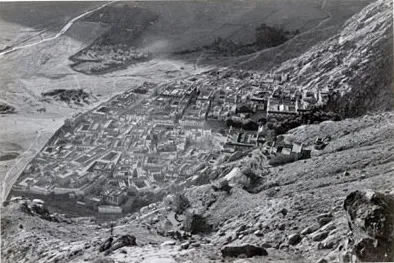
Among the photographs of Sir Charles Bell’s Lhasa mission are a panorama of Sera Monastery at the foot of the mountain, looking from open ground toward the monastic buildings spreading along the slope, and a view of the great assembly hall of Sera Jé College, recording its front façade, steps, and the monks gathered before it.
c. 1922
The Tibet Album also holds a photograph of an entrance to Sera Monastery from about 1922: four monks stand beneath the gateway, the two in the middle holding the iron staffs of office, with monastery buildings visible behind them.
1936
The Tibet Album, jointly compiled by the British Museum and the Pitt Rivers Museum, holds Frederick Spencer Chapman’s 1936 photographs of Sera Monastery, including a panorama of the monastery taken from a nearby slope on 25 October, and the exterior of the great assembly hall of Sera Jé College, the hall’s interior, and the passage leading to the hall, all photographed on 18 October. Another photograph taken between 18 and 21 October records the gilded Buddhist emblems on the assembly hall roof.
Also on 18 October that year, Evan Yorke Nepean photographed a courtyard at Sera Monastery, preserving its houses, stone steps, young monks, and the large metal vessels used to brew tea during religious ceremonies.
1937
The same collection holds two more panoramas of Sera that Chapman took from the mountains in January 1937. The first overlooks Sera Monastery and the Lhasa river valley; the second records the monastery, the valley, and the distant mountains from another slope.
1936–1950
Among the early color photographs Hugh E. Richardson took between 1936 and 1950 are views of Sera Monastery and the sandy ground north of Lhasa and a frontal panorama of the monastery, preserving a color record of the monastic complex and the terrain at the foot of the mountain.
References
- The Treasury of Lives: “Sera Monastery”, which records the 1419 founding date of Sera Thegchen Ling and its three colleges.
- José Cabezón: “An Introduction to the Hermitages of Sera”, which discusses Sera’s eighteenth-century expansion, Lhabzang Khan, and the changing uses of the old and new assembly halls.
- Tibetan and Himalayan Library: “Sera Ngakpa College Information”, which records how the old assembly hall was converted for use by the ritual college and the tantric college.
- Geshé Rabten: “The Life of a Sera Monk”, a Sera Jé College monk’s recollections of study, debate, and all-night debating sessions.
- Oxford Research Encyclopedia of Asian History: “The Sino-Tibetan Borderlands”, which explains the 1642 Ganden Podrang government, the Khoshut Mongol military support, and the layered political relationships of Qing-period Tibet.
- Convention Between Great Britain and China Relating to Sikkim and Tibet (1890), consulted for the signing at Calcutta, the Sikkim–Tibet boundary, and the trade arrangements at Yadong.
- British Foreign Office treaty archive: Convention Between Great Britain and China Respecting Tibet with the appended 1904 Convention Between Great Britain and Tibet, consulted for the trade marts, the indemnity, the garrison at Chumbi, the restrictions on foreign relations, the representatives of the three great monasteries, and the British declaration reducing the indemnity at ratification.