Introduction
In the third month of the thirty-second year of the Qianlong reign, work began on the Putuo Zongcheng Temple at Shizigou (Lion Gully), north of the Mountain Resort. Built in imitation of the Potala Palace of Tibet, it is the largest of the Eight Outer Temples of Rehe[1]; it was commissioned by imperial decree for the celebrations of the Qianlong Emperor’s sixtieth birthday and the eightieth birthday of Empress Dowager Chongqing, and was scheduled for completion in the thirty-fifth year, the year of those anniversaries. That year, the thousand Buddha images jointly presented by the Mongol princes arrived at Rehe on schedule, but the temple—its works having suffered a fire that year—was not yet complete.
To house these early-arriving images, a Thousand-Buddha Pavilion was built in haste to the southwest of the Great Red Terrace[2], and a stele was erected in the eighth month of that year to record the matter. The following summer, none of the three 《工程成数》 (Accounts of Work Completed) reporting the progress of the works mentioned this pavilion again—very likely it had long since been finished, the first structure of the whole temple to be declared complete.
Qianlong recorded the circumstances in the temple stele: “先是,群藩合辞请进千佛像,恳款弗可却,因命就庙中庋阁奉之。” (“Before this, the various vassal princes jointly asked leave to present a thousand Buddha images; their earnest plea could not be declined, so I ordered that a pavilion be provided in the temple to house and venerate them.”) Yet this “pavilion” (ge), commissioned to hold the Buddhas, bore a name that belied the reality: it was no storied pavilion, only a courtyard enclosed by single-story buildings on four sides, of the simplest construction. By the thirtieth year of the Guangxu reign, a memorial inspecting the temples again mistakenly called the shelter pavilion over the red sandalwood pagoda atop the Great Red Terrace the “Thousand-Buddha Pavilion”—the name of this little courtyard had been attached to a different building.
This improvised little courtyard still stands today to the southwest of the Great Red Terrace: a stone-walled compound five bays wide and only one story high. Coming up the stepped path of the White Terrace on the west to climb the Red Terrace, one must, on reaching it, detour west and then north around its back—in Yang Xu’s view, the ascent route of the original design was very likely cut off by it. More than two hundred and fifty years on, those who climb the Red Terrace still have to go around it.
Historical Documents
Putuo Zongcheng zhi Miao Beiwen (Stele Inscription of the Putuo Zongcheng Temple)
山庄迤北,普陀宗乘之庙之建,仿西藏,非仿南海也。南海普陀,在浙东定海县境,朝山之舶,岁岁凌越,洪涛澜涆间,擎芗顶礼唯谨曰:大士道场,舍兹奚属?是独震旦缁流,方隅所见故然。考之贝夹,普陀有三,一居额讷特珂克,一居图伯特,一居南海。盖南海特大士行教至此,偶一示现云耳,庸可以此为是而彼为非乎?额讷特珂克即印度,是,由此以证西来因缘,自印度而西藏,自西藏而南海,了了可识。第印度金刚座,辽远难稽,讵若西藏都纲,法式具备,为天人摄受之闳规,藩服皈依之总汇也哉?乃者岁𢈏寅,为朕六袠庆辰,辛夘恭遇圣母皇太后八旬万寿,自旧隶蒙古、喀尔喀、青海王公台吉等,暨新附准部回城众蕃长,联轸偕来,胪欢祝嘏,念所以昭褒答,示惠怀者,前期咨捋作,营构斯庙,以乾隆三十二年三月经始,至三十六年八月讫工。
North of the Mountain Resort, the building of the Putuo Zongcheng Temple imitates Tibet, not the Southern Sea. The Putuo of the Southern Sea lies within the bounds of Dinghai County in eastern Zhejiang; the boats of mountain pilgrims, year after year, brave the crossing, and amid the vast billows, raising incense and bowing their heads with utmost reverence, [say]: the place of the Way of the Great Being—if not here, where else? This is merely how the monks of China, seeing but one corner, have come to regard it. Examining the palm-leaf scriptures, there are three Potalas: one is in Enetkek, one in Tubet, and one in the Southern Sea. Now the Southern Sea is only a place where the Great Being, traveling in his teaching, once chanced to manifest himself; how could one take this one as right and the others as wrong? Enetkek is India—and so it is: from this the chain of causes coming from the West is proven, from India to Tibet, from Tibet to the Southern Sea, perfectly clear to discern. But the Vajrasana of India is remote and hard to verify; how can it compare with the monastic model of Tibet, whose rules and forms are complete—a grand norm in which gods and men are gathered and received, a confluence where the vassal peoples take refuge? Now the gengyin year was the celebration of my sixtieth birthday, and in the xinmao year we reverently met the eightieth birthday of our holy mother the Empress Dowager. From the princes and taijis of the Mongols, Khalkhas, and Qinghai long subject to us, to the newly attached chiefs of the Dzungar tribes and the Muslim towns, all came together, carriage joined to carriage, to array their joy and pray for our felicity. Considering how to make manifest our praise and recompense and show our gracious regard, we beforehand ordered the planning of works and the building of this temple: begun in the third month of the thirty-second year of the Qianlong reign and completed in the eighth month of the thirty-sixth year.
广殿重壹,穹亭翼庑,爰逮陶范斤凿,金碧𩬘垩之用,莫不严净如制。夫𦭵藩信心回向,厥惟大慈氏之教。而热河尤我皇祖、圣祖仁皇帝抚绥列服,岁时肆觐之区。向也西陲内面景从,朕勤思缵述,普宁、安远、普乐诸刹,所谓嗣溥仁溥善而作也。今也逢国大庆,延洪曼羡,而斯庙聿成,三乘之宗,实其统会。于焉宣宝铎,演金轮,关禽流梵乐之音,塞树种菩提之果。一切国土善信,膜拜欢喜,以为得未曾有。而夂入俄罗斯之土尔扈特,以其为外道,非黄教所,概舍夂牧之额济勒,率全部数万人,历半年余,行万有数千里。倾心归顺,适于是时,莅止瞻仰,善因福果,诚有不可思议者。是则山庄之普陀,与西藏之普陀一如,与印度之普陀亦一如,与南海之普陀,亦何必不一如?
Broad halls and double porticoes, vaulted kiosks and winged galleries, down to the pottery molds and the work of adze and chisel, the use of gold, jade-green, cinnabar, and whitewash—all is severe and pure, according to rule. For the faithful dedication of the vassal peoples turns to none but the teaching of the Great Compassionate One. And Rehe above all is the region where my august grandfather, the Emperor Shengzu Ren, soothed the ranks of the submitted peoples and received their audiences through the years. Formerly, when the western marches turned inward and followed like shadows, I diligently pondered continuing his work: the monasteries of Puning, Anyuan, and Pule are precisely those made to succeed Puren and Pushan. Now, meeting with a great celebration of the state, its vast abundance prolonged, this temple is completed; the doctrine of the Three Vehicles truly finds in it its convergence. Here the precious bells resound and the golden wheel turns; the birds of the passes carry the sounds of Brahma music, and the trees of the frontier bear the fruits of bodhi. The faithful of all lands worship and rejoice, deeming they have obtained what never was before. And the Torghuts, who had entered Russia, holding it to be an alien way and no seat of the Yellow Teaching, one and all abandoned their pastures on the Ejile (the Volga), led all their tribes, tens of thousands of people, for more than half a year, traveling more than ten thousand li. With hearts inclined to submission they arrived just at this time, came and gazed up in reverence: good causes and blessed fruits—truly this is inconceivable. Thus the Potala of the Mountain Resort is one with the Potala of Tibet, one also with the Potala of India—and with the Potala of the Southern Sea, why should it not also be one?
然一推溯夫建庙所由来,而如不如又均可毋论。即如如之本义,岂外是乎?岂外是乎?
Yet if one traces back to whence the building of this temple arose, then alike or unalike may both be left undiscussed. Is not the original meaning of “suchness” (tathatā) precisely this? Is it not precisely this?
先是,群藩合辞请进千佛像,恳款弗可却,因命就庙中庋阁奉之。别有记,不复详缀,为说偈曰:我闻赡部洲,古德有道场。
Before this, the various vassal princes jointly asked leave to present a thousand Buddha images; their earnest plea could not be declined, so I ordered that a pavilion be made within the temple to house and venerate them. There is a separate record; I do not detail it again here, and I compose this gāthā: I have heard that on the continent of Jambudvīpa the ancient worthies had places of the Way.
天龙各护持,名四大结聚。
Gods and dragons each guard and keep them; they are named the four great assemblies.
九华及二峨,五台亦初地。
Jiuhua and the two Emeis, and Wutai too, are first grounds of the path.
普陀南海南,观自在所住。
Potala, south of the Southern Sea, is where Guanzizai (Avalokiteśvara) dwells.
其言限方所,不出边邪见。
To say it is confined to one place is not to escape the false view of extremes.
譬如一搩手,眯万亿由旬。
As a single raised hand can veil from the eye a billion yojanas.
若人证三摩,要令不失故。
If one would realize samādhi, one must see to it that this is not lost.
卫藏妙庄严,竺乾祖庭意。
The wondrous adornment of Ü-Tsang carries the meaning of the patriarchal court of India.
兴桓足香界,成此大胜因。
Raised firm, a fragrant realm complete: thus is this great victorious cause accomplished.
百部诸贤王,合十聆呗赞。
The hundred tribes and their worthy princes, palms joined, listen to the hymns of praise.
塞土黄金色,是处菩萨面。
The frontier earth takes on a golden hue: here appears the bodhisattva’s face.
其前罗汉峰,磬石为犍椎。
Before it, the Peak of the Arhats, whose sounding stone serves as the ghaṇṭā.
举似象王岩,非离亦非即。
It may be likened to the Rock of the Elephant King: neither apart nor identical.
其下狮子沟,武列功德水。
Below it lies Shizigou (Lion Gully), and the Wulie, river of merit.
举似铁莲洋,无垢亦无净。
It may be likened to the Ocean of the Iron Lotus: neither defiled nor pure.
能具等正觉,皆作如是观。
Whoever can possess the perfect and equal awakening contemplates all things thus.
五十三参竟,还叩两足尊。
The fifty-three visits of Sudhana completed, one returns to bow to the Honored One of Two Feet.
长现调御相,为说无生法。
Ever manifesting the form of the Tamer of men, he expounds the Dharma of non-arising.
Zhiguo Lun (Discourse on Knowing One’s Faults)
予去岁为古稀说,历数古来粃政之过,曰强藩,曰外患,曰权臣,曰外戚,曰女谒,曰宦寺,曰奸臣,曰佞幸,而幸今都无其事,非骄也,盖纪其实,且以自励也。然则予遂无过乎?曰:有为何过?曰:为兴工作。盖予承国家百年熙和之会,且当胜朝二百余年废弛之后,不可无黻饰,壮万国之观瞻。四十余年之间,次第兴举。内若坛庙宫殿、京城、皇城、禁城、沟渠、河道,以及部院衙署,莫不为之葺其坏,新其蒨;外若海塘、河工、城郭堤堰,莫不为之修其废,举其湮。是皆有关国政,则胥用正帑,物给价,工给值,而弗兴徭役,加赋税以病民。他若内而西苑、南苑、畅春园、圆明园以及清漪、静明、静宜三园,又因预为菟裘之颐,而重新宁寿宫,别创长春园,外而盛京之属城,式筑其颓。
Last year I composed the Discourse on Seventy, enumerating one by one the faults of bad governments since antiquity: powerful vassals, foreign invasions, overpowerful ministers, imperial in-laws, women’s intrigues, eunuchs, treacherous ministers, and favorites—and happily none of these exists today. This is not pride; it is recording the facts, and moreover encouraging myself thereby. But am I then without fault? I say: there is one. What fault? I say: it is undertaking works. For I inherited a state enjoying a century of prosperous harmony, and after more than two hundred years of slackness under the preceding dynasty, ornament could not be lacking, to magnify the aspect seen by the myriad states. Over more than forty years, they were undertaken in turn. Within: the altars and temples and palaces, the capital city, the imperial city, the forbidden city, the canals and waterways, down to the offices of the ministries and courts—for all of these I had what was broken repaired and what was shabby renewed; without: the sea walls, the river works, the city walls and dikes—for all of these I had what was abandoned restored and what was silted cleared. All these concern the governance of the state, and so in every case the regular treasury funds were used, paying the price of materials and the wages of labor, without raising corvées or increasing taxes to the hurt of the people. As for the rest—within, the Western Park, the Southern Park, the Changchun Garden, the Yuanming Garden, and the three gardens of Qingyi, Jingming, and Jingyi; and because I was providing beforehand for a retreat in my old age, I further restored the Palace of Tranquil Longevity and separately created the Garden of Lasting Spring; without, in the cities belonging to Shengjing, I had their ruined parts rebuilt.
永陵、福陵、昭陵陪都宫殿,胥肯构以轮𭑏。又景陵、泰陵往来之行宫,以及热河往来之行宫,避暑山庄、盘山之静寄山庄,更因祝厘而有普陀宗乘之庙,延班禅而有须弥福寿之庙,以至溥宁、普乐、安远诸寺,无不因平定准夷,示兴黄教,以次而建。是皆弗用正帑,惟以关税盈余及内帑节省者,物给价,工给值,更弗兴徭役,加赋税以病民。夫弗兴徭役、加赋税,则虽有工作,闾阎本不知,而物给价,工给值,贫者且受其利,是实我朝之善政。家法,是以各省偶遇水旱,率兴工作,有以工代赈之请,而内之司园囿工程者,且或以其年无工作为苦。如是,则所为兴工作者为无过矣。而予引以为过者,盖心有所萦繋,必有所疏忽,得毋萦繋𪱸小,而或有迹忽𪱸大者乎?夫小者,游目赏心是也;大者,敬天勤民是也。
The Yongling, Fuling, and Zhaoling mausoleums and the palaces of the auxiliary capital were all rebuilt in their grandeur. Also the traveling palaces on the road to the Jingling and Tailing mausoleums, and the traveling palaces on the road to Rehe—the Mountain Resort and the Jingji Mountain Villa at Mount Pan; moreover, for the offering of birthday prayers there is the Putuo Zongcheng Temple, and for the invitation of the Panchen Lama there is the Xumi Fushou Temple, down to the temples of Puren, Pule, and Anyuan—all built in succession because of the pacification of the Dzungars, to demonstrate the flourishing of the Yellow Teaching. None of these used the regular treasury; they drew only on the surplus of customs duties and the savings of the privy purse, paying the price of materials and the wages of labor, again without raising corvées or increasing taxes to the hurt of the people. When no corvées are raised and no taxes increased, then even if there are works, the village folk are in essence unaware of them; and when materials are paid for and labor given its due, the poor moreover receive benefit from it: this is truly the good policy of our dynasty, a house law. Thus when a province happens upon flood or drought, works are generally undertaken there, and there are requests to substitute work for relief; and those in charge of the garden works within the palace even regard a year without works as a hardship. If so, then what is called undertaking works is no fault. The reason I hold it to be a fault is that when the heart has some attachment there is sure to be some neglect: might it not be that the attachment is to the small, while the neglect falls upon the great? The small is what delights the eye and gladdens the heart; the great is revering Heaven and laboring for the people.
Qinding Rehe Zhi (Imperially Commissioned Gazetteer of Rehe)
递肖何妨屡普陀,〈普陀有三:一居额讷特珂克,即印度;一居图伯特,即西藏;一居南海。而西来因缘,则始自印度,而西藏,而南海。南海特大士行教示现之所,印度又远不可稽,惟西藏都纲法式具备,因于山庄北麓,仿其制为之。〉金刚四句括无多。层楼金瓦辉香象,偏袒黄衣演法螺。虔为祝厘开八秩,会逢归极仰三摩。〈今岁恭遇皇太后八旬万寿,因建此庙,庆迓慈禧。兹届蒇工庆落会,土尔扈特汗渥巴锡等适至,以其素重黄教,命往瞻礼,俾益深感悦。〉撰良庆落欣瞻礼,曰罪曰知且付他。
To copy it in every feature—what harm in a Potala once more? 〈There are three Potalas: one in Enetkek, that is India; one in Tubet, that is Tibet; one in the Southern Sea. And the chain of causes coming from the West begins in India, passes to Tibet, then to the Southern Sea. The Southern Sea is only a place where the Great Being manifested himself in the course of his teaching; India moreover is too remote to verify, and only Tibet has a monastic model complete in rules and forms—therefore at the northern foot of the Mountain Resort we built ours in imitation of it.〉 The four lines of the Diamond Sūtra encompass in few words. Tiered stories and golden tiles gleam over the fragrant elephant; with shoulder bared beneath the yellow robe, they sound the Dharma conch. Devoutly, to pray for her blessing, the eighth decade opens; meeting those who have returned to the pole, we gaze upon samādhi. 〈This year we reverently meet the eightieth birthday of the Empress Dowager, for which this temple was built, to celebrate and greet her joy. Now the time has come to finish the works and celebrate the inauguration: the Torghut khan Ubashi and the rest have just arrived; as they have always honored the Yellow Teaching, I ordered them to go and pay reverence, so as to deepen their heartfelt joy.〉 The lucky day chosen, the completion celebrated, gladly we come to gaze; to call it fault or call it knowledge—leave that to others.
震旦惟南海,山庄护北峰。庄严犹绪事,清净是真宗。优钵含风灿,贝多带露浓。盘旋清跸返,听远隔林钟。
For China there is only the Southern Sea; the Mountain Resort guards the northern peak. The adornment is still a work in progress; purity is the true doctrine. Utpala lotuses hold the wind in splendor; pattra leaves are heavy with dew. Lingering, I return by the cleared imperial way, listening afar to the bell beyond the groves.
Qing Shilu (Veritable Records of the Qing)
谕:据英廉奏:重修布达拉庙工程,应令原办之匠头等按照成数分赔,即于应领工价内次第扣除等语。该匠头等办工草率,致有坍坏闪裂等事,按例分赔,实属咎无可辞。第念伊等执役营生,小人牟利,乃其常态。监督等每日在工董察匠役等做工如何,皆可真知灼见。如查有偷工减料之处,即可随时责惩,驳斥另做。伊等自皆尽心供役,不敢任意侵肥,草率贻误。是布达拉工程,从前办理不能坚固,罪在监督人员,而不在匠头人等。所有英廉奏请将原办匠头等派令重修,于应领工价内扣除赔缴之处,著加恩宽免。该匠头等自应感发天良,实心承办,以期工程经久完善。倘敢复蹈前辙,致所做工程仍不坚久,则是伊等不复具有人心,必令照数分赔,按名追缴,并当查明重治其罪,以示惩儆。著福隆安将朕此旨出示晓谕工匠人等知之。
Edict: According to the memorial of Yinglian: for the rebuilding works of the Potala Temple, the foremen who originally conducted them should be made to repay shares according to the accounts, to be deducted in turn from the wages they are due to receive, and so on. That these foremen conducted the work carelessly, so that collapses, cracks, and deformations occurred, and that by rule they should repay in shares, is truly a fault they cannot excuse. Yet consider that they serve for their livelihood, and that small men’s chasing profit is their constant nature. The supervisors are at the works every day, overseeing how the craftsmen do their work, and can know it truly and see it clearly; if they find any stinting of labor or materials, they may at any time punish it, reject the work, and order it redone. The craftsmen would then all serve with a whole heart, not daring to embezzle at will or botch the work and cause delay. Thus if the Potala works were formerly not carried out solidly, the fault lies with the supervisory personnel, not with the foremen. All that Yinglian requests—that the original foremen be assigned to redo the work, with repayment deducted from the wages due them—shall by grace be pardoned. These foremen should of themselves be moved by their heaven-given conscience and honestly undertake the charge, so that the works may be durable and perfect. If they dare to repeat their former tracks, so that the works they do remain unsound and short-lived, then they no longer have human hearts, and they shall without fail be made to repay according to the account, pursued by name, and, upon investigation, severely punished for their crime, as a warning. Let Fu Long’an post this edict of mine and make it known to the craftsmen.
谕军机大臣等:热河布达拉庙月台红墙闪裂坍塌,现将承办之大臣、监督等分别议处,责令按股赔修。如永和、什宝、萨哈亮等皆革去顶带效力。寅著、全德均系始终承办之人,现据英廉奏请将二人革职回京候旨,亦属罪所应得。即不然,亦应照内务府官员之例,革去顶带留任。但念伊等现在外省管理关务,若身无顶带,于外省体制攸关,且恐一切呼应不灵,于公事无益。寅著、全德均著加恩免革顶带,并免其革职。至其应赔之项,伊等所得外任养廉本优,尚属力能赔缴,俟赔修工程估有成数,即著寅著、全德于此内。分赔十分之四。如别股有不能赔完者,仍应在英廉及伊等名下摊赔。寅著全德各宜知朕格外从宽恩意,倍加感发天良,黾勉赔缴,庶可稍赎前愆。倘或观望逡巡,不思效诚竭力,即属毫无人心,仍必将伊等重治其罪。明山保原系兼管照料,并未经手工程。所有此次应赔银两,著加恩免其分赔,并不必治罪。至现在修葺工程,有应需人夫车辆及巡缉贼匪事宜,本系地方官之责,仍令明山保照上届兼管照料。倘明山保意存观望,不肯实心料理,经朕闻知,即将应赔之项,令明山保一体分赔。
Edict to the grand councillors and others: The red wall of the moon terrace of the Potala Temple at Rehe has cracked, shifted, and collapsed; the ministers who undertook it and the supervisors are now to be judged separately and ordered to repair it, sharing the cost by quotas. Thus Yonghe, Shibao, Sahaliang, and others have all been stripped of button and belt and made to serve. Yinzhu and Quande both conducted the matter from beginning to end; Yinglian now requests that the two men be dismissed and returned to the capital to await orders—this too is a punishment they deserve. Failing that, they should, after the example of officials of the Imperial Household Department, be stripped of button and belt while remaining in office. But considering that they now administer the customs in the provinces, if they were without button and belt it would touch upon the dignity of provincial administration, and I fear all calls would go unanswered, to no benefit for public business. Yinzhu and Quande shall by grace be spared the stripping of button and belt, and also spared dismissal. As for the sums they must repay, the integrity-nourishing allowance they receive in their provincial posts is generous, and they are well able to pay; when the estimate of the repair works has been made, Yinzhu and Quande shall within it repay four parts in ten. If other shares cannot be paid in full, the remainder shall still be apportioned to the account of Yinglian and of them. Yinzhu and Quande should each know this exceptional clemency of mine, redouble the stirrings of conscience, and exert themselves to pay, so as somewhat to redeem their former fault. If they hesitate and hang back, not thinking to give loyal utmost effort, that is having no human heart at all, and I shall still punish their crime severely. Mingshanbao was originally a concurrent overseer and never handled the works; all the silver he should repay this time shall by grace be remitted, and he need not be punished. As for the present repair works, whatever laborers and carts are needed and the matter of patrolling against bandits are in origin the duty of the local officials; let Mingshanbao still, as last time, concurrently oversee and care for them. If Mingshanbao harbors a wait-and-see attitude and is unwilling to manage it honestly, when I come to know of it, I shall make Mingshanbao share in the repayment of the sums due.
Shizhai Shiji (Poetry Collection of the Shizhai Studio)
持节曾教护坐床,攒招异域每难忘。谁知塞上巡行日,重睹西天选佛场。彩塔媥斓光最胜,碉楼摩豁式俱方。使臣偶尔来瞻礼,又惹黄衣迎送忙。
Bearing the credentials, I once had charge of watching over the enthronement of a lama; the monasteries I gathered in that alien land are ever unforgettable. Who knew that on a day of inspection beyond the passes I would see again this field of electing Buddhas of the Western Heaven? Bright-hued pagodas, their splendor the most surpassing; stone watchtowers, lofty and broad, all square in form. An envoy comes by chance to gaze and worship—and sets the yellow robes bustling to welcome and escort.
Hushan Shiji (Poetry Collection of Hushan)
西天佛所此规为,皇化宗风共仰之。瑞霭千重连印度,宝光五色现摩尼。慈云晓覆松承盖,甘露秋垂柳亚枝。祝嘏祐民徕远服,圣人情喜见乎诃。
What the Buddha of the Western Heaven possessed is here reproduced; the imperial transformation and the wind of the doctrine are alike looked up to. Auspicious mists in a thousand folds stretch to India; the five-colored jewel-radiance reveals the maṇi. The cloud of compassion covers the pines at dawn like a canopy; sweet dew weighs on the willows in autumn, bending their branches. Praying for blessing, protecting the people, drawing the distant to allegiance: the sage’s joy shows upon his brow.
Jiaolitang Wenji (Collected Works of the Jiaoli Hall)
化人宗喀巴,黄教所称最。嗣法二弟子,愿力极广大。
Tsongkhapa, transformer of men, the greatest the Yellow Teaching names; two disciples inherited his Dharma, the power of their vows utmost vast.
其次曰班禅,其长即达赖。
The second is called the Panchen, the elder is the Dalai.
所居布达拉。殿宇悉珠则,西北诸藩服,信之若蓍蔡。滦阳行在所,岁岁纪王会。
Their dwelling is the Potala. Its halls and chambers rival pearls; the vassal peoples of the northwest believe in it as in yarrow and tortoise. At Luanyang, the traveling residence, the royal assembly is recorded year by year.
特命创兹庙,用以示无外。
By special command this temple was founded, to show that nothing lies beyond.
随俗以施教,八方其安泰。
Following custom to dispense the teaching, the eight directions have peace and quiet.
飞甍饰朱丹,崇墉植松桧。九品装莲台,七宝拥芝盖。
Flying ridges are decked in cinnabar red, high walls are planted with pine and cypress. The nine grades array the lotus thrones; the seven treasures throng the mushroom canopy.
琅函时讽诵,妙相务雕绘。桀子与悍夫,睹此辄惩艾。
The precious caskets of scripture are chanted at all hours; the wondrous images vie in carving and painting. Outlaws and violent men, seeing this, are straightaway chastened.
上者言性命,下者讲利害。始知象教力,半属怖聋昧。
The loftier speak of nature and destiny; the lesser talk of profit and harm. Then one knows the power of the teaching of images belongs half to frightening the deaf and blind.
空阶立移时,花雨落雱霈。意得言辄忘,微风响天籁。
Long I stand on the empty steps while a rain of flowers falls in torrents. The meaning grasped, the words are straightway forgotten; a light breeze sounds the music of heaven.
Qinding Baqi Tongzhi (Imperially Commissioned General Gazetteer of the Eight Banners)
九月,奏言:“唐三营官仓向贮米万二千石。乾隆四年,热河总管巴图奏定五年一次运至热河喀喇河屯贮仓,搭放兵饷,仍将热河同知添买兵米拨万二千石,运赴唐三营仓归款。五年后仍照前运至热河喀喇河屯仓,往返徒滋糜费。请将唐三营米于此次运喀喇河屯后,毋庸再为拨抵,将唐三营空仓归热河四旗二厅分贮,采买米谷。唐三营原设千总一、兵三十,移驻布达拉庙。又奏言:古北口为畿辅重镇,兵糈向借口外贩运,应请拨热河厅谷六千石、四旗厅谷四万石,喀喇河屯谷一万四千石,运古北口建仓存贮,并移驻满缺同知一员经理。停密云县采买兵米,即于古北口仓内动支。”并允行。
In the ninth month, [Yang Tingzhang] memorialized: “The government granary of the Third Tang Battalion has long stored twelve thousand shi of rice. In the fourth year of the Qianlong reign, Batu, the superintendent of Rehe, fixed by memorial that once every five years it be transported to the Karahetun granary at Rehe for disbursement as soldiers’ pay, and that twelve thousand shi of soldiers’ rice additionally purchased by the sub-prefect of Rehe be sent to the Third Tang Battalion granary in repayment. After five years it was again transported as before to the Karahetun granary of Rehe: the back-and-forth merely multiplies waste. I request that the rice of the Third Tang Battalion, after this transport to Karahetun, no longer be replaced in this way, and that the empty Third Tang Battalion granary be assigned to the four banners and two sub-prefectures of Rehe for the divided storage of purchased rice and grain. As for the one company commander and thirty soldiers originally posted at the Third Tang Battalion, let them be transferred to the Potala Temple.” He further memorialized: “Gubeikou is a strategic town of the metropolitan region; the grain for its troops has long depended on merchants’ transport from beyond the passes. I request that six thousand shi of grain be allotted from the Rehe sub-prefecture, forty thousand shi from the Four-Banner sub-prefecture, and fourteen thousand shi from Karahetun, to be transported to Gubeikou to build a granary for storage, with a Manchu sub-prefect transferred there to manage it; and that Miyun County’s purchasing of soldiers’ rice cease, expenditure being made instead from the Gubeikou granary.” Both requests were granted.
Chengde Fu Zhi (Gazetteer of Chengde Prefecture)
狮子岭三在府治西北九里岭势奇伟如狻猊俯听帖依莲座故名岭下为狮子园岭之东地势闳敞名狮子沟凡普陀宗乘诸巨刹皆建于此
The Lion Ridge lies nine li northwest of the prefectural seat; its configuration is singular and grand, like a suanni lion bending to listen, pressed against a lotus throne—whence the name. Below the ridge lies the Lion Garden; east of the ridge the land opens broad and is called Shizigou (Lion Gully): it is here that all the great monasteries, Putuo Zongcheng among them, were built.
普陀宗乘庙千总一员,副千总三员。守卫兵二百一十四名。
At the Putuo Zongcheng Temple: one company commander (qianzong) and three deputy company commanders; two hundred and fourteen guards.
Renzong Rui Huangdi Shengxun (Sacred Instructions of Emperor Renzong Rui)
上谕内阁本年节候较早天气渐寒大学士庆桂年逾七旬现有腿疾不必随进木兰著留住热河会同征瑞察看普陀宗乘庙工俟回銮时迎至中关接驾随扈回京以示体恤
Edict to the Grand Secretariat: This year the season has come early and the weather is gradually turning cold; the grand secretary Qinggui is over seventy and now suffers from an ailment of the legs—he need not accompany the court to Mulan; let him remain at Rehe and, together with Zhengrui, inspect the works of the Putuo Zongcheng Temple; when the imperial chariot returns, let him come to meet it at Zhongguan to receive the cortege, then follow the suite back to the capital—so as to show our consideration.
Dong Meng Youji (Travel Notes in Eastern Mongolia)
凡普陀宗乘诸巨刹俱建此。下为狮子园,俗呼狮子沟。街有阀阅,市廛多旗户,有旅店巳闭。
All the great monasteries, Putuo Zongcheng among them, were built here. Below lies the Lion Garden, popularly called Shizigou (Lion Gully). The street has honorary portals; the market houses are mostly banner households; there is an inn already closed.
Historical Photographs
Between 1900 and 1902
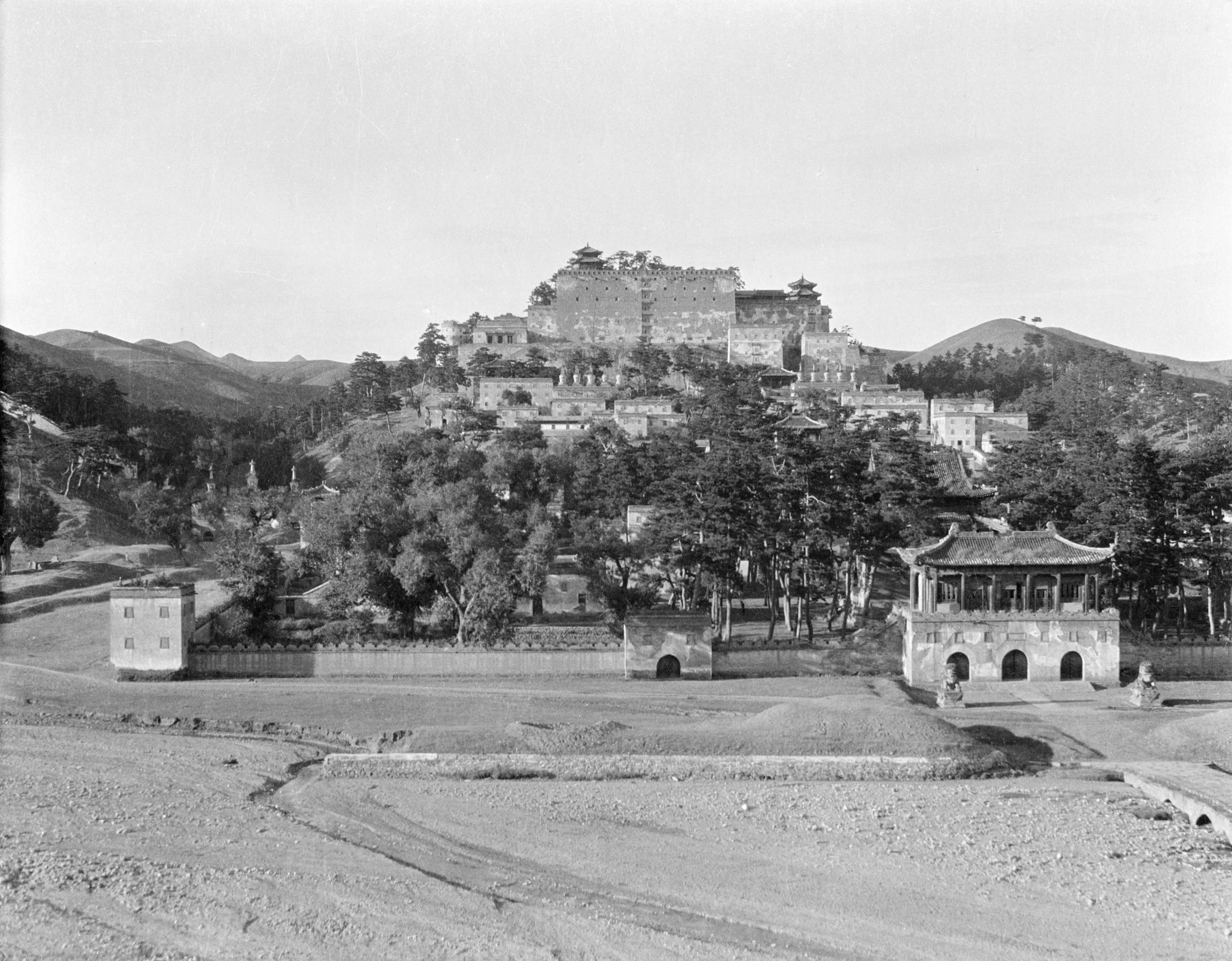
Ein Tagebuch in Bildern (A Diary in Pictures), photographed by Alfons von Mumm between his departure for China in July 1900 and July 1902 and compiled in 1902, includes a group of old views of the Putuo Zongcheng Temple captioned “Putala.” The six photographs record respectively a general view of the monastery, a side view of the Great Red Terrace, the view from within the temple toward the north wall of the Mountain Resort, the three-bay memorial archway, the inner courtyard at the highest point, and the main building of the Great Red Terrace. The original book gives no specific shooting dates for the Rehe leg of the journey, so they are labeled here by the photographic period of the whole album.
Early 20th Century
Baukunst und Landschaft in China (Architecture and Landscape in China), edited by Ernst Boerschmann and published in 1926, includes two old views of the Putuo Zongcheng Temple. The general view from the southeast is reproduced, according to the original plate caption, from an old photograph held by the Kunstgewerbemuseum in Berlin; the close view of the Great Red Terrace from the southwest belongs to Boerschmann’s photography during his 1906–1909 survey travels in China.
1924–1927
The fourth volume of Sidney D. Gamble’s photograph collection, taken in Chengde between 1924 and 1927, includes two old views captioned “Putuo Zongcheng Temple (Little Potala),” recording the hillside building complex from afar in front of the temple and from close up.
1932
Sven Hedin’s Jehol: City of Emperors, published in 1932, includes a group of old views captioned “The Potala.” Selected here are the perspective looking into the temple through the central arched gateway of the memorial archway, and the Cihang Pudu Pavilion—the only pavilion left on the roof of the Great Red Terrace after the shelter pavilions collapsed.
1934
Issue no. 120 of Ajia Taikan (Grand Views of Asia), published in 1934 by the Ajia Shashin Taikan Sha, includes a group of old views of the Putuo Zongcheng Temple, the photographer uncredited. Its general view, its upward view of the slope of the Great Red Terrace, and its close view of the outer wall record, at three scales from far to near, the building complex spread along the mountainside.
Between 1933 and 1946
The Rehe album of Hedda Morrison’s China album, photographed and assembled by Hedda Morrison between about 1933 and 1946, includes a group of old views captioned “Potala,” recording the temple’s three-bay memorial archway, the Great Red Terrace, the circular stone watchtower, and the roofs of the halls.
References
- Alfons von Mumm, Ein Tagebuch in Bildern (A Diary in Pictures), Berlin: Graphische Gesellschaft, 1902.
- Yang Xu, “An Examination of the Original State of the Qianlong-Era Buildings of the Putuo Zongcheng Temple in Rehe”, Journal of the Palace Museum, no. 1 (2013).